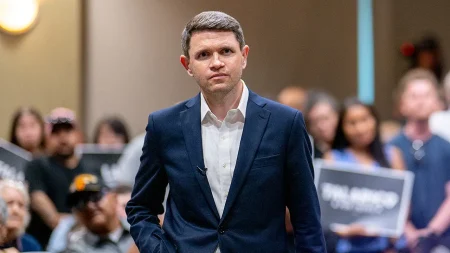



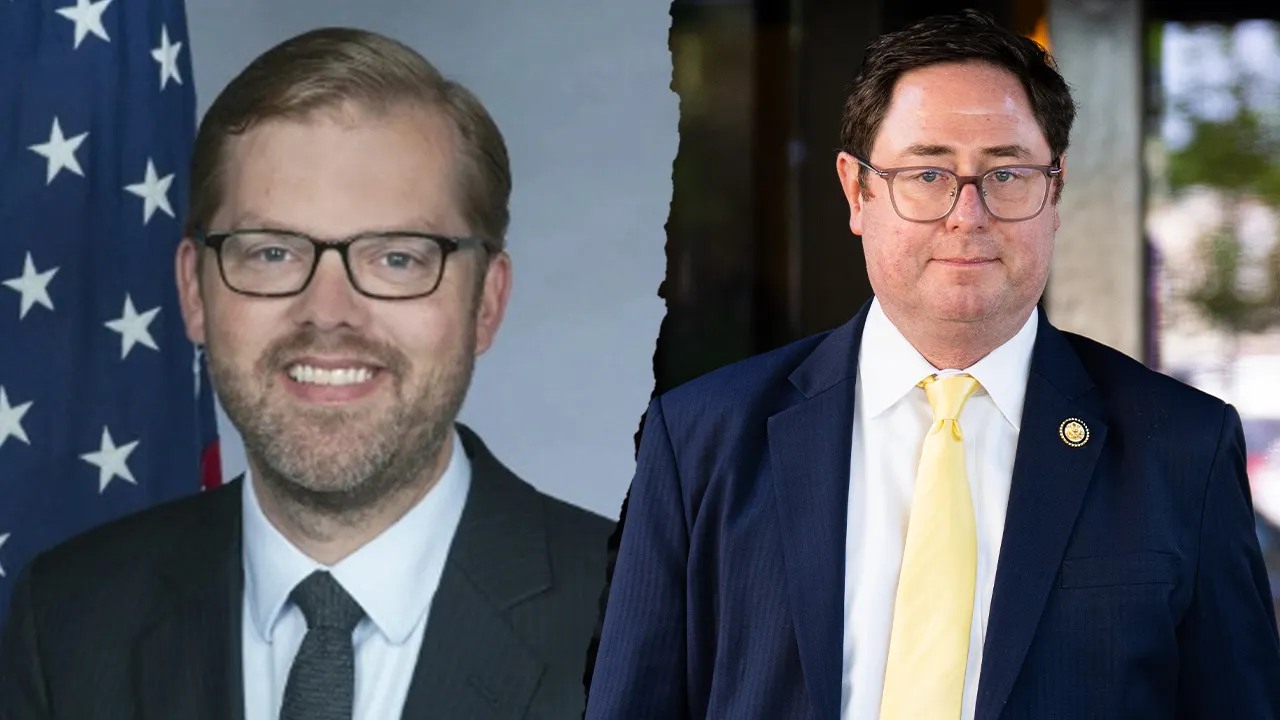
In the heart of the rolling plains of Nebraska, where cornfields stretch like golden rivers under the endless sky, a new chapter in American politics is unfolding—one that feels deeply personal and refreshingly unscripted. Austin Ahlman, a sharp-witted journalist known for his fearless dives into corporate malfeasance and political corruption at the progressive outlet The Intercept, has thrown his hat into the ring for Nebraska’s first congressional district. Picture this: a guy who’s spent his career shining a light on the shadows of power, now stepping out from behind the keyboard to challenge the status quo directly. On a crisp Thursday morning, Ahlman announced his candidacy as a nonpartisan independent, just two days after incumbent Republican Representative Mike Flood and Democratic nominee Chris Backemeyer advanced in their primaries. It’s like a midwestern drama coming to life, where the underdog isn’t some Hollywood archetype but a real journalist from the working class, ready to face off against established players in a district that’s as Republican as it gets. Ahlman, with his roots firmly planted in the everyday struggles of folks like those in Omaha and Lincoln, isn’t afraid to call it like he sees it. He paints Backemeyer—a seasoned diplomat who worked in Barack Obama’s administration and advised Kamala Harris on national security—as just another “creature of the establishment in D.C.” “Look,” he told the local Lincoln Journal Star in an interview that crackled with energy, “I’ve taken on the big corporations gutting our state, exposing the crooked politicians who keep selling us out. Neither Flood nor Backemeyer can say they’ve done that. They’re part of the machine—I’m not. I’m one of you, from the working class, fighting for change without the fancy suits and insider deals.” As I imagine sitting in a small-town diner, sipping bad coffee while Ahlman lays it out, it becomes clear why this race is heating up. Nebraska’s first district isn’t just a spot on the map; it’s a microcosm of rural America grappling with economic shifts, corporate influence, and a yearning for authentic voices. Ahlman’s entry adds a twist to what was shaping up to be a predictable Republican-vs.-Democrat showdown, injecting a dose of outsider energy that could upend the game. But in a state where politics often feels more like family reunions than ideological battles, how will voters respond? Flood, the solid incumbent who won his seat in a 2022 special election after a scandal-plagued predecessor, has built a reputation on steady, if unflashy, representation. Winning by five points in that nail-biter special election and clinching comfortable margins of 15% in 2022 and over 20% in 2024, Flood embodies the district’s conservative bedrock—a reliable farmer-turned-politician who knows the lay of the land. The Cook Political Report rates the district as a Republican stronghold, meaning flipping it would require a perfect storm: anemic turnout among GOP voters paired with a tidal wave of Democratic enthusiasm. Yet, Ahlman’s candidacy complicates things, potentially splitting votes and turning what could be a close race into a landslide for Flood. I can almost hear the whispers in Nebraska’s county fairs and church basements: Is this progressive independent a genuine force for change, or a spoiler in sheep’s clothing? Leaders like Nebraska Democratic Party Chair Jane Kleeb aren’t shy about calling it out. In a statement that landed with the force of a hay bale, she warned, “Mike Flood has let this district down, and splitting the vote with a fringe third candidate won’t fix that. We don’t need noise from the extremes; we need steady, experienced leadership to fight for fairness and protect our democracy. That’s Chris Backemeyer.” Her words echo the frustrations of many locals who feel stuck between the lesser of two evils—Flood’s entrenched Republican machinery and the Democratic establishment’s polished appeals.
Diving deeper into the personalities, Chris Backemeyer emerges as a compelling figure in her own right, a former State Department employee whose résumé reads like a thriller novel of international intrigue. With stints in Obama’s administration and as a special advisor to Vice President Harris on national security and policy, she’s no stranger to the corridors of power. Her campaign’s pitch is a rallying cry for Nebraskans battling Trump’s tariffs, which they’ve dubbed harmful to farmers and businesses, and looming healthcare cuts that threaten the region’s aging population. “After sweeping almost every county in the primary,” her team told local press like the Nebraska Examiner, Backemeyer is laser-focused on defeating Flood to halt these policies. Humanizing her story, I envision a dedicated public servant, perhaps a mom from a Nebraska family, who traded the chaos of D.C. briefings for the heartland’s quieter rhythms. She’s positioned herself as the antidote to Flood’s conservative agenda, promising to champion progressive causes without the baggage. Yet Ahlman and his backers question her independence, arguing she’s too tied to the Democratic elite. Backemeyer’s response is pragmatic: in a district where Republicans hold sway, she needs to appeal broadly, but Ahlman’s presence might dilute her chances. It’s a classic case of fierce competition turning personal—imagine the awkward encounters at statewide fundraisers, or the tense debates where these rivals must stand toe-to-toe. Ahlman’s campaign, fresh and hungry, contrasts with Backemeyer’s methodical approach, highlighting a broader tension in American politics: the clash between insiders who navigate the system and outsiders who aim to dismantle it. For Nebraskans watching from their porches, this isn’t just about policies; it’s about who truly understands the grit of their lives.
Meanwhile, Flood’s side digs in with the kind of hard-nosed rhetoric that defines Midwestern conservatism. His spokesperson, Daniel Bass, framed Ahlman as a saboteur, telling the Examiner that the independent is merely “trying to sabotage the campaign of a Kamala Harris adviser because the Democratic Party is in shambles.” It’s a pointed jab, suggesting Ahlman’s run is less about principle and more about partisan mischief. Flood himself, a self-made man who rose from Nebraska’s agricultural heartland, projects a no-nonsense image—think of a farmer who fixes tractors with one hand and drafts legislation with the other. His wins aren’t flukes; they’re built on grassroots connections, from attending local rodeos to pushing bills that protect family farms from federal overreach. In conversations with voters, Flood might say, “I’ve been getting things done—fixing roads, boosting our economy—while Backemeyer and Ahlman bicker over D.C. power plays.” Humanizing the incumbent, picture him as the dependable neighbor who shows up early to help with harvests, earning trust through reliability rather than flashy promises. But critics argue he’s failed on key issues, from healthcare access in rural areas to addressing corporate influence that Ahlman so relentlessly exposes. As the race heats up, Flood’s team sees Ahlman as a potential boon, splitting progressive votes and securing another victory in this red district. Yet beneath the bravado lies a vulnerable truth: Nebraska’s electorate, proud and independent-minded, might see Ahlman’s fresh challenge as a breath of fresh air.
Zooming out, this contest isn’t isolated—it’s part of a national wave of nonpartisan upstarts shaking up midterm elections. From Nebraska’s plains to West Virginia’s hills and New Jersey’s suburbs, primaries are setting the stage for fierce battles where independents like Ahlman are turning conventional wisdom on its head. Progressive journalists entering politics signal a growing frustration with the two-party duopoly, a sentiment that resonates in diners and living rooms across America. Ahlman embodies this shift, a reporter-turned-candidate who humanizes the fight against systemic issues by sharing personal stories of overlooked corruption. Imagine him recounting tales of big agribusiness pulling strings or politicians profiting off Nebraskans’ backs—it’s not just policy talk; it’s emotional, relatable resistance. Flood and Backemeyer, seasoned pros, counter with experience, but in today’s polarized climate, that edge might not cut it. Voters are starved for authenticity, and Ahlman’s nonpartisan stance offers that elusive middle ground. Fox News Digital reached out to all campaigns for comment, but the back-and-forth plays out vividly in op-eds and town halls, where Nebraskans debate whether Ahlman’s entry will unite or divide the opposition against Flood. It’s a human story of ambition, legacy, and the quest for representation that truly listens.
In the end, Nebraska’s first district race is more than votes—it’s a tapestry of dreams and disappointments, where Ahlman’s idealism clashes with the pragmatism of established figures. As a journalist myself, I see echoes of Ahlman’s courage in every report challenging the powerful, reminding us that democracy thrives on voices like his. Whether he wins or not, his bid galvanizes conversations about working-class struggles, corporate accountability, and the insider-outsider divide that plagues our political scene. Locals in the district—teachers, farmers, small-business owners—are tuning in, perhaps inspired by this narrative of one man’s grit against the odds. It’s a reminder that politics, at its core, is personal, shaped by real folks with real stakes. As campaigns ramp up with debates and ads, Nebraskans might find themselves cheering for the underdog, or sticking with the familiar. Fox News’ audibility feature lets listeners engage on the move, transforming static news into dynamic discussions. Either way, this race captures the heartbeat of America, where every candidate’s story intertwines with the hopes of those they seek to serve.
Reflecting on broader implications, Ahlman’s run highlights how progressive candidates are redefining elections in conservative strongholds. Analysts note that independents could sway outcomes, forcing major parties to adapt or risk irrelevance. For Nebraskans, this means a potential shift from rote Republican dominance to something more vibrant, though not without risks. Flood’s allies warn that Ahlman’s “fringe” positioning won’t unify the left; instead, it dissipates energy that could challenge his tenure. Yet Backemeyer’s campaign counters that Ahlman’s critiques might expose Flood’s shortcomings, pushing for progress on tariffs and healthcare. Humanizing these dynamics, consider a voter like Juanita, a lifelong Nebraskan, torn between Ahlman’s outsider appeal and Backemeyer’s background—she represents the electorate’s internal tug-of-war. In statewide primaries and beyond, such stories foreshadow the 2024 midterms, where nonpartisans test the waters of change. Fox News’ new listening option enhances accessibility, allowing folks to delve into these narratives during commutes or chores, bridging the gap between elite politics and everyday lives. Ultimately, Nebraska’s race becomes a bellwether for national trends, urging Americans to question: Is politics for the people, or just the powerful?
As the dust settles post-announcement, campaigns gear up for what promises to be a whirlwind general election. Ahlman, flooding social media with posts about his journalistic exposés, positions himself as the relatable alternative to establishment figures. Flood counters with town halls emphasizing his tangible achievements, while Backemeyer rallies with policy talks on economic fairness. This triad of candidates injects humanity into a often sterile process, turning headlines into heartfelt dialogues. For instance, Ahlman’s emphasis on working-class roots might resonate with union members in the Omaha area, fostering a sense of kinship absent in traditional races. Conversely, Flood’s folksy anecdotes about Nebraska life build rapport, and Backemeyer’s global perspective offers broader visions. Fox News Digital’s inquiries to the campaigns underscore the dynamic exchanges, with each side sharpening their narratives. In this expansive political theater, where independence challenges it all, Nebraskans stand at the crossroads of tradition and transformation, their voices amplified through every vote.