


Washington is stirring again, but it’s the kind of stirring you do when you’d rather pull the covers over your head and roll back over. The House of Representatives has finally returned to the Capitol after a long stretch of silence — no votes since July 23 — but this isn’t a dramatic comeback. It’s a pit stop, a three-day visit, a chance to take attendance and then vanish again. The Senate won’t even straggle back until September 14. So the scene on Capitol Hill right now feels less like the start of a new political chapter and more like the third and final preseason game in the NFL, the one where the stands are half-empty, the star players are resting, and everyone is mostly just waiting for the regular season to arrive. Remember the first preseason game? Fans show up, tailgates are hot, rookies look promising, and the whole city gets a little flutter of hope. But by the third preseason game, the excitement is gone. Roster spots have been decided, the cuts have already been made, and even the most loyal fans linger for only a series or two before heading back to the parking lot. Congress has reached that exact point. The big legislative battles that usually drive drama into the autumn have either been resolved or quietly put to bed. The much-touted Republican reconciliation package is basically dead. The government shutdown scare that hung over Washington last year has been defused, at least for now, by an interim spending bill that keeps the government funded into December. The House will vote on that bill Tuesday, and then everyone can get back to doing what they really want to do: hit the campaign trail. The hallways have that weird hush of a school day when most kids are on a field trip. Members hurry through the tunnels, clutching phones and schedules, smiling but not warmly. They say hello, but they’re already checking their departure times. The first day of school, this is not. There are no fresh notebooks, no new backpacks, no sense of possibility. Just the quiet acknowledgment that the real game is in November, and nobody wants to be stuck in Washington when the whistle blows.
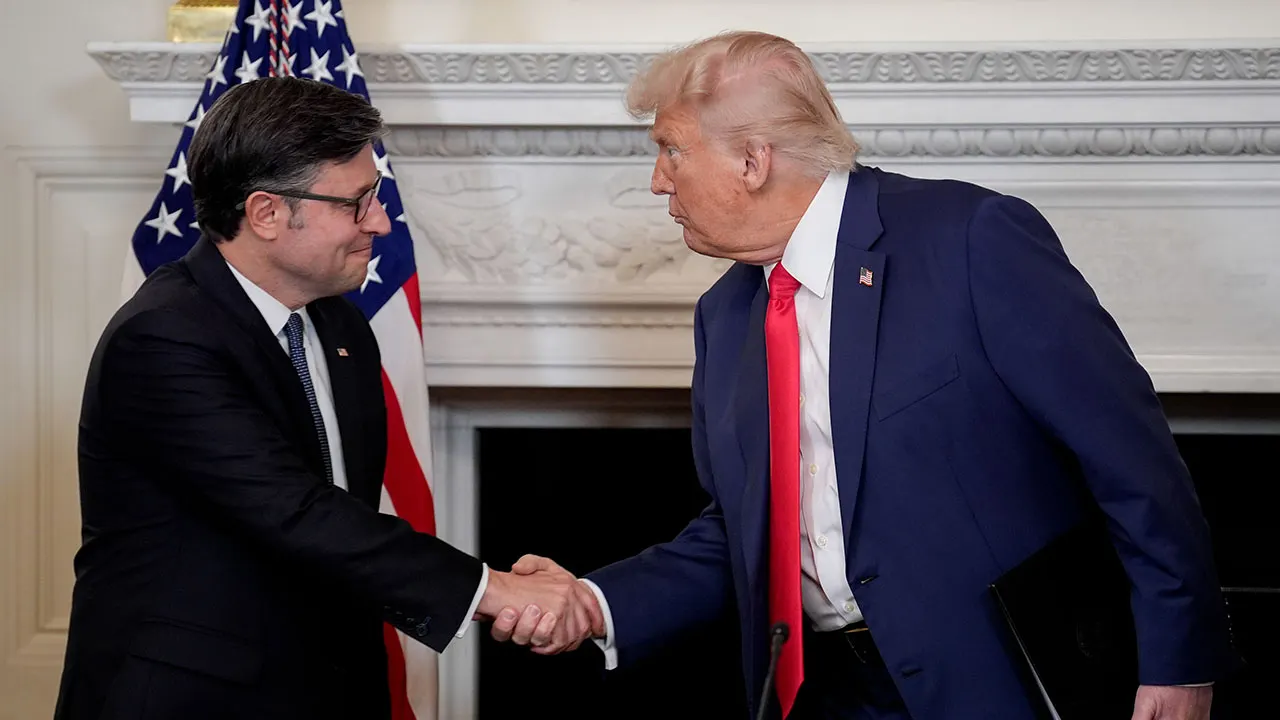
Even by Washington’s bizarre standards, the schedule this week is strange. The House didn’t vote for weeks, returns for a few days, then scatters again before the Senate even shows up. It’s the congressional version of a school day where the teacher walks in, hands out the syllabus, and says, “go home and read it.” Speaker Mike Johnson acknowledged as much when asked whether members would stay in town or come back in a couple of weeks. “Well, it’s on the schedule,” he said, with the shrug of a man who knows schedules are made to be broken. That schedule was etched out last December, right after the painful 43-day government shutdown, at a time when nobody could imagine the next spending fight being resolved so easily. But here we are. The interim funding bill gave everyone a pass to skip the usual September cliff-hanger. So what’s left? Not much. The GOP’s grand policy ambitions have mostly faded. The “Reconciliation 3.0” package that was supposed to be the centerpiece of Republican governance? Likely gone. The usual autumn drama over a government shutdown? Already defused. And with the midterms looming, many members would rather be in their districts than in Washington. Attendance was around 384 members for one uncontroversial vote Monday night, and 388 for another. That sounds close to a quorum, but it’s not exactly a full house. And that number could slide dramatically once the House returns in mid-September, as the current schedule dictates. Some lawmakers who lost their primaries or decided to retire may simply stop showing up. A few have even considered resigning their seats early, according to people familiar with the conversations. If that happened, the already razor-thin Republican majority could get even thinner, which is the last thing GOP leaders want as they try to hold the gavel. So the plan is simple: get in, get the votes done, get out, and hope nobody does anything too embarrassing while the cameras are rolling.
So what is actually on the agenda? Not a landmark tax bill, not a sweeping infrastructure package, not a serious attempt to fund the government beyond a stopgap. Instead, Republicans want to force Democrats to go on the record about socialism. The resolution is a classic “gotcha” vote, a campaign tool disguised as legislation. It asks Democrats to choose between supporting something called socialism and supporting democracy itself. If they vote no, they look radical to swing voters. If they vote yes, they’re publicly rejecting the left-wing activists now energizing their party. Rep. Jeff Crank of Colorado framed it as a necessary stand for American democracy, saying the other side wants to abolish things like the Supreme Court and the Senate. Rep. Tom Tiffany of Wisconsin told Fox that Republicans need to see where Democrats stand because the American people are rejecting the socialist direction of the Democratic Party. Rep. Carlos Gimenez of Florida added that Democrats will try to distance themselves as much as they can, but that’s where the energy of the Democratic Party is going. The catch is that the resolution includes the SAVE America Act, which would require proof of citizenship for voting. That measure is a core part of the GOP policy platform, but for most Democrats it’s a poison pill. So Democrats are likely to vote no, and Republicans will use that no to paint every Democrat as pro-socialism and anti-election integrity. It’s a trap, and everyone knows it. Some Democrats might see a clean vote against socialism as a gift, because they’ve been accused of being socialists for years and would love to go on the record saying they’re not. But the SAVE America Act rider changes the calculus. If Democrats vote for the resolution, they’re embracing a voter ID measure that much of their base considers suppression. If they vote against it, they’re “voting against saying America shouldn’t be socialist.” It’s precisely the kind of impossible choice that defines American politics in the final stretch before a midterm, and Republicans are betting it works in their favor.
House Minority Leader Hakeem Jeffries, a New York Democrat, gave the predictable but powerful response. He called the resolution an effort to elevate the so-called Save America Act, which he described as the “suppress the vote act.” He accused Republicans of trying to rig the midterm election by jamming a voter suppression bill down the throats of the American people, a bill that Donald Trump has been pushing for the past year. This is the inevitable dance: Democrats say the GOP is making it harder to vote; Republicans say Democrats want non-citizens to vote. The truth is messier, but in a campaign season, no one has time for nuance. For some vulnerable Democrats, the vote is a genuine dilemma. They might actually like a clean measure saying “we don’t support socialism,” because they’ve been hammered for months by Republican ads accusing them of being radical leftists. But because of the SAVE America Act rider, they can’t support the resolution. So Republicans get an even cleaner ad line: “Your representative even voted against saying America shouldn’t be socialist.” It’s a win-win for the GOP on the surface, though the political reality is more complicated. Many Democrats represent districts where changing the subject from inflation, healthcare, and crime to socialism and voting rules could actually help them refocus attention on what they consider their stronger issues. There is also the risk for Republicans that the whole exercise looks like a stunt, a desperate attempt to distract from the fact that they haven’t passed a major spending package or delivered on the big promises they made to voters. But in the rough-and-tumble world of House politics, “gotcha” votes are as old as the institution itself. Both sides do it, and the only people who really suffer are the voters who have to parse the attack ads that follow.
Beyond the socialism vote, there are also some dark little ethics side-plots that leadership would rather not discuss. The House could take up a resolution to censure Rep. Chuck Edwards, a North Carolina Republican who admitted to inappropriate conduct around female aides and dropped his reelection bid. There may also be an effort to expel Rep. Cory Mills of Florida, who lost his primary but now faces allegations of financial misconduct and an alleged assault of a woman at his apartment last year. Then there is Rep. Max Miller of Ohio, who faces allegations of spousal and child abuse. Fellow Republicans implored Miller to drop his reelection bid, but he doubled down, insisting the allegations are false. Speaker Johnson says he supports Miller’s reelection and argues the House shouldn’t do anything until the Ethics Committee finishes its inquiry. “He has been a great Member of Congress,” Johnson said of Miller. “He has some personal issues he’s still working through.” That answer might satisfy a friendly audience, but it’s not hard to imagine Democrats — and even some Republicans — trying to force a vote on expelling Miller or otherwise punishing him. Johnson and the GOP leadership want nothing to do with that. They know that a messy ethics fight on the House floor could dominate the news cycle, provide Democrats with ammunition, and distract from the party’s message. So what’s the solution? Exactly what Washington does best: leave. Go home. Let the committee process grind slowly through the fall. It’s the oldest trick in the political playbook. If you can’t fix a problem, don’t give it a stage. Let it fester in obscurity while everyone gets back to the thing they actually care about: campaigning. The fact that the House is even in town this week is awkward enough, and leaders are eager to turn the page.
In the end, don’t be surprised if the House leaves Washington until November in the next few days. That would be the safest political move for Republicans clinging to their narrow majority. There’s no reason to risk a vote on Miller, no reason to let Democrats change the subject, no reason to let a censure or expulsion battle make headlines. Just get out of town, go home, talk to voters, shake hands, and run out the clock. The Senate may have work to do when it returns in mid-September, but the House is the real prize, and every day spent on Capitol Hill is a day not spent defending seats that are about to be contested. Speaker Johnson may say the schedule shows a return in a couple of weeks, but schedules are made to be changed, especially when the political weather turns ugly. If Republicans can avoid a self-inflicted wound between now and Election Day, they’ll be happy. And if that means abandoning the Capitol months before the official end of the session, so be it. It’s not cowardice; it’s political survival. So expect the floor to empty out this week. Expect the flights back home to be full. Expect the lights in the Capitol to dim earlier than usual, while the campaign trail lights burn bright across the country. And if anyone questions whether members of Congress are really doing their jobs by skipping town, the answer from the leadership will be simple: the regular season is coming, and everybody needs to be ready. This week is just preseason. The only thing left to do is get right out of town.