



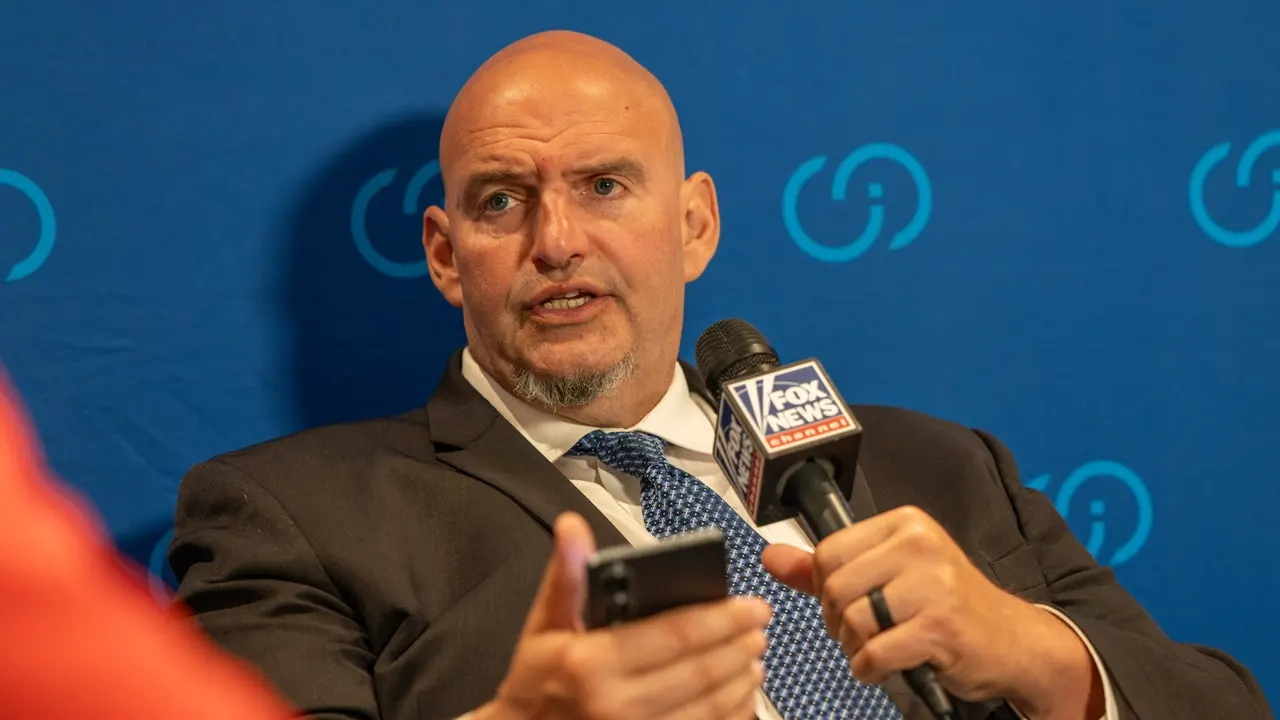
The political landscape of modern America is undergoing a dramatic, often painful realignment, and perhaps no figure embodies this turbulent transformation more vividly than Pennsylvania Senator John Fetterman. Once celebrated by the progressive wing of the Democratic Party as a working-class hero who wore hoodies to press conferences and championed marginalized communities, Fetterman has recently pivoted to become one of the most outspoken critics of his party’s left flank. This shift was on full display at the Israel on Campus Coalition’s National Leadership Summit in Washington, D.C., where Fetterman delivered a fiery critique of what he views as a dangerous drift toward radicalism within Democratic ranks. Speaking directly with Fox News Digital, he expressed deep concern over the rising influence of self-identified socialists and communists who are successfully pulling the party’s ideological center of gravity toward a more extreme and unrecognizable future. For Fetterman, this is not merely a superficial disagreement over policy details; it is a fundamental struggle for the very soul and moral clarity of the Democratic Party. He warned that ignoring this ideological drift could alienate mainstream voters who still believe in traditional American values, sensible foreign policy, and strong international alliances. By standing at the podium of a pro-Israel student advocacy group, Fetterman signaled a willingness to break bread with those who prioritize national security and historical alliances over the trendy, highly polarized activist movements currently dominating social media. His presence at the summit underscored a growing determination to act as a bulwark against the voices he believes are trying to dismantle the party from within, transforming his political identity from a populist rebel into a fierce defender of the political center.
At the heart of Fetterman’s warnings is the unique and pervasive influence of modern digital culture, where internet fame often translates directly into political power without the traditional vetting of public service. He specifically pointed to Hasan Piker, an immensely popular left-wing Twitch streamer who has built a massive online empire by discussing politics, video games, and social issues to millions of young followers. Fetterman expressed bewilderment and deep concern that a figure who openly praises historical communist leaders like Mao Zedong and defends authoritarian regimes like Cuba’s could wield such significant influence over the contemporary Democratic electorate. In the eyes of the Pennsylvania senator, elevating someone who rationalizes the actions of oppressive communist dictatorships is not just historically illiterate; it is a direct threat to the core democratic principles that the United States was founded upon. The digital landscape has allowed online creators to bypass traditional journalistic scrutiny, building highly loyal echo chambers where complex global histories are flattened into easily digestible, anti-Western narratives. When figures like Piker campaign alongside mainstream Democratic candidates—such as endorsing socialist New York City mayoral hopeful Zohran Mamdani or rallying behind high-profile Senate candidates in Michigan—it highlights a troubling convergence between virtual radicalism and real-world electoral politics. Fetterman argues that the party cannot afford to normalize or pander to individuals who find solace in the ideologies of historical adversaries, urging his colleagues to recognize that online follower counts do not equate to moral or intellectual authority in the serious business of governance.
This ideological friction is no longer confined to online forums or university lecture halls; it is actively playing out in high-stakes primary elections across the nation, serving as a critical litmus test for the party’s future direction. During the recent primary cycle, the battle lines were clearly drawn between the Democratic establishment and candidates backed by the Democratic Socialists of America (DSA). In Missouri, establishment candidate Rep. Wesley Bell managed to secure a crucial victory by defeating former Rep. Cori Bush, a prominent member of the progressive “Squad” whose controversial foreign policy stances had alienated moderate voters. Meanwhile, in Michigan’s highly competitive Senate primary, the tension was palpable as moderate candidates faced off against progressives like Abdul El-Sayed, who had garnered support from the party’s furthest-left factions. Fetterman remarked that the more radical elements of the party have increasingly turned Israel into a singular, polarizing litmus test, creating a hostile environment for anyone who supports the Jewish state. He expressed disappointment in high-profile Democrats, including California Governor Gavin Newsom, whom he accused of using inaccurate and inflammatory rhetoric by describing Israel as an “apartheid state.” To Fetterman, such characterizations are not only factually incorrect but represent a dangerous capitulation to a vocal minority. He insisted that the path to long-term electoral success lies in rejecting these fringe elements and standing firm on core democratic principles, emphasizing that pandering to extremist voices ultimately weakens the party’s credibility with the broader American electorate who seek stability and common-sense leadership.
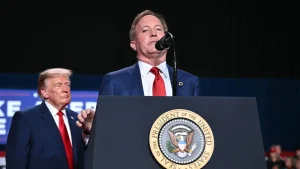
The internal civil war brewing within the Democratic Party has not escaped the watchful eye of its political opponents, most notably former President Donald Trump. Leveraging the rising visibility of socialist candidates, Trump has capitalized on these divisions to paint the entire Democratic apparatus with a broad, alarming brush. In speeches delivered earlier this summer, Trump warned his supporters that the modern Democratic Party is no longer composed of traditional social democrats, but has instead been overtaken by what he termed “hardcore, godless communists.” By framing the political debate in such existential, spiritually charged terms, Trump seeks to rally his base against what he describes as the most significant threat to the American republic since its founding nearly 250 years ago. He argued that these radical elements would inevitably turn America’s great cities into impoverished, lawless slums if left unchecked, presenting a grim vision of a nation losing its moral and economic compass. When asked about the prospect of more socialists winning primary races, Trump dismissively suggested that these far-left politicians should abandon the Democratic brand entirely and form a separate “Communist of America Party,” predicting they would capture a small but disruptive portion of the national vote. This external pressure puts moderate Democrats like Fetterman in a highly precarious position, forcing them to wage a two-front war: defending their party against Republican accusations of radicalism while simultaneously fighting to reclaim their party’s identity from the genuine extremists operating within their own coalition.
Perhaps the most painful and deeply personal battleground in this ideological war is the rapid rise of antisemitism and the systemic demonization of Israel, particularly on college campuses. Speaking to the more than 800 pro-Israel students gathered at the Washington summit, Fetterman lamented how the term “Zionist” has been systematically weaponized as a toxic slur, used to isolate, harass, and silence young Jewish Americans. On college campuses across the country, supporting Israel’s right to exist and defend itself has increasingly become a social liability, forcing students to defend their heritage and beliefs against a barrage of hostile rhetoric. Fetterman expressed profound concern over this cultural shift, noting that being proudly pro-Israel was once a bipartisan consensus but has now been twisted into a negative attribute that people are forced to continuously justify. This hostile environment does not just affect geopolitical debates; it inflicts real emotional and psychological distress on young people who simply wish to celebrate their identity without fear of ostracism or violence. By lending his voice to the Israel on Campus Coalition, Fetterman aimed to provide these students with a sense of solidarity and reassurance, reminding them that there are still leaders in Washington willing to stand up against the tide of hate. He emphasized that standing with Israel is not a partisan issue but a moral imperative, and that the Democratic Party must actively confront the antisemitic undercurrents masquerading as progressive activism if it hopes to maintain its moral authority.
Fetterman’s willingness to break with party orthodoxy is perhaps most evident in his hawkish, highly independent approach to foreign policy, particularly regarding the Middle East and the threat posed by Iran. While many Senate Democrats have consistently advocated for diplomatic restraint and pushed to limit presidential war powers, Fetterman has repeatedly taken positions that align more closely with conservative national security strategies. He proudly pointed out that he was one of the very few Democrats to support the Trump administration’s proposal to bomb Iranian nuclear facilities, arguing pragmatically that if the global goal is to prevent a hostile regime from acquiring nuclear weapons, taking direct military action to destroy those facilities is a logical and necessary option. Furthermore, Fetterman stood alone as the sole Democrat to vote against the War Powers Act, reflecting his belief that the executive branch must maintain the flexibility and authority to respond swiftly to international threats without being crippled by congressional gridlock. For nearly half a century, American presidents have struggled to contain the aggressive actions of the Iranian regime, and Fetterman insists that the root of the instability in the region remains squarely with Iran itself. By championing these muscular foreign policy positions, Fetterman is redefining what it means to be a modern Democratic senator. He demonstrates that true representation requires the courage to stand alone, navigate the complex realities of global geopolitics without ideological blinders, and prioritize national security and human decency over party conformity. His journey serves as a compelling reminder that in a deeply polarized age, personal conviction and moral clarity can still triumph over the deafening noise of political tribalism.