


The Musk-Newsom Feud: A Personal Battle Goes Public
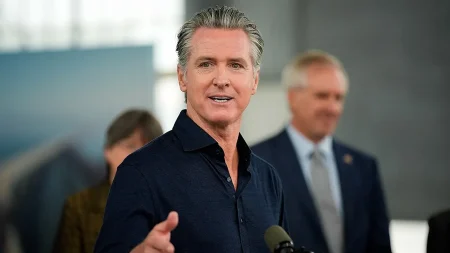
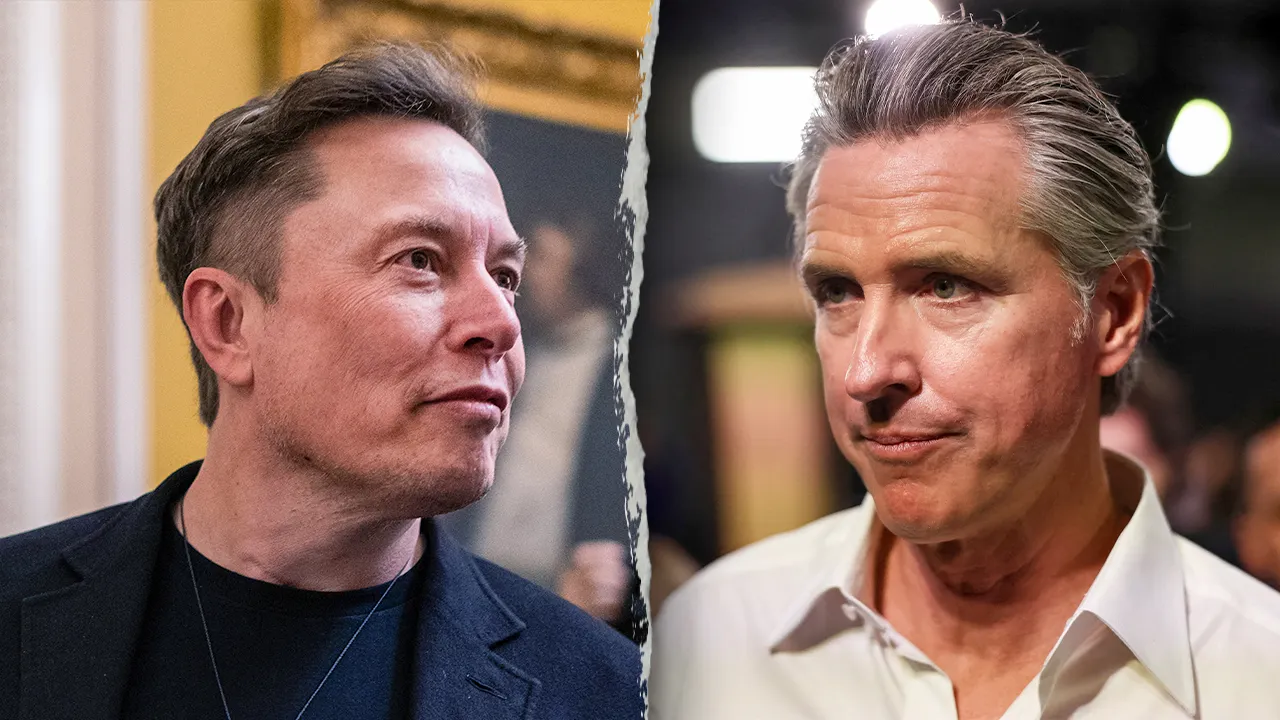
In a heated exchange that blurs the lines between politics and personal lives, Elon Musk and California Governor Gavin Newsom’s office have become embroiled in a public dispute centered around Musk’s transgender child. The controversy began innocuously enough when Musk’s America PAC reposted a clip of Newsom on “The Ezra Klein Show” where the governor claimed, “There’s no governor that’s done more pro-trans legislation than I have.” This statement came as Newsom was explaining his somewhat surprising stance on transgender athletes in women’s sports, a position where he has notably diverged from many fellow Democrats. Newsom had previously raised eyebrows during his podcast “This is Gavin Newsom” when interviewing Turning Point USA CEO Charlie Kirk, stating that it was “deeply unfair” to allow transgender athletes to compete in women’s sports – a comment that caught many by surprise given his typically progressive positioning.
The situation escalated dramatically when Newsom’s press office responded to America PAC’s commentary with a deeply personal attack aimed at Musk: “Correct. We’re sorry your daughter hates you, Elon.” This barb, posted on X (formerly Twitter) – the very platform Musk owns – referenced his strained relationship with his transgender daughter, who now goes by Vivian Jenna Wilson. The comment represented an unusual and striking moment where a governor’s official communications team deliberately targeted the family dynamics of a private citizen, albeit an extraordinarily public and politically active one. The decision to weaponize Musk’s family relationship in official government communication raised immediate questions about the appropriateness of such tactics, regardless of one’s position on transgender rights or Musk’s own controversial statements.
Musk’s response was swift and equally personal, refusing to acknowledge Wilson’s gender identity while expressing his perspective on the situation. “I assume you’re referring to my son, Xavier, who has a tragic mental illness caused by the evil woke mind virus you push on vulnerable children. I love Xavier very much and hope he recovers,” Musk wrote, continuing to list his other daughters – Azure, Exa (nicknamed “Y”), and Arcadia – stating they “do indeed love me very much.” The billionaire entrepreneur then pinned a post to his profile stating, “If you have a womb, you are a woman. Otherwise, you are not,” making his position on gender identity unmistakably clear to his millions of followers. This exchange highlighted the profound cultural divide in America regarding transgender issues, with Musk positioning himself firmly on the conservative side of the debate, despite his otherwise complex political positioning that defies simple categorization.
In a revealing 2024 interview with Dr. Jordan Peterson, Musk shared more about his perspective on gender-affirming care for minors, claiming he was “essentially tricked” into giving consent for Wilson to receive puberty blockers. “This is before I had any understanding of what was going on. COVID was going on, so there was a lot of confusion and I was told Xavier might commit suicide if he doesn’t…” Musk explained during the conversation. These comments provide context for Musk’s current stance, suggesting his opposition to gender-affirming care stems partly from personal experience rather than purely political calculation. However, many medical organizations and LGBTQ+ advocates would strongly dispute Musk’s characterization of transgender identity as a “mental illness” or the result of external influence, pointing to substantial research indicating that gender identity is an intrinsic aspect of human development.
Musk’s framing of the situation in stark terms of loss reveals the emotional underpinnings of his public position. “I lost my son, essentially. They call it deadnaming for a reason,” Musk told Peterson. “The reason it’s called ‘deadnaming’ is because your son is dead. So, my son Xavier is dead, killed by the woke mind virus.” This deeply personal framing helps explain the intensity of Musk’s political engagement on this issue, as he concluded by stating that after his experience, he “vowed to destroy the woke mind virus.” While many transgender individuals and their families would describe their transitions as life-affirming rather than a form of death, Musk’s perspective represents a viewpoint shared by some parents who struggle to accept their children’s transgender identities, illustrating how deeply personal these societal debates can become.
This exchange between one of the world’s wealthiest and most influential businessmen and the administration of America’s most populous state demonstrates how the most intimate family matters can become political battlegrounds in today’s polarized climate. What might once have remained a private family matter has transformed into a public spectacle that encapsulates broader cultural conflicts about gender, parental rights, medical autonomy for minors, and the appropriate boundaries of political discourse. As both Musk and Newsom position themselves as potential future presidential candidates, their willingness to engage in such personal attacks may presage an increasingly bitter and boundary-crossing style of political combat. Meanwhile, caught in the middle of this high-profile dispute is a private individual – Vivian Jenna Wilson – whose personal journey has become, without her choosing, a symbol in America’s ongoing culture wars.