





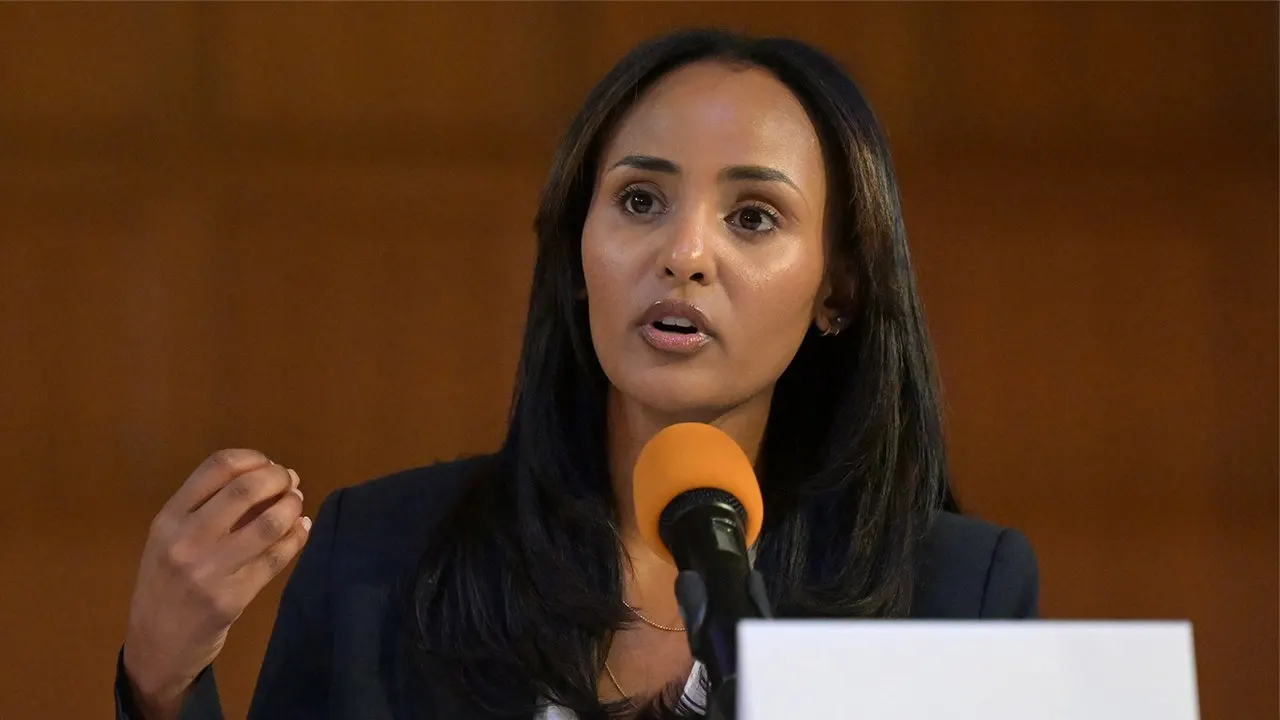
The political landscape of Denver, Colorado, was shaken to its core by a massive ideological shift that few inside the insulated halls of the Washington establishment saw coming, but which had been quietly brewing on the streets and in the community centers of the Mile High City. In a stunning upset that completely redefined the boundaries of raw progressive possibility, 29-year-old former attorney and first-time political candidate Melat Kiros, backed by the formidable, grassroots engine of the Democratic Socialists of America, defeated the deeply entrenched incumbent Representative Diana DeGette. DeGette, an absolute fixture of Colorado politics who had held her seat in Congress since 1997—long before her challenger had even finished elementary school—found herself swept aside by an energetic electorate hungry for bold, systemic change rather than cautious, incremental legislative stewardship. Kiros’s victory represents far more than a mere change in political representation; it is a profound human testament to a changing of the guard, showcasing how a young woman who had previously lost her professional livelihood as an attorney for standing firm in her geopolitical convictions could capture the imagination of a city. This localized political victory was emotional, raw, and electric, serving notice to institutional Democrats that the traditional playbook of relying on name recognition and victories of seniority is no longer a guaranteed shield against a generation of voters who feel abandoned by the status quo. In the crowded, sweaty rooms of Kiros’s primary night celebration, the air was thick with the beautiful sense of history being rewritten in real-time, proving that a campaign fueled by working-class solidarity and unyielding progressive values can successfully dismantle even the most formidable political dynasties.
This shocking progressive upset in the shadow of the Rocky Mountains did not occur in a vacuum, but was instead the latest, most dramatic chapter in a rapidly unfolding national narrative of left-wing insurgency that had caught fire just a week prior in the crowded, diverse neighborhoods of New York City. There, the political machinery of the established center-left suffered devastating, back-to-back blows that signaled a broader, coordinated realignment within the Democratic party’s traditional metropolitan strongholds. In a performance that sent shockwaves through the Congressional Hispanic Caucus, 32-year-old progressive community organizer Darializa Avila Chevalier successfully unseated the powerful, long-serving incumbent Representative Adriano Espaillat, proving that deep community roots can overcome institutional backing. At the same time, Claire Valdez, another fierce champion of the Democratic Socialists of America, triumphed in a hotly contested primary to succeed the legendary, retiring Representative Nydia Velázquez, cementing the progressive left’s grip on the city’s future representation. Both of these New York campaigns were bolstered by the visible, highly energetic endorsement of New York City’s socialist Mayor, Zohran Mamdani, who has rapidly become the ideological lightning rod and chief architect of this rising urban left movement. The human element of these victories is impossible to ignore; these are young women of color, community organizers, and working-class advocates who chose to step out of the shadows of organizing and into the harsh light of electoral politics, fueled by a shared belief that working people are tired of waiting for incremental change. Their collective triumph over entrenched power structures demonstrates a growing, nationwide appetite for a brand of populism that places human dignity, affordable housing, and real systemic representation at the absolute forefront of the national conversation, bypassing the cautious moderation of the party elite.
The ideological engine driving this wave of shocking primary victories is a potent mixture of unyielding policy demands and a deeply felt, populist anger against an economic and social system that many young Americans feel is fundamentally broken. Emboldened by Kiros’s triumph in Colorado’s 1st Congressional District—a progressive bastion that overwhelmingly backed the Democratic presidential ticket in 2024—the Democratic Socialists of America wasted no time in framing this moment as a clear mandate for a radically different future. For Kiros, whose personal sacrifice included losing her legal job after writing a highly controversial and critical essay regarding geopolitical conflicts, the victory was a validation of her absolute refusal to compromise her beliefs for professional safety or political acceptance. Backed not only by the DSA but also by the formidable fundraising and organizing prowess of Justice Democrats—the organization famous for launching the historic congressional careers of “Squad” members like Alexandria Ocasio-Cortez and Rashida Tlaib—Kiros campaigned on a platform that challenges the very foundations of American domestic and foreign policy. She spoke directly to the anxieties of working families, promising to wage a relentless battle in Washington to abolish the Immigration and Customs Enforcement agency, secure a free Palestine, and establish universal programs like Medicare for All and universal childcare. The presence of influential, far-left national media personalities like streamer Hasan Piker at her Denver primary night event highlighted the digital-era organizing strength of this movement, which successfully translates online enthusiasm into real-world, history-making ballots. To the millions of young voters watching from across the country, Kiros’s journey represents the possibility of a politics that does not ask for permission from the wealthy or the powerful, but instead demands a seat at the table.
The ideological battleground quickly shifted from safely blue urban fortresses into the intensely competitive, economically diverse suburbs of Colorado’s 8th Congressional District, revealing how these progressive ideas translate to swing-district realities where the stakes are highest. In a highly contentious primary that captivated the state, progressive State Representative Manny Rutinel secured a decisive, double-digit victory over the more moderate, business-friendly former State Representative Shannon Bird. This primary was deeply personal and intensely fought, centered around the deeply complex and human issue of immigration in a district where nearly forty percent of the population identifies as Latino. Rutinel tapped into local frustrations by launching blistering critiques against Bird for her previous legislative vote opposing a measure designed to limit local law enforcement’s cooperation with federal immigration agents, a stance that resonated powerfully with local advocacy groups and mobilized a massive wave of grassroots support. Boosted by significant independent expenditures from prominent national and local Latino organizations, Rutinel’s victory sets up a high-stakes fall showdown against Republican Representative Gabe Evans, who flipped the seat during the previous election cycle. This matchup is widely regarded as one of only a few dozen races nationwide that will decide which party controls the House of Representatives, making it a crucial test of whether a candidate with strong progressive roots can win over independent voters in a moderate swing district. While Rutinel has recently sought to temper some of his previous, more controversial progressive stances—such as past support for Medicare for All and bans on local fracking—Republicans are already preparing to paint him as an ideological extremist whose allegiance lies with big-city socialists rather than the working-class families, farmers, and energy workers of suburban Colorado.
This profound ideological and generational friction was also on full display in statewide races, illustrating a broader, deeply felt soul-searching within the Colorado Democratic Party that extends far beyond individual congressional districts. In the primary battle for the United States Senate, the 74-year-old moderate incumbent Senator John Hickenlooper—a beloved former governor and Denver mayor who has championed a pro-business, consensus-driven brand of politics for decades—faced an unexpectedly fierce and emotionally charged challenge from 43-year-old former state Senator Julie Gonzales. Gonzales, a former DSA member with deep roots in social justice organizing, tapped into a growing sense of frustration among younger voters who feel the party’s older leadership is out of touch with the existential crises of climate change, housing unaffordability, and income inequality. Although Hickenlooper ultimately leveraged his massive financial advantage and statewide name recognition to secure victory, Gonzales’s strong showing and the dramatic narrowing of the race in its final weeks sent a clear, unmissable signal to the party hierarchy. Her defiant post-election warning that the establishment patronizes working-class and diverse communities at its own political peril echoed across the state. This lesson was further cemented in the state’s expensive and highly volatile gubernatorial primary, where progressive Attorney General Phil Weiser successfully leveraged a bold, activist brand of law, running to the left of multi-term Senator Michael Bennet. Weiser capitalized on his high-profile legal battles against the Trump administration to build an enthusiastic coalition of progressive voters, proving that even in statewide contests, building a human connection through bold, proactive resistance to conservative policies is a winning strategy.
As the dust settles on these historic primaries, the national Democratic Party finds itself caught in an incredibly delicate, high-stakes balancing act between embracing the organic energy of its youthful left wing and protecting its moderate members in vulnerable general election swing seats. Veteran progressive strategists, such as Joe Caiazzo, argue that the rise of candidates like Kiros and Rutinel demonstrates that populism, when centered on the tangible, everyday material needs of the working class, offers a uniquely compelling alternative to an uninspiring political status quo. However, this progressive surge has handed national Republicans a golden opportunity and a potent rhetorical weapon, which they are eagerly deploying across the country to portray the entire Democratic ticket as dangerous radicals who are hostaged to an aggressive socialist agenda. Leaders of the National Republican Congressional Committee are already seizing the moment, arguing that the rise of left-wing candidates in key swing districts like Colorado’s 8th will ultimately alienate moderate suburban voters and secure a stable Republican majority in the upcoming midterms. Ultimately, the political drama playing out from the blocks of Brooklyn to the suburban trails of Denver is a deeply human story about the struggle to define the soul of a political party in an era of profound economic anxiety. As these newly minted candidates prepare for the general election, they carry with them not just the institutional hopes of the Democratic Party, but the deep, personal aspirations of a working-class movement striving to prove that a fairer, more compassionate world is indeed possible.