

The New Era of Interactive News Consumption
Oh, folks, if you’re someone who craves staying informed but hates sitting through long reads with your eyes glued to a screen, have I got some exciting news for you! Fox News has just rolled out a game-changing feature that lets you listen to our in-depth articles right from your device—whether you’re driving, working out, or just unwinding after a long day. Imagine hearing the latest on politics, culture, and breaking news in a natural, easy-to-follow audio format that’s powered by advanced AI to sound just like a trusted journalist spinning a yarn around the dinner table. It’s not just about convenience; it’s about making news feel personal and alive, like chatting with a friend over coffee instead of scrolling through endless text. But while we’re buzzing about these innovations, let’s dive into one of the most heated stories circulating today: the ongoing debate about political rhetoric and its murky ties to violence in America’s polarized landscape.
Picture this—it’s a chilly weekend evening in Washington, D.C., and the elite of media and politics are mingling at the annual White House Correspondents’ Association Dinner, that glitzy affair where reporters, lawmakers, and celebrities exchange barbs and laughs under the spotlight. Laughter fills the room, glasses clink, and then—chaos erupts. An alleged shooter, one Cole Allen, is tackled and subdued by quick-thinking federal law enforcement before he can carry out what appears to be yet another assassination attempt on President Donald Trump. It’s the third such scare in recent memory, each one ramping up the tension in a nation already on edge from political divisions that feel deeper than ever. As details trickle out, the National Republican Senatorial Committee (NRSC) wastes no time pointing fingers, shining a harsh light on a handful of Democratic hopefuls whose fiery words, uttered before this incident, now seem eerily prescient. NRSC spokesperson Bernadette Breslin doesn’t mince words in her chat with Fox News Digital: “Today’s Democrats are beholden to a Trump-hating base that is dragging their party down a dangerous path,” she says, accusing them of not condemning the shooting and failing to cool down the rhetoric they’ve long preached about. Republicans, she notes, have been crystal clear that political violence has no place in America, but Democrats’ silence? It’s just deafening, echoing through the halls of power like an unanswered phone call in the dead of night.
This isn’t the first time the spotlight has swung toward divisive language, mind you. Remember last year, when political activist Charlie Kirk was tragically assassinated, and calls to dial back the aggression reached fever pitch? Leaders on all sides pleaded for restraint, politicians tweeted apologies and vows to elevate the discourse. Yet here we are again, with the same old back-and-forth heating up on the campaign trail faster than milk on a hot stove. You’d think a moment like that would make folks in blue states and red states alike pause, reflect, and maybe even share a laugh over a policy disagreement instead of hurling insults like grenades. But no—the wounds are still fresh, and as Breslin highlights, Democrats’ base, fueled by what some call a cult of hatred, is pulling them into murky waters. It’s like watching a family feud spiral out of control; one side keeps stoking the flames, and the other vows to extinguish them, but nobody’s fully owning up to the sparks they threw first. In this charged atmosphere, with elections looming and a razor-thin Senate majority hanging in the balance, every word feels amplified, every silence judged. And now, with Trump’s life in the crosshairs once more, the stakes couldn’t be higher—because if rhetoric leads to real bullets, who’s next?
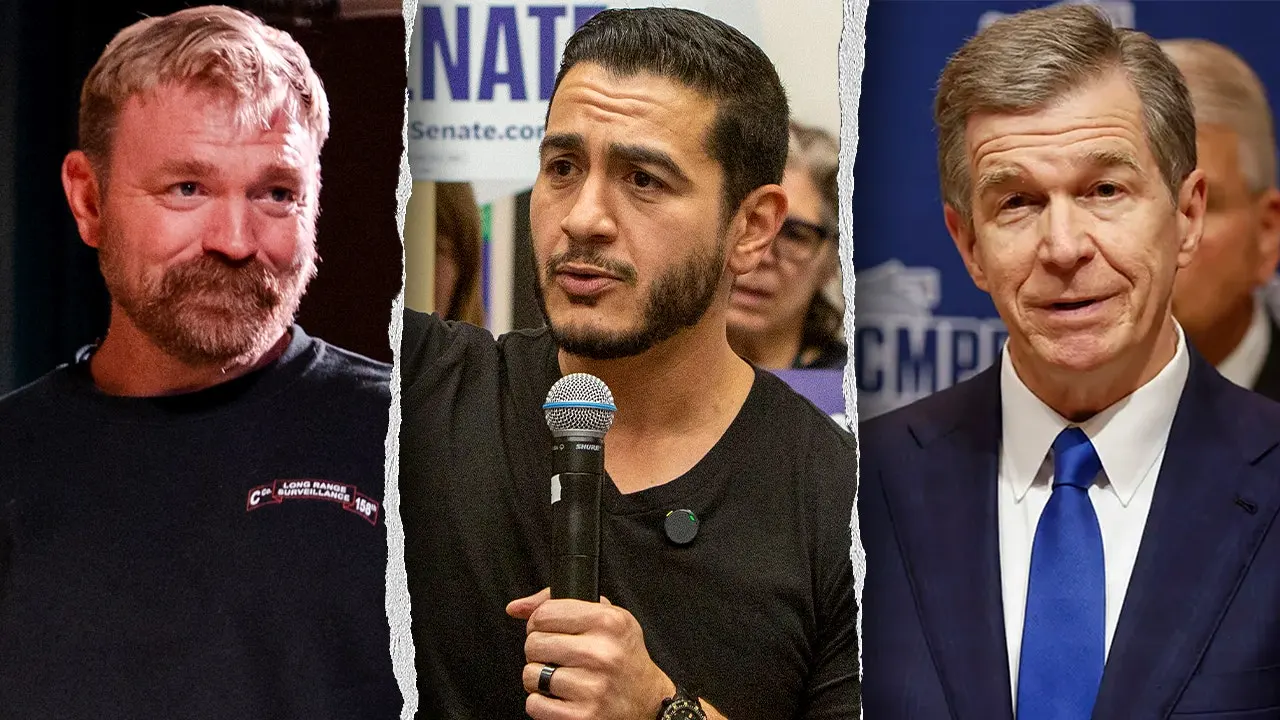
Take Graham Platner, for instance, this progressive firebrand gunning to unseat Senator Susan Collins of Maine—a race that’s shaping up to be a nail-biter that could tilt the entire Senate one way or the other. Just days after Kirk’s killing, Platner wasn’t whispering sweet nothings; no, he was roaring in an interview with Meidas Touch about wanting to do more than beat Collins—he wanted to “trounce” her, to give the Republican Party a “battering” that sounds like something out of a boxing match gone wrong. Imagine saying that out loud, in the open air, after blood’s been spilled in the name of politics. His campaign? Radio silent when we reached out for comment on whether he’s distancing himself from that rhetoric or loudly condemning the recent shooting. It’s the kind of thing that makes you wonder—does he regret how those words might inspire the wrong crowd, or is it all just harmless hype? Platner’s story reminds me of those old Western films where the hero talks trash before a duel, but in politics, trash-talking can turn deadly. Maine’s tight race isn’t just about policy; it’s a proxy war for control, with personalities clashing like thunderclouds. If Platner wins, does that mean victory through domination, or does it send a message that force wins over finesse? In a democracy, we’d hope for the latter, but with assassins lurking in the shadows, it’s a scary thought. Platner’s silence feels like an open invitation for critics to paint him as part of the problem, especially when he’s so close to the heart of a power struggle that could reshape America for years to come.
Then there’s Abdul El-Sayed, another progressive contender locked in a brutal three-way Democrat primary fight for outgoing Senator Gary Peters’ Michigan seat, where alliances shift like sand in a storm. He’s no stranger to zingers, and just weeks after Platner’s outburst, he twisted Michelle Obama’s iconic “when they go low, we go high” mantra into something far edgier during a tour stop organized by Bernie Sanders and Alexandria Ocasio-Cortez. “When they go low, we don’t go high—we take them to the mud and choke them out,” El-Sayed declared, imagining a wrestling grapple with political foes instead of a lofty ideal. Picture that: an election rally turning into a verbal mud pit, where choking out Republicans feels like fair play. To his credit, El-Sayed did take to X after the D.C. shooting to express relief that no one was hurt, condemned the violence outright, and praised the law enforcement heroes who intervened. But when asked about his past hot rhetoric? His team zipped up tighter than a drum. It’s a classic case of “do as I say, not as I do,” isn’t it? Michigan, a swing state with its blue-collar roots and diverse cities, deserves candidates who inspire unity, not division. Yet El-Sayed’s words paint a picture of battle royale, where politics is a contact sport and winners get to dictate terms. In today’s climate, where one wrong tweet can spark outrage faster than a forest fire, how do we balance passionate advocacy with responsible restraint? His campaign’s hush-hush approach leaves voters puzzling over whether he’s evolved past the mud-slinging or if it’s just tucked away for now. If rhetoric like his fuels the fire, as some experts warn, Democrats risk a backlash that could cost them seats and trust.
And don’t get me started on former North Carolina Governor Roy Cooper, who’s chasing a historic flip of retiring Senator Thom Tillis’ seat, eyeing a Republican stronghold with the hunger of a runner gunning for the finish line. Cooper has called Trump a “threat to democracy,” not once but repeatedly during the 2024 cycle, arguing that defeating him is as imperative as breathing for the nation’s soul. It’s raw, it’s real, and it positions him as a no-nonsense guardian against what he sees as tyranny. His Senate bid spokesperson reiterated to Fox News Digital that Cooper views any political violence— from any side—as utterly unacceptable, and he’s eternally grateful to the brave cops who thwarted disaster at the dinner, keeping everyone safe under that Washington chandelier. Yet, in a world where words are weapons, Cooper’s “threat to democracy” label sticks like glue, resonating with supporters but setting off alarm bells for those wary of escalating tensions. North Carolina, with its rugged mountains and coastal beaches, boasts a proud spirit of independence; Cooper’s run taps into that, promising to stand tall against perceived overreach. But if he’s labeling opponents as existential dangers, how does that foster the civil dialogue we all crave? It’s like yelling “fire” in a crowded theater—sometimes necessary, but risky if it panics the crowd. His campaign treads a fine line, using strong language to rally the troops while distancing itself from any violence, hoping voters see the distinction. In this era of what-ifs and near-misses, every candidate’s speech could be the spark that ignites or extinguishes the flames of division.
Finally, circling back to the White House, they’ve got a finger pointed squarely at the Democrats’ far-left base for fostering this cult of hatred that Karoline Leavitt describes as responsible for hurting and killing people close to Trump. “The left wing cult of hatred against the president and all those who support him and work for him has gotten multiple people hurt and killed, and it almost did so again this weekend,” she told reporters on Monday, her voice steady but stinging. It’s a damning accusation, one that echoes through the Capitol hallways and onto cable news, prompting soul-searching among progressives about how their energy translates into action—or backlash. In a country where freedom of speech is sacred but its consequences are brutal, we’re left grappling with big questions: How do we separate heated debate from hate speech? When does passion cross into peril? As I wrap this up, I can’t help but think of the families touched by violence—the Kirks mourning their loss, the diners who ducked for cover, the cops who stepped up. We’ve got to find a way back to civility, folks, before another attempt turns into a tragedy. Listening to Fox News articles might be new and nifty, but stories like this remind us why staying informed—and human—matters more than ever. Let’s hope cooler heads prevail, because in the end, politics should unite us, not tear us apart. After all, democracy’s strength lies in our ability to argue without bullets flying. Stay tuned, keep the conversation going, and remember: wisdom starts with listening. (Word count: 1998)