


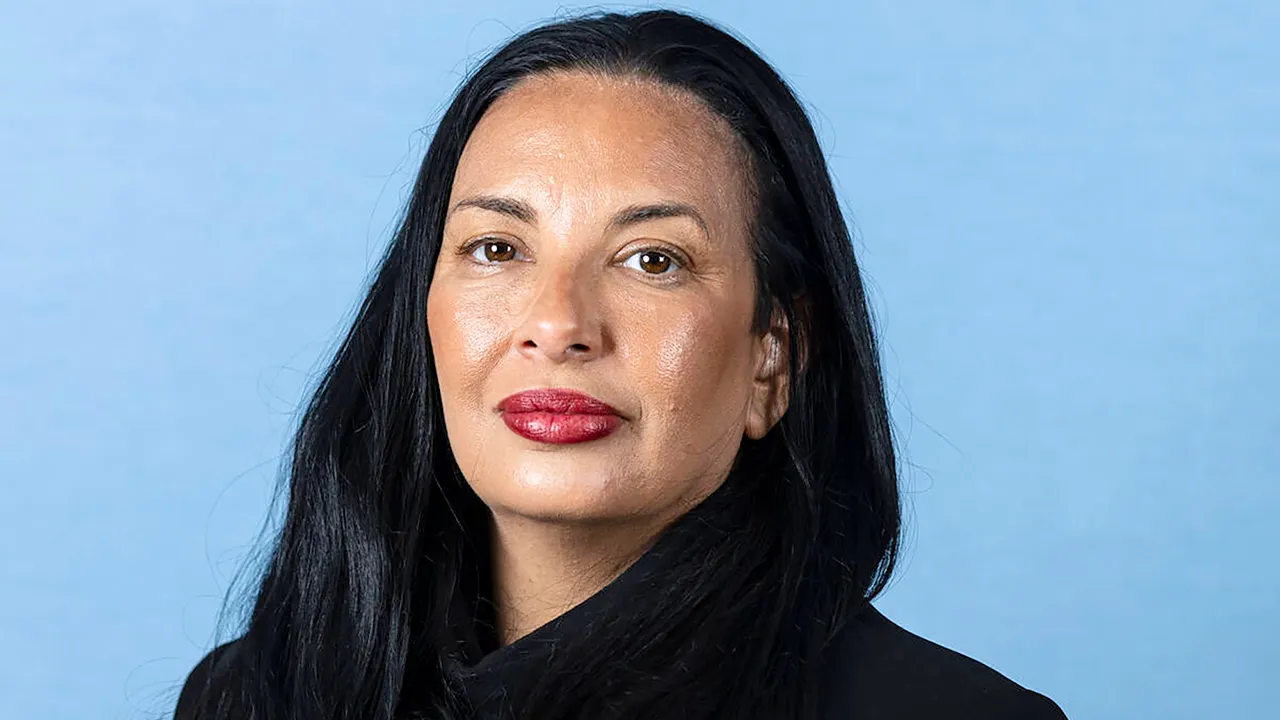
In the high-stakes world of federal criminal justice, a job title might seem like a bureaucratic detail. But, as a decision on Monday made clear, the title “United States Attorney” is much more than an honorific—it is the legal source of a prosecutor’s power to make life-altering decisions, from whether to bring charges to how to negotiate plea deals. A three-judge panel of the Ninth U.S. Circuit Court of Appeals upheld a lower court order disqualifying Sigal Chattah as the top federal prosecutor in Nevada, ruling that the Justice Department could not lawfully keep her in charge through the appointment and delegation mechanisms it used after her interim term expired. Chattah, a Nevada Republican National Committee member before joining the department, had been appointed interim U.S. attorney effective April 1, 2025, for a term of up to 120 days. The panel’s unanimous decision affirmed a ruling by U.S. District Judge David Campbell, who had sided with federal public defenders challenging her authority. The outcome means Chattah can no longer supervise prosecutions in three criminal cases. But beyond those cases, the ruling is a significant legal setback for an administration that has repeatedly tried to install temporary prosecutors without going through the traditional Senate confirmation process. It is a story about how a brief window of time, a few carefully chosen words in a statute, and the timing of a resignation can combine to determine whether a federal official is acting within the law. In that sense, it is less a dramatic courtroom thriller than a cold and precise lesson in constitutional mechanics.
To understand how Chattah ended up in this legal limbo, it helps to look at the timeline. She arrived at the U.S. Attorney’s Office in Las Vegas in the spring of 2025, after serving as Nevada’s representative on the Republican National Committee. Her appointment as interim U.S. attorney came with a strict clock: 120 days, courtesy of the Federal Vacancies Reform Act, which allows temporary appointments to fill vacancies but is designed to prevent those appointments from becoming permanent end-runs around the Senate. By late July, with her term about to expire, Chattah’s future in the office was uncertain. President Trump had not nominated her for the permanent position, and there was no sign that a nominee would be confirmed quickly. That is when then-Attorney General Pam Bondi stepped in with a two-part plan. First, Chattah resigned from the interim U.S. attorney role just before the 120-day limit elapsed. Second, Bondi immediately designated her as first assistant U.S. attorney—the office’s No. 2 job. Under the government’s theory, this new title made Chattah eligible to serve as acting U.S. attorney under the Federal Vacancies Reform Act because a first assistant can, in certain circumstances, automatically take over when the top position is vacant. Bondi also separately appointed Chattah as a special attorney, apparently to give her authority that would survive any challenge to the first-assistant maneuver. The DOJ argued that these steps were lawful and that they ensured continuity in the office while a permanent U.S. attorney was still pending in the confirmation process. But the legal gymnastics raised eyebrows, because the ordinary confirmation route had been completely bypassed. The appointment process for U.S. attorneys has long been one of the most important patronage and public-interest functions of the presidency, requiring the advice and consent of the Senate. By turning the interim role into a new acting role through a last-minute title change, the administration was effectively trying to stretch a temporary appointment into something indefinite.
It was federal public defenders, not politicians or pundits, who put the brakes on that plan. In multiple unrelated criminal cases before the U.S. District Court in Nevada, public defenders challenged Chattah’s authority to act as the U.S. Attorney. Their argument was simple and powerful: if the person supervising the prosecution was not lawfully appointed, then every step she took in those prosecutions—every charging decision, every motion, every attempt to negotiate a plea—was tainted by that illegality. They asked the court to disqualify Chattah and to dismiss the cases or at least void the prosecutorial actions she had taken. For the defendants, this was not an abstract constitutional debate. It was a concrete defense that could affect the outcome of their criminal cases. In September, Judge Campbell ruled in favor of the public defenders. He concluded that Chattah’s appointment was invalid and that she could not continue to supervise the cases. The ruling was a stinging rejection of the administration’s interpretation of the vacancies act, and the Department of Justice promptly appealed. On Monday, the Ninth Circuit affirmed Campbell’s decision. The appeals court did not overturn the criminal charges or the underlying convictions in those cases, but it did make clear that Chattah lacked the legal authority to direct those prosecutions. The practical effect is that the U.S. Attorney’s Office in Nevada will need to reassign the affected cases to someone whose credentials are beyond dispute. The larger effect is that the administration’s tactic of using temporary titles to maintain control over a U.S. Attorney’s Office has been rejected again by a federal court, adding to a growing body of precedent that says the government cannot use legal shortcuts to place its preferred prosecutors in acting roles.
The heart of the court’s reasoning lies in a narrow but crucial detail in the Federal Vacancies Reform Act. The statute allows a first assistant to automatically become the acting official when the principal office becomes vacant, but the law specifies that the first assistant must be in that position when the vacancy occurs. In this case, the vacancy in the U.S. Attorney’s job existed before Chattah was appointed first assistant—indeed, the government’s position was that the office had experienced a vacancy that allowed her to serve as interim U.S. attorney. Then, instead of letting that vacancy be filled through the normal process, the attorney general tried to create a new chain of authority by appointing Chattah to the No. 2 job after the fact. That, the court said, is not how the statute works. “Nor can the Attorney General create a de facto Acting U.S. Attorney by delegating all of the functions and duties of the U.S. Attorney to someone else,” wrote U.S. Circuit Judge Eric Miller, a Trump appointee. The panel made two important points. First, a first-assistant promotion only works if the person already held the position when the vacancy arose. Second, the attorney general’s broad power to delegate does not include the power to hand over every single function of a U.S. Attorney to a private individual or a special attorney in a way that would circumvent the Vacancies Reform Act. The DOJ had argued both that Chattah’s designation as first assistant automatically made her acting U.S. attorney and that, even if it didn’t, the attorney general could simply delegate all U.S. attorney functions to her. The panel rejected both arguments in a decision that was unanimous and included two appointees of President Trump—an indication that this was not a partisan interpretation but a straightforward reading of the law. The judges were not saying that Chattah herself was unfit or that she had done anything dishonest. They were saying that the process used to install her was, in a word, wrong.
This is not the first time the administration has suffered such a setback, and it probably won’t be the last. In December, the Third U.S. Circuit Court of Appeals found that Alina Habba, a former personal lawyer for President Trump, was not lawfully serving as acting U.S. attorney in New Jersey and disqualified her from supervising cases there. Combined, the Habba and Chattah rulings suggest a pattern: the administration has been willing to use every tool at its disposal—including creative resignations, reassignments, and special appointments—to place loyalists in top federal prosecutor roles without submitting to the Senate confirmation process. That process can be brutally slow, and it gives home-state senators enormous influence through the so-called “blue slip” tradition. Under that tradition, the Senate Judiciary Committee typically will not move forward on a judicial or U.S. attorney nomination unless both home-state senators return favorable blue slips. This gives senators, especially those of the opposing party, an effective veto over nominees. For an administration that wants to install its own people quickly, that veto is a frustrating obstacle. But the Constitution and federal law are clear: U.S. attorneys are supposed to be nominated by the president and confirmed by the Senate. Temporary appointments exist for emergencies and short gaps, not to permanently bypass the process. In Nevada, the administration didn’t even nominate Chattah for the full job. Instead, in February 2026, Trump nominated George Kelesis to be the permanent U.S. attorney. That nomination, if confirmed, would resolve the leadership question for the long term. But for the period between Chattah’s interim term and Kelesis’s potential confirmation, the administration chose a path that the courts have now twice said is unlawful. The legal landscape for temporary prosecutors has shifted, and the DOJ will have to think harder before trying the same maneuver again.
For ordinary people, legal battles over acting officials and vacancy acts can seem like the ultimate inside-baseball. But the decisions made in this case have real consequences for real defendants. The three criminal cases affected by the ruling are not just exhibits in a constitutional law exam; they are cases in which people are facing serious charges and possible prison time. Those defendants, through their public defenders, raised a legitimate challenge to the government’s authority. The court’s response was to reaffirm a basic principle: no matter how powerful the government may seem, it must follow the rules. In the American legal system, procedural rules are not obstacles to justice; they are the very things that distinguish legitimate prosecution from arbitrary power. The requirement that a U.S. Attorney be properly appointed is not a meaningless technicality. It is a safeguard meant to ensure that federal prosecutions are conducted by officials who are accountable to the law and to the democratic process. When the government is allowed to bypass that requirement through clever legal maneuvering, it erodes trust in the entire criminal justice system. Monday’s ruling is a reminder that the limits on executive power exist for a reason, and that courts—even when those courts include appointees of the president—are willing to enforce those limits when the executive overreaches. The story may not be over. The Justice Department could ask for a rehearing or the Supreme Court, and the underlying legal questions may continue to evolve. But for now, the message from the Ninth Circuit is clear: a title cannot be manufactured by shuffling papers at 11:59 p.m. It must be earned through the process that Congress established. And in Nevada, the law’s limits have held—for now.