




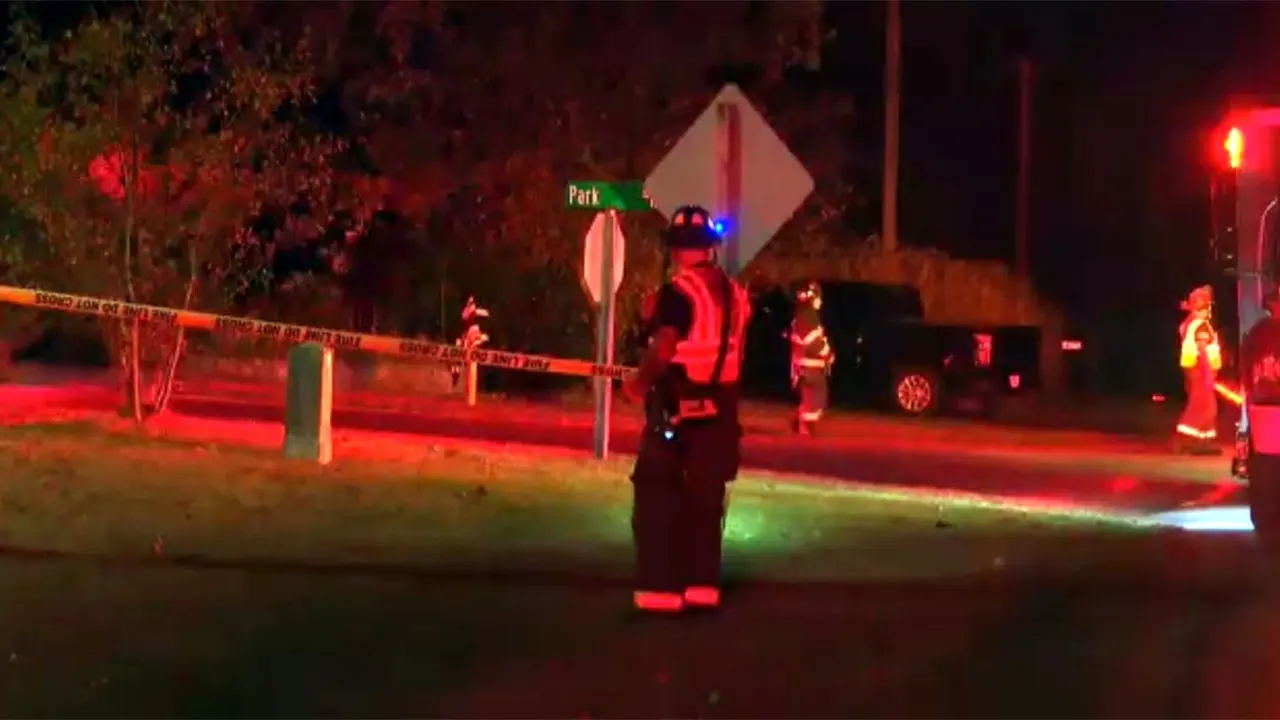
The night air over central Wisconsin had settled into the quiet, ordinary darkness of a late Tuesday evening when a small plane, carrying six souls on what should have been a routine trip home, tore through that stillness and ended in tragedy. The aircraft, a Piper PA-46, had been making its way back from Kenosha to Menomonie, a journey that likely marked the close of a visit, a workday, or a family gathering. Somewhere above the Town of Dellona in Sauk County, something went terribly wrong. Around 9:31 p.m., multiple calls flooded into dispatchers from people who had heard the unmistakable, terrifying sound of an engine in distress or had seen the plane drop from the sky, and emergency crews were immediately sent to the area of Park Lane, near Herwig Road. What they found in a densely wooded, hard-to-reach stretch of land was the wreckage of the Piper, crumpled among the trees—a sight that signaled the worst was likely true. All five adults and one child aboard perished in the crash, their identities still withheld as authorities worked to notify next of kin and piece together the heartbreaking final moments of a flight that was never meant to end this way.
The tragedy is all the more poignant because of how unremarkable this flight appears to have been before it went silent. The Piper PA-46 is a well-regarded, single-engine aircraft, often used by private owners and small operators for precisely this kind of travel—speeding across the Midwest, shaving hours off a long drive, connecting cities like Kenosha and Menomonie in a short hop that most travelers would think nothing of. According to the Sauk County Sheriff’s Office, the plane was on a return flight to Menomonie when it went down, suggesting that the day had started in one place and was supposed to end quietly in another. There is a particular sadness in the phrase “return flight”; it implies people heading home, perhaps tired, perhaps looking forward to their own beds, carrying with them the small conversations and mundane thoughts that make up the texture of everyday life, all of which were suddenly and irrevocably ended when the aircraft met the trees. This was not a commercial venture, not a crowded airliner—just a handful of people, including a child, whose ordinary travel plans turned into an unfathomable loss for the families and communities left behind.
When first responders reached the crash site in the rural, heavily forested area west of Herwig Road, they stepped into a scene of devastating finality. The search that followed was never a search for survivors in the hopeful sense, but rather a methodical, grim effort to confirm what the silence of the radio already suggested. All six occupants were found dead at the scene, officials confirmed. The terrain itself made the recovery and investigation more difficult, with dense woods hampering access and forcing crews to navigate the wreckage carefully. No structures on the ground were damaged, and no injuries were reported among anyone on the earth below, a small mercy that did little to soften the blow of the six lives lost. As Wednesday dawned, the crash site remained secured, a crude memorial of bent metal and broken trees marking the spot where so many hearts stopped at once. The work of identifying the victims, of mapping the debris field, and of trying to understand the physics and the choices that led to this moment had only just begun.
The investigation now hinges on the final communications that took place between the Piper and air traffic control. Sauk County Sheriff Chip Meister told FOX6 Milwaukee that the plane had been in contact with a tower before the crash, and that investigators were working to recover and analyze those exchanges to determine what, if anything, was said in the moments leading up to the disaster. Was there a warning of trouble, a distress call, an attempted declaration of an emergency? Or did the aircraft go down without warning, the pilots’ voices calm and routine one minute and gone the next? These are the questions that haunt accident investigators, and the answers may lie in audio recordings, radar data, and the physical wreckage. Weather is also being examined as a possible factor; Wisconsin in the autumn can present shifting conditions, with gusting winds, low ceilings, or sudden patches of fog that can catch even an experienced pilot off guard. But at this stage, no cause has been determined, and officials are careful not to speculate. The only certainty is that at some point, the peaceful return flight turned into a nightmare, and the final words transmitted from the cockpit have become the subject of intense scrutiny.
Beyond the question of why the plane crashed, there is the more basic question of whose plane it was and who was on board. Sheriff Meister said it remained unclear who owned the aircraft, though it was confirmed to be a privately operated, non-commercial flight. The identities of the six victims—five adults and a child—had not been released as of Wednesday, leaving families in suspense and communities bracing for the personal grief that will emerge once names are made public. The Federal Aviation Administration and the National Transportation Safety Board have both been notified and will lead the investigation, bringing the full weight of federal expertise to bear on determining the cause. These agencies will conduct a thorough examination of the plane’s maintenance records, the pilot’s credentials and history, the engine’s condition, and every scrap of data that can be extracted from the wreckage. It is slow, painstaking work that can take months, but it is the only path to answers for the families and for the public, who deserve to know whether this tragedy was the result of mechanical failure, human error, or an act of nature.
For the small community of Dellona and the wider Sauk County area, the crash is a sudden, jarring intrusion of sorrow into a rural landscape that typically sees little more than the everyday rhythms of farming, family, and small-town life. It is also a reminder, in the starkest possible terms, of the fragility of human existence—how a routine Tuesday evening can be transformed in an instant into a moment of irreversible loss. The six people aboard were not just statistics in a news report; they were part of a family, a circle of friends, a set of dreams and plans and unfinished conversations. Somewhere, someone is waiting for a phone call that will never come, for a car to pull into the driveway, for a child to run through the door. In the days ahead, the names will be released, the funerals will be held, and the investigation will continue its patient, methodical course. But the grief that now hangs over this quiet corner of Wisconsin will not be so easily resolved, carried quietly by those who loved the victims and by a community that, for a brief, terrible moment, found itself at the center of a national tragedy.