




For most Americans, election night is a familiar ritual of cable news chyrons, map colors flipping from red to blue, and candidates delivering victory or concession speeches before the clock strikes midnight. Yet, for voters in California, the sunset of Election Day does not signal the end of the journey; it is merely the opening sequence of a winding, weeks-long civic drama. This slow-burning reality was on full display following the June 2 primaries, where several high-profile contests—including the high-stakes race to succeed the term-limited Governor Gavin Newsom and the highly competitive battle for the mayor’s office in Los Angeles—remained suspended in statistical limbo long after the polling stations had packed up their voting booths. Days after the final in-person ballots were cast, the leaderboards remained frozen in place: in the gubernatorial primary, Republican Steve Hilton held a narrow lead of 27.2 percent, closely chased by Democrat Xavier Becerra at 26 percent and billionaire activist Tom Steyer at 20.2 percent, while the Los Angeles mayoral race saw frontrunner Karen Bass holding 35 percent of the vote, with Spencer Pratt and city councilwoman Nithya Raman trailing at 29 percent and 23 percent respectively. For the candidates, their campaign staffs, and an increasingly anxious public, this prolonged silence from the county registrars can feel deeply unsettling, turning what should be a moment of decisive democratic resolution into an agonizing waiting game that tests the limits of collective patience.
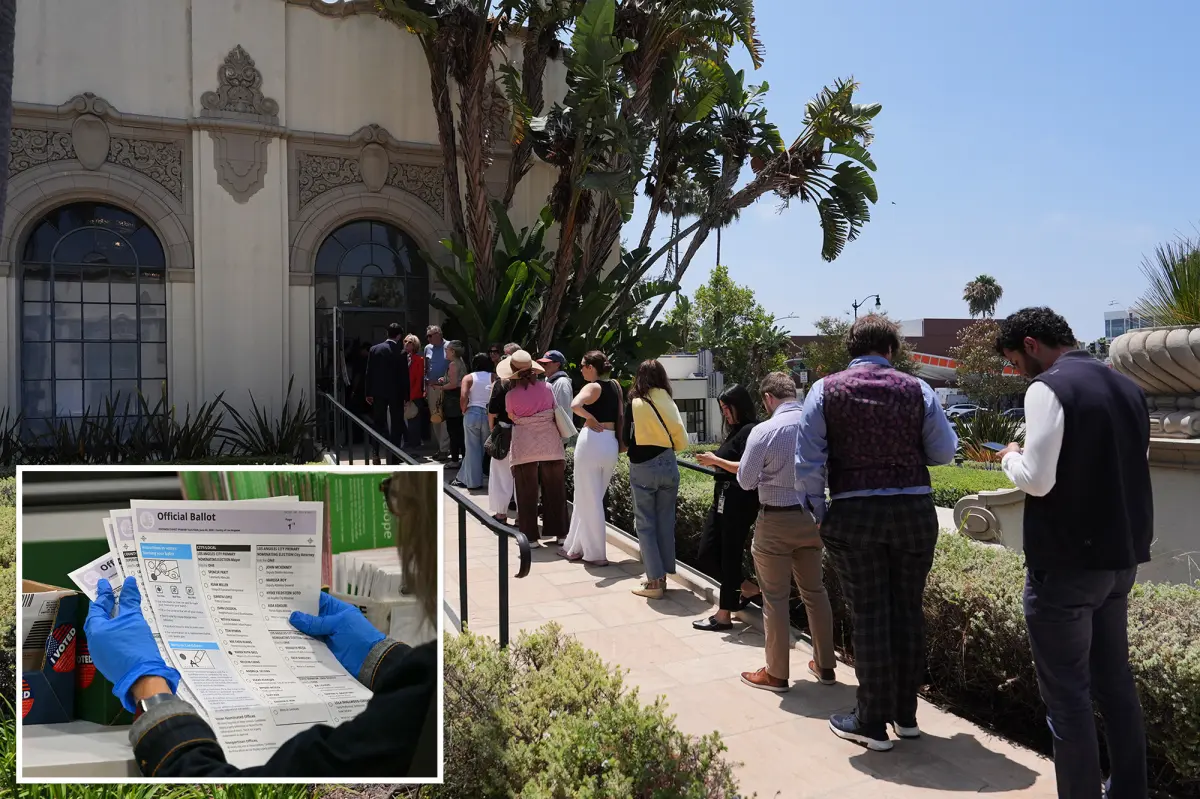
This deliberate pace is not the result of administrative failure, mechanical breakdown, or bureaucratic incompetence; rather, it is the direct consequence of a conscious, voter-centric philosophy that California has deliberately woven into its legislative framework. In a nation where many states have spent recent years narrowing the avenues through which citizens can participate in elections, California has taken the opposite path, designing a system that prioritizes maximum voter franchise and accessibility over the media’s demand for instant results. As political analyst Paul Mitchell points out, the primary objective of this design is to ensure that every eligible citizen can cast a ballot in whatever manner best fits the messy reality of their daily lives. Whether a voter prefers to receive a ballot automatically in the mail, hand-deliver it to a secure neighborhood drop box on their way to work, drop it in a mailbox, or visit an in-person voting center to use an electronic machine, the system is engineered to say “yes” to participation. Crucially, the state also honors ballots that are postmarked on or before Election Day, even if they take days to wind their way through the postal service to reach election offices. Furthermore, the state provides a generous fortnight-long grace period for voters to “cure” their ballots—allowing them to correct a mismatched signature or verify their identity—ensuring that minor clerical errors do not result in disenfranchisement, and proving that California value-judges accuracy and inclusivity far above sheer reporting speed.
Behind the scenes of this democratic process lies a massive, mostly unseen logistical apparatus staffed by regular citizens who work tirelessly to process millions of physical pieces of paper. The journey of a single mail-in ballot is a fascinating testament to this complexity, often involving long transit paths dictated by regional postal logistics rather than geographic proximity. For instance, a ballot mailed by a resident in the coastal community of Capitola, just a few miles from the local county registrar, is routed through a massive regional mail-processing facility in Santa Clara County before it can be sent back to local election officials for counting. Similarly, in the vast, rural expanses of the Eastern Sierra, a ballot dropped in a mailbox in the tiny town of Independence might travel hundreds of miles through regional distribution networks before finally returning home to be counted. Once these ballots arrive at county registrar offices, the meticulous human work begins: permanent and seasonal staff members—numbering between 600 and 700 individuals in major hubs like Los Angeles—must physically inspect signatures, cross-reference registration rolls, resolve provisional voter issues, and even forward misdirected ballots that were mistakenly sent to neighboring counties. This labor-intensive work cannot be automated by algorithms or rushed by machinery; it requires careful, eyes-on analysis by dedicated workers who are operating under strict legal guidelines to ensure that every voice is accurately recorded, a massive administrative undertaking that simply cannot be scaled up overnight without enormous, unsustainable public expenditures.
However, this deeply empathetic commitment to voter inclusivity is a double-edged sword, creating a modern paradox where the very integrity of the democratic process can be undermined by the time it takes to achieve absolute accuracy. In an era structured around instant digital feedback, where people expect immediate confirmation for everything from grocery deliveries to bank transactions, a multi-week silence from election officials creates a psychological vacuum that is easily filled by doubt, anxiety, and misinformation. As veteran political consultant Mike Madrid observes, this prolonged counting window presents a real challenge to public confidence; while the slow speed is a sign of a healthy, highly secure system doing its job, the public often misinterprets the delay as a sign of inefficiency or systemic weakness. This vulnerability is frequently exploited by partisan figures seeking to undermine faith in the democratic process, as demonstrated by former President Donald Trump’s unsubstantiated social media statements accusing opponents of attempting to manipulate the primary outcomes in both the gubernatorial and Los Angeles mayoral races through late-arriving mail-in ballots. This dynamic places election officials in an incredibly difficult position, where they must constantly defend their meticulous, legally mandated procedures against bad-faith attacks, proving that maintaining public trust in modern elections requires not just secure systems, but also a continuous effort to educate the public on why accuracy requires patience.
To appreciate the sheer scale of California’s undertaking, one must contrast its voting landscape with other heavily populated states that habitually project their winners within minutes of the polls closing. States like Florida and Texas have chosen to optimize their systems for rapid election-night returns, enforcing strict deadlines for receipt of mail-in ballots and processing the vast majority of their early votes well before Election Day arrives. While this model delivers a satisfyingly swift conclusion for television audiences, it does so by imposing rigid restrictions that leave far less room for voter error or late-minute participation. Even when compared to progressive, mail-voting peers like Oregon and Washington, California exists in an entirely different operational reality due to its sheer demographic weight; Los Angeles County alone boasts a larger population and handles a higher volume of registered voters than many entire states. As representatives from the Los Angeles County Registrar’s office frequently remind critics, the fundamental difference is not a lack of efficiency, but rather the unprecedented scale of the electorate, meaning that processing millions of diverse, multi-lingual ballots over a massive geographic footprint is a uniquely Californian challenge that defies easy comparison with smaller or less inclusive systems.
As the counting process enters its final, decisive phases with over four million ballots—roughly 44 percent of the total expected vote—still waiting to be processed, candidates and campaigns are bracing for the famous “blue shift” that historically redefines California’s late election returns. Because younger voters, working-class families, and residents of dense urban centers tend to return their mail-in ballots closer to the actual deadline, these late-arriving votes traditionally skew heavily toward progressives and Democrats. This shifting mathematical reality is particularly critical in the Los Angeles mayoral race, where councilwoman Nithya Raman’s campaign stands to gain significant ground from the outstanding pool of urban ballots, potentially reshaping her competitive pursuit of Spencer Pratt for the final spot in the upcoming November runoff. Meanwhile, in the gubernatorial race, the margins separating Steve Hilton, Xavier Becerra, and Tom Steyer will continue to fluctuate with every new data release, keeping political observers on the edge of their seats for several weeks. Ultimately, this extended process serves as a powerful reminder of the true cost of a robust democracy: by choosing to prioritize the voice of the commuter who mailed their ballot at sunset, the senior citizen who needed extra time to verify their signature, and the rural resident living miles from a polling place, California has decided that a complete and inclusive count is well worth the wait.