




Paragraph 1: The Quiet Federal Dragnet
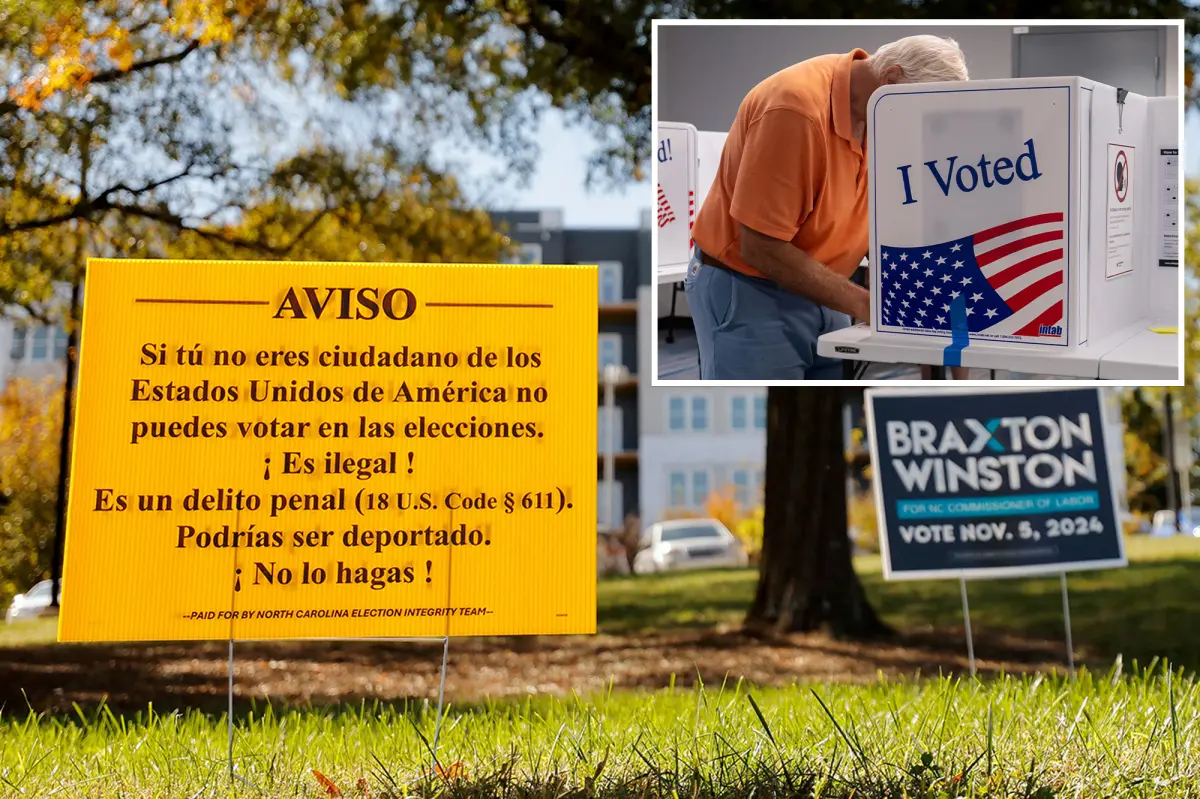
Behind the marble facade of the Department of Homeland Security and the hurried phone calls of White House aides, a fierce and methodical bureaucratic war is raging over the very heart of American democracy—the voter roll. The Trump administration, acting on decades of suspicion and the president’s unshakeable belief that his 2020 defeat was tainted, has launched the “Unlawful Voter Initiative,” a sweeping, database-driven dragnet designed to purge tens of thousands of non-citizens from the electoral registers of at least 47 states. The effort is not moving fast enough for the officials in charge. In a sharply worded email sent on September 1st and obtained by Reuters, a senior DHS official threatened to escalate the frustration directly to White House Chief of Staff Susie Wiles, signaling a deep internal impatience that the machinery of state is grinding far too slowly for the political clock ticking toward the November 3rd midterms. This is not a simple administrative cleanup; it is a public accusation against the integrity of the electoral system, and a high-stakes gamble that the courts, the public, and the nation’s tolerance for a massive data-mining operation will hold. The stakes could not be higher, as federal prosecutors are already charging non-citizens with felonies for casting ballots in critical swing states like Pennsylvania, turning a dry statistics debate into a series of terrifying criminal trials for immigrants who often claim they had no idea their participation was illegal.
Paragraph 2: The Broken Machine at the DMV
The origin of this political firestorm lies not in a shadowy conspiracy, but in the banal, flawed mechanics of the American welfare and driver’s licensing system. For decades, the federal “Motor Voter” law has required state agencies to automatically register anyone applying for a driver’s license or government benefits—a system designed to increase civic participation, but one that was never rigorously wired to verify citizenship. According to reports, software glitches and human errors have resulted in as many as 30,000 non-citizens being added to voter rolls since the year 2000, a staggering number that represents a profound institutional failure. One can almost picture the scene: a legal permanent resident from Mexico, a green-card holder from Vietnam, or a student from India visits the DMV in a hectic, crowded office, signs a digital form that erroneously assumes they are a citizen, and unknowingly becomes a registered voter. Months later, they receive a sample ballot, feel the civic pull to participate, and cast a vote—completely unaware that they have just committed a federal felony. The human tragedy here is deep. These are not malicious actors plotting to steal elections; they are often people who have spent years paying taxes and building lives in the United States, only to be ensnared by a broken digital interface. Yet, from the administration’s perspective, the volume of these errors constitutes a national security threat, a porous border into the ballot box itself, and the White House is determined to expose every single flaw, regardless of the human cost to those caught in the gears.
Paragraph 3: Blue States, Red Faces, and Painful Admissions
The political weight of this crackdown has become impossible for Democratic governors and state officials to ignore, forcing them into awkward, highly public admissions that their progressive policies have allowed a pipeline of unqualified voters into their systems. In late July, New Jersey’s Democratic Governor, Mikie Sherrill, was compelled to confess that a review had uncovered 6,600 non-citizens sitting on the Garden State’s voter rolls, and that roughly 400 of them had illegally cast ballots between June 2023 and June 2024. It was a moment of unmistakable humiliation for a party that has long dismissed such claims as right-wing propaganda. Beyond New Jersey, the preliminary DHS data paints an alarming picture across the map: California may hold as many as 35,152 non-citizens on its rolls, New York could harbor over 10,000, and the combined totals for California, New Jersey, Nevada, and Pennsylvania reached 190,832. When compounded, the DHS review assessed that a staggering 278,000 non-citizens might currently be registered nationwide. These figures, leaked to outlets like Fox News and Reuters, are transforming the narrative. No longer can state officials dismiss the phenomenon as a myth; instead, they are forced to grapple with the administrative reality that their efforts to expand access to the franchise—often celebrated as a moral victory for the underrepresented—have inadvertently created a bureaucratic nightmare that is undermining public confidence in the very election results they champion.
Paragraph 4: The Legislative and Rhetorical Civil War
In Washington, the battle has morphed into a scorched-earth legislative showdown, centering on the SAVE America Act, a piece of commonsense legislation that would mandate strict proof of citizenship for all voter registrations. Republicans, buoyed by the mounting evidence, are holding this bill up as the ultimate firewall against electoral corruption, while Senate Democrats have successfully blocked it, framing it as a cynical voter suppression tactic designed to disenfranchise minority and low-income communities who may lack easy access to passports or birth certificates. White House spokeswoman Lauren Bis has leaned into the political victory, stating that after decades of media denial, the recent arrests and data dumps prove the threat is real, and that “Democrats must stop refusing to pass the SAVE America Act—commonsense legislation that ensures Americans, and Americans only, decide our elections.” This is set against the backdrop of President Trump’s broader rhetoric, where he accused China of cyberattacking voter infrastructure and stealing data on 220 million Americans. The emotional temperature on the right is one of fury and vindication; on the left, it is one of existential dread that these findings will be used to justify draconian purges, mass deportations, and a return to an exclusionary definition of American identity. The courts have already blocked one executive action tightening mail-in ballot rules, leaving the administration frustrated and searching for any lever of power—legal, regulatory, or through direct prosecutorial pressure—to bend the system to their will before the next cycle of voting begins.
Paragraph 5: The Gears of Verification and the Hammer of Justice
To execute this unprecedented purge, the Department of Homeland Security has constructed a Frankenstein’s monster of data aggregation, pulling records from the State Department, the Social Security Administration, and the US Citizenship and Immigration Services. When those federal databases proved insufficient—lacking, say, a critical birthdate or naturalization number—DHS officials have resorted to purchasing information from private data brokers, a practice that raises significant privacy alarms among civil liberties groups. The human element of this verification is terrifyingly precise: thousands of auditors are cross-referencing John Smith in Texas with a residence card holder in California, looking for a single mismatch that could cost a person their vote or their freedom. Meanwhile, the legal hammer has fallen hard. Reuters has confirmed that federal prosecutors have charged at least 149 illegal aliens since 1996, with twenty of those cases filed exclusively during Trump’s second term. Each prosecution is a story of its own: a grandmother from the Philippines who voted in several local elections, a truck driver from Guatemala pulled over for a traffic violation who discovers a warrant for his arrest for casting a midterm ballot. The prosecutorial zeal sends a chilling message through immigrant communities, who are now terrified of interacting with any government agency, even to renew a license, for fear of being flagged for a clerical error made by a DMV clerk years earlier. Yet, for the DHS officials coordinating the effort, these prosecutions are essential to deterring future fraud, asserting that the integrity of the ballot box is non-negotiable, even if it requires turning a local bureaucrat’s mistake into a federal courtroom spectacle.
Paragraph 6: A Nation Straining Against the Seams
As the November 3rd midterms approach, the United States finds itself trapped in a paradox of its own making. On one side, millions of Americans feel an acute sense of disenfranchisement, believing that their legitimate votes have been diluted by a flood of ineligible participants, a sentiment that Donald Trump has harnessed to his full advantage. Their trust in the institution has been shattered, and they view the DHS crackdown not as an overreach, but as a long-overdue restoration of order. On the other side, millions of immigrants and civil rights advocates see a terrifying specter of a police state, where government databases are weaponized against the vulnerable, and where the mere act of registering to drive could lead to deportation. The DHS has never publicized the full dataset of its review, leaving the 278,000 figure hanging like a sword of Damocles over the national psyche, allowing both sides to project their worst fears onto the opaque numbers. The White House is pushing for faster progress, prosecutors are unsealing indictments, and state election officials are scrambling to update their software. But the deeper question—the human question—is whether a nation founded on immigration can survive this level of demographic scrutiny without tearing itself apart. In every county clerk’s office, in every ICE detention center, and in every voting booth, the fear is palpable. The machinery of democracy is grinding forward, but the lubricant has been replaced with distrust, and the nation holds its breath, waiting to see if this aggressive purge purifies the system or poisons it entirely.