





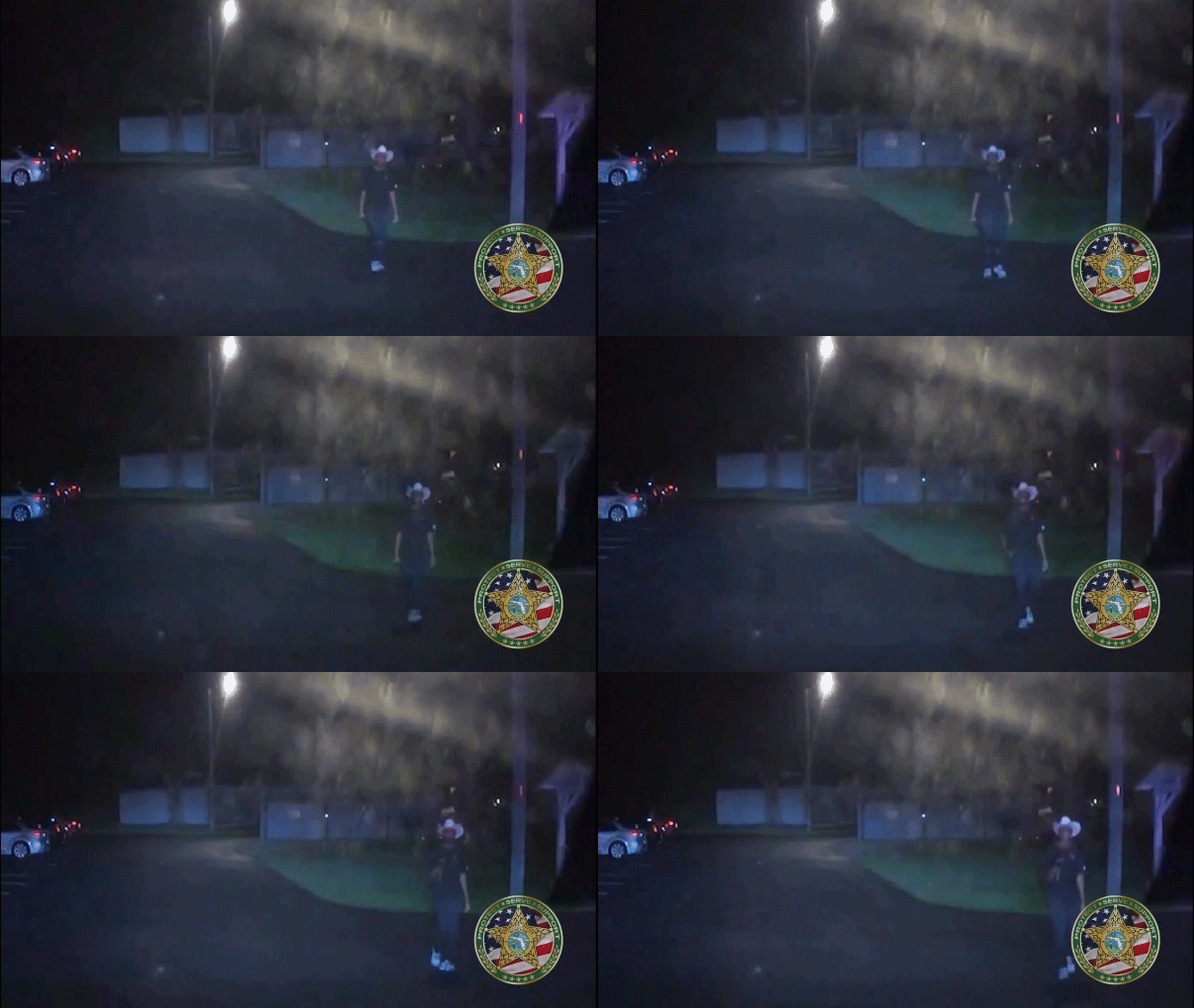
The quiet residential streets of Gainesville, Florida, were still dark in the early hours of Tuesday morning when a frantic call shattered the silence. A man had forced his way into a home, not with a gun or a knife, but with a sword. The people inside were pushed outside against their will, their own home transformed in an instant from a sanctuary into a place of terror. By the time deputies from the Alachua County Sheriff’s Office arrived, the situation was already volatile, and no one knew what would happen next. Body camera footage, later released to the public, captures the raw and unedited reality of that encounter. It is not a scene from an action movie, but a real-life moment where fear, adrenaline, and split-second decisions collide. The video begins with the suspect, identified as 26-year-old Josiah Smith, still holding the weapon, and an officer trying to find a way to end the standoff without bloodshed. The victims, who had been forced outside, were likely watching from a distance, their hearts pounding, wondering if this stranger would hurt them or the officers. The deputies, too, had no idea what they were walking into. They only knew that someone with a sword was inside a home, and that people had been forced out. The body camera was already recording, and every word, every movement, every breath would be preserved for the public to see.
The bodycam footage shows the deputies encountering Smith, and the first deputy’s voice is surprisingly calm. “Hey, brother, do me a favor, drop the sword. Drop the sword on the ground, my man. Let me talk to you, OK? It’s the sheriff’s office,” he says. The tone is almost conversational, as if the officer is trying to reach a friend rather than subdue a suspect. This is de-escalation in action, an attempt to build rapport, to humanize both the officer and the suspect, to find a path to a peaceful resolution. But Smith does not drop the sword. Instead, he keeps approaching. The deputy’s voice changes, becoming more urgent, more strained. “Hey, we got him at gunpoint, he’s not compliant, he keeps approaching,” he tells other officers. That sentence is both a warning and a plea. It signals that the situation is spiraling toward a dangerous conclusion. The deputy then yells directly at Smith: “Josiah, throw the sword away, OK? Hey, stop, stop! Don’t move, stop. Stop, stop!” The repetition is desperate, a last-ditch effort to avoid violence. Then, suddenly, Smith falls backward, his body convulsing as the taser’s probes make contact. The sound of the taser and the thud of his body hitting the ground are jarring. The video freezes the moment, but the emotional impact lingers. For the deputies, this is not a victory; it is the end of a crisis that could have ended much worse. For the viewer, it is a glimpse into the impossible choices officers face every day.
According to the Alachua County Sheriff’s Office, the encounter did not begin with the taser. First, deputies used a less lethal launcher, firing a foam round at Smith in an attempt to force him to drop the sword. The foam round struck him, but it did not stop his advance. Only then did they deploy the taser, and Smith was finally detained. This sequence matters because it shows a progression of force, a series of choices designed to stop a threat without taking a life. The deputies could have fired their guns; a sword-wielding suspect approaching officers at gunpoint would legally justify lethal force. But they chose a different path. They gave commands, they tried to talk, they used a foam round, and finally a taser. The bodycam video is a testament to the uncertainty of police work. Every decision is made in a fraction of a second, with adrenaline pumping and lives at stake. A foam round is designed to stun or distract, not to penetrate, but it is not always effective. The taser, which delivers an electric shock, finally brought Smith down. After he was subdued, deputies moved in quickly to handcuff him. The immediate danger was over, but the consequences were just beginning. No one was seriously injured, and that is something to be grateful for. The deputies’ training and restraint likely saved lives, including Smith’s own. If they had resorted to lethal force, the story would be very different. Instead, Smith is alive and will face justice.
As the sun rose over Gainesville, investigators began to piece together what had happened. The most startling discovery was that Smith and the alleged victim did not know each other. There was no known connection, no history, no explanation for why a 26-year-old man would force his way into someone else’s home with a sword. That lack of motive makes the crime even more terrifying. It means that the victims were chosen at random, that their safety was shattered by a person they had never met. The sheriff’s office announced that Smith now faces a series of serious charges: armed burglary of an occupied dwelling, aggravated assault with a deadly weapon, armed kidnapping, and resisting without violence. Each charge carries its own weight, but together they paint a picture of a terrifying ordeal. The victims were not just robbed; they were held hostage by fear, pushed out of their own home, and forced to confront a weapon that most people only see in movies. The charge of armed kidnapping is particularly serious, as it suggests the victims were deprived of their freedom, forced to do something against their will. The investigation likely involved interviews with the victims, witnesses, and Smith himself. Detectives would have examined the scene, collected evidence, and determined the sequence of events. The fact that Smith and the victim were strangers raises questions about motive, mental state, and the nature of the attack. Was it a random act of violence? A cry for help? The article does not say, and the investigation may not yet have answers. But the charges reflect the severity of the alleged actions, and the legal process will now determine what happens next.
The release of this body camera video is more than just a piece of evidence; it is an act of transparency. In an era of intense scrutiny on law enforcement, agencies often release footage to show the public exactly what officers face. This video does that. It shows deputies who are calm at first, who try to de-escalate, who use words before weapons. It also shows the harsh reality that not every situation can be resolved with conversation. When a person is holding a sword and advancing, words may not be enough. The deputies used less-lethal tools, but even those are not guaranteed to work. The foam round failed; the taser succeeded. This is the messy, unpredictable nature of policing. It is easy to judge from a distance, but the bodycam footage puts the viewer in the moment, forcing them to ask: What would I have done? The officers deserve credit for their restraint, but they also carry the weight of the encounter. They will replay the video in their minds, wondering if they could have done something differently. That is the burden of those who wear the badge. Body-worn cameras have become a standard tool for police departments across the country, providing an unbiased record of encounters between officers and citizens. They can protect officers from false accusations and protect citizens from misconduct. But they also capture the raw, unfiltered reality of dangerous situations. This video is a prime example. It shows that police work is not a series of clear-cut decisions but a series of judgment calls made under extreme pressure. The public can see that the deputies tried to resolve the situation peacefully, and they can also see the moment when that became impossible. This transparency is essential for building trust between law enforcement and the communities they serve.
At its heart, this story is about human beings. The victims, whose home was invaded, will likely never feel completely safe again. The deputies, who went to work expecting a routine shift, found themselves in a life-or-death situation. And Smith, a young man with his whole life ahead of him, now sits in a jail cell facing serious consequences. There is no simple explanation for what happened, no easy moral to draw. But the bodycam video reminds us that behind every police report, every legal charge, every news article, there are real people with real fears and real pain. It also reminds us of the importance of mental health, of the need for communities to support those who are struggling, and of the courage required to do the right thing in the face of chaos. The Gainesville community, and especially the neighborhood where this happened, will feel the effects of this incident for a long time. Neighbors will lock their doors a little more carefully. Parents will hold their children a little closer. The sense of safety that was shattered cannot be restored overnight. But there is also a sense of relief that the suspect is in custody and that no one was killed. The deputies who responded may be offered counseling to help them process the trauma. The victims may need support as well. And Smith, whatever his circumstances, is a human being who deserves a fair trial and, if necessary, help rather than just punishment. This is not to excuse his alleged actions, but to recognize that behind every crime is a complex story. As the legal process unfolds, the hope is that justice will be served, that the victims will find peace, and that everyone involved can begin to heal. The sword has been taken away, the suspect is in custody, and the immediate danger is gone. But the echoes of that early morning in Gainesville will linger, a reminder of how fragile safety can be and how quickly life can change.