


Wes Streeting’s Resignation Sparks Labour Leadership Turmoil
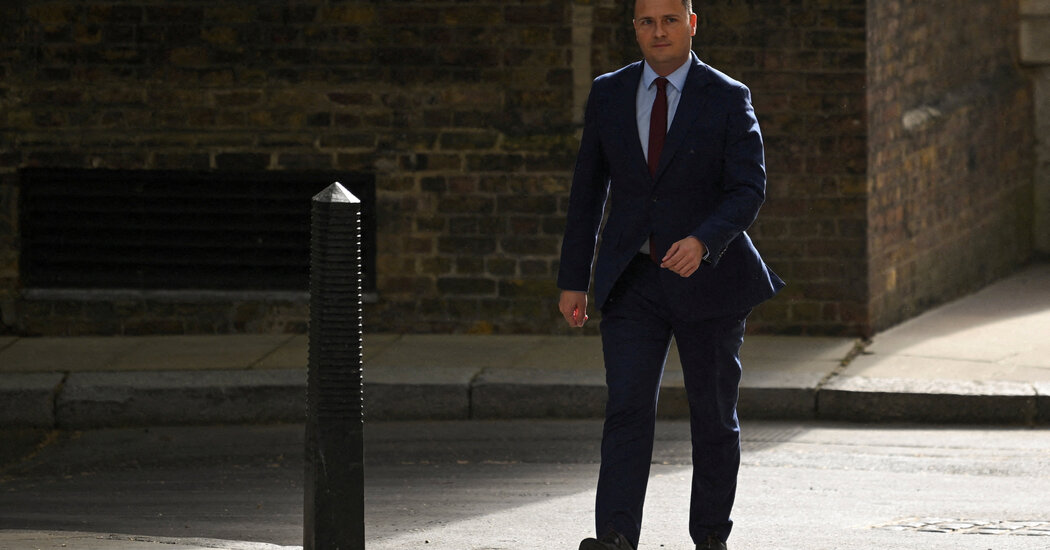
In a move that rattled the British political landscape,Health Secretary Wes Streeting announced his resignation on Thursday, signaling an end to his tenure in the government and opening the door to a possible challenge against Prime Minister Keir Starmer for the Labour Party leadership. This dramatic exit, shared publicly on X via his resignation letter, has thrust the Labour Party into uncertainty, echoing the chaotic internal strife that plagued the Conservatives before their electoral defeat. Streeting’s decision wasn’t taken lightly; it culminated days of speculation that had been building among MPs and party insiders. As health secretary, he had been a key figure in Starmer’s administration, responsible for navigating the complexities of the UK’s beleaguered healthcare system amid ongoing budget constraints and staffing shortages. By stepping down, Streeting has not only vacated a pivotal cabinet role but also positioned himself as a potential lightning rod for dissent within his party. Observers note that this isn’t just a personal gambit—it’s a reflection of broader frustrations simmering beneath Labour’s surface, where early promises of renewal have morphed into perceptions of stagnation. With Starmer clinging to power despite mounting criticism, Streeting’s departure could catalyze a leadership contest that tests the party’s resilience. Analysts point to similar upheavals in Labour’s history, like the 1980s battles between Tony Blair and his rivals, reminding us that internal divisions often precede broader democratic shifts. As the dust settles on this resignation, all eyes are on whether Streeting can muster the necessary endorsements to force a full-blown confrontation. For now, the Labour Party stands at a crossroads, balancing ideological debates with the stark realities of governing a nation grappling with economic woes and public disillusionment.
A Letter Laden with Leadership Queries Unanswered
In his meticulously worded resignation letter, Wes Streeting laid bare his disillusionment with Starmer’s stewardship, framing his exit as a principled stand rather than a mere power play. “Having lost confidence in your leadership,” Streeting wrote, “I have concluded that it would be dishonorable and unprincipled to remain in the post.” This candid rebuke, posted for all to see on social media, didn’t mince words—it painted Starmer as unfit to steer the Labour Party through the impending general election. Yet, beneath the surface accusation, Streeting hinted at optimism for a more inclusive process, urging the prime minister to facilitate a “battle of ideas” rather than personal vendettas. He spoke of the need for a “broad” debate involving MPs and unions, one that’s free from “petty factionalism.” Such language suggests Streeting envisions himself as a unifying force, possibly rallying moderates and left-leaning factions alike. However, the letter swung from constructive advice to pointed criticism, declaring that Starmer “will not lead the Labour Party into the next general election.” This prophecy, based presumably on internal polling and whispers from colleagues, underscores the fragility of Starmer’s grip. Under Labour’s arcane rules, a formal challenge requires endorsement from 20% of parliamentary members—amounting to 81 MPs—for a leadership election to be triggered. Streeting’s missive danced around whether he’s amassed that support, leaving journalists scrambling for answers from behind-the-scenes sources. Political historians draw parallels to Michael Foot’s era in 1983, where a lack of party consensus weakened Labour’s electoral prospects, potentially foreshadowing a repeat scenario. As endorsements trickle in—or fail to—Streeting’s gambit could fade into obscurity or ignite a revolution. The ambiguity in his letter has fueled speculation that other figures might leap into the fray, turning a solitary resignation into a rallying cry for change. In the hallowed halls of Westminster, where alliances shift like tides, this document is more than paper—it’s a potential manifesto for Labour’s next chapter.
Potential Challengers Loom as Rayner’s Tax Saga Concludes
As Wes Streeting steps into the spotlight as a putative challenger, the shadows of Labour’s internal machinations reveal other names poised to complicate Sir Keir’s premiership. Angela Rayner, the former deputy prime minister and a darling of the party’s left wing, watches from the wings after emerging unscathed from a tax row that had threatened to derail her ambitions. Earlier this week, Rayner was cleared by tax authorities of any deliberate wrongdoing in a case involving the purchase of a seaside apartment at an incorrect rate—a blunder she attributed to inadvertence. Her exoneration, confirmed in interviews, lifts a cloud that had hung over her since resigning from the cabinet last September. Rayner’s statement encapsulated the zeitgeist of discontent: “Labour exists to make working people better off. That is not happening fast enough, and it needs to change—now.” This rallying cry, delivered amid Labour’s electoral setbacks, echoed the frustrations of a party base weary of incremental progress. While Rayner hasn’t explicitly declared her intent to challenge Starmer, her quasi-endorsement of another potential contender, Greater Manchester Mayor Andy Burnham, earlier cycle hints at strategic maneuvering. Burnham, known for his pragmatic approach to regional governance, represents a centrist alternative that could appeal to blue-collar voters disillusioned by Starmer’s policies. Political pundits speculate that if Streeting officially throws his hat into the ring, others like Burnham or even radical figures might follow, fragmenting the party’s vote and prolonging the uncertainty. Rayner’s tax saga, controversial yet resolved, reminds voters of the human elements behind policy debates—mistakes happen, but so do reckonings. In a party that prides itself on working-class roots, her story adds a layer of relatability to the unfolding drama, contrasting with Starmer’s more lofty, metropolitan veneer. As endorsements pile up or fade away, the possibility of multiple challengers could transform a leadership spat into a full-fledged battle, forcing Starmer to defend his record against a chorus of critics.
Starmer’s Tumultuous Tenure Under Scrutiny
Keir Starmer’s ascent to the premiership in the summer of 2024 was heralded as a beacon of stability, promising an end to the chaos that defined the Conservatives’ final years. Yet, mere months into his tenure, economic stagnation and policy vacillations have eroded his image, painting him as indecisive and out of touch. Critics from both within and outside Labour decry his flip-flopping on key issues, from fiscal strategies to social policies, attributing it to a leadership style that’s more reactive than visionary. One flashpoint was Starmer’s battered reputation following the controversial appointment of Peter Mandelson as U.S. ambassador, despite longstanding knowledge of Mandelson’s ties to Jeffrey Epstein—a decision lambasted as a grave lapse in judgment. Such gaffes have fueled perceptions of weakness, alienating pragmatic MPs who yearn for a firmer hand. Starmer’s pledge to tackle inequality seems hollow amid these missteps, transforming what was meant to be a government of “sunlit uplands” into one bogged down in controversy. In speeches, he has tried to reclaim the narrative, vowing defiance against challengers—like his Tuesday dare to cabinet dissidents to “run against him if they had the nerve.” But behind closed doors, the atmosphere is fraught; leaks and anonymous briefings suggest a cabinet riddled with dissent. Analysts compare Starmer’s plight to Gordon Brown’s 2010 struggles, where economic pressures amplified internal fractures. If Streeting or others mount a serious challenge, it could plunge Labour into the very “chaotic power struggle” the party vowed to avoid, reminiscent of the Tories’ fratricidal endgame. This looming crisis not only threatens Starmer’s hold but also risks demoralizing the electorate, who entrusted Labour with hopes of renewal. As the party grapples with these dynamics, questions arise about whether Starmer’s brand of centrism can adapt or if a more ideological pivot is needed. In the unforgiving arena of British politics, where history judges leaders harshly, Starmer’s legacy hangs in precarious balance.
Election Debacles Exacerbate Party Divisions
The catalyst for Labour’s current upheaval can be traced back to last week’s electoral drubbings, where the party suffered its worst local results in over a century, including heavy losses in England, Scotland, and Wales. Municipal contests and devolved parliament races saw Labour trounced, a humiliation that laid bare the disconnect between Starmer’s strategy and public sentiment. In England, traditional heartlands slipped through fingers, while in Scotland and Wales, nationalist surges further isolated the party. These outcomes weren’t isolated calamities but a cumulative verdict on perceived policy inertia. Starmer, in a Monday address, accepted accountability, lamenting the “anger and frustration” voiced at the polls. “This hurts,” he admitted, “not just because Labour has done badly, but because if we don’t get this right, our country will go down a very dark path.” He appealed for unity, urging the party to “deliver the change” for a “stronger and fairer Britain.” Yet, detractors argue his response rings hollow, with no concrete reversals offered. The electoral rout accelerated internal doubts, turning murmurs of dissatisfaction into open rebellion. Streeting’s resignation and Rayner’s pugnacious statements are direct progeny of these defeats, signaling that patience with Starmer’s gradualism has worn thin. Political experts point to parallels with Labour’s 2019 nadir under Jeremy Corbyn, where electoral wipeouts forced soul-searching. For a party that positioned itself as the antidote to Conservative turmoil, these results underscore a paradoxical vulnerability: promising stability yet delivering drama. As MPs recalibrate, the question looms whether this setback will spur substantive reforms or merely amplify factional divides. Voter turnout woes and demographic shifts reveal a landscape in flux, where urban leftism clashes with rural pragmatism. In this charged atmosphere, the leadership race could redefine Labour’s identity for generations.
Looking Ahead: A Party at a Pivotal Crossroad
With Wes Streeting’s resignation echoing through Westminster, the Labour Party teeters on the brink of a defining moment, one that could reshape its role in British politics. As endorsements potentially coalesce around challengers, observers wonder if Starmer will solidify his position or yield to a new era. The coming weeks will test the party’s mettle, with a leadership contest—if triggered—promising heated debates on economic justice, healthcare reform, and international alliances. Streeting’s call for an “ideas battle” resonates in a divided Westminster, where personal ambitions give way to collective aspirations. Rayner’s exoneration and supportive nods toward figures like Burnham illustrate the fluidity of alliances, yet also highlight the risks of splintering. Should the contest escalate, it might rejuvenate Labour or entrench division, much like the ideological battles of the Blair-Brown era that energized some but alienated others. Economists warn that prolonged instability hampers governance, potentially exacerbating the UK’s fiscal challenges and housing crises. Public opinion, already soured by recent polls, could further erode trust in Labour as the government’s anchor. Yet, in crisis lies opportunity; a new leader might galvanize the base, drawing on lessons from past recoveries. As Starmer navigates this storm, his responses will define not just his legacy but Labour’s future relevance. In the grand theater of democracy, where heroes and hubris intertwine, the party’s resolution of this conflict will determine whether it emerges stronger or succumbs to the shadows of its predecessors. For voters yearning for authenticity, the unfolding narrative offers a glimpse into the soul of Labour—and the pulse of Britain itself. Only time will reveal if Streeting’s bold step heralds dawn or dusk for Starmer’s stewardship.