


The reality of how quickly a life can be derailed by a single evening of unchecked anger and political fury was laid bare in a federal courtroom, where Ismael Vega, a 42-year-old resident of Los Angeles’ Westlake neighborhood, was sentenced to more than three years in federal prison. On Monday, a federal judge ordered Vega to serve 37 months behind bars and to pay a staggering restitution sum of $253,415 for his role in the violent anti-ICE riots that shook Los Angeles on June 8, 2025. For Vega, a middle-aged man living in a vibrant but heavily stressed working-class pocket of the city, the sentence represents a catastrophic collapse of his personal freedom and financial future. Legal actions such as these serve as sobering reminders of the human wreckage left in the wake of civil unrest. When political passions boil over into physical violence, the consequences do not stop when the smoke clears; instead, they manifest as years in a cold cell and a lifetime of crushing debt. U.S. Attorney Bill Essayli drove this point home in a public statement on X, writing that those who attack law enforcement officers protecting public safety will face federal prison, offering a stark warning to anyone who believes they can act without consequences. By pleading guilty in April to obstructing, impeding, and interfering with law enforcement during a civil disorder, Vega acknowledged his direct hand in a night of terror, illustrating how quickly individual lives can be shattered when the boundary between peaceful advocacy and dangerous criminality is crossed.
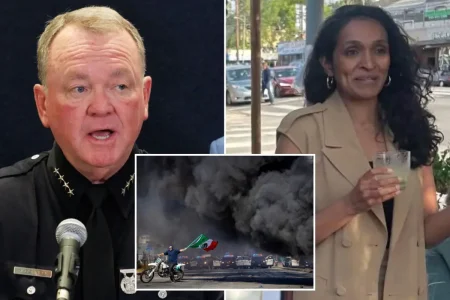
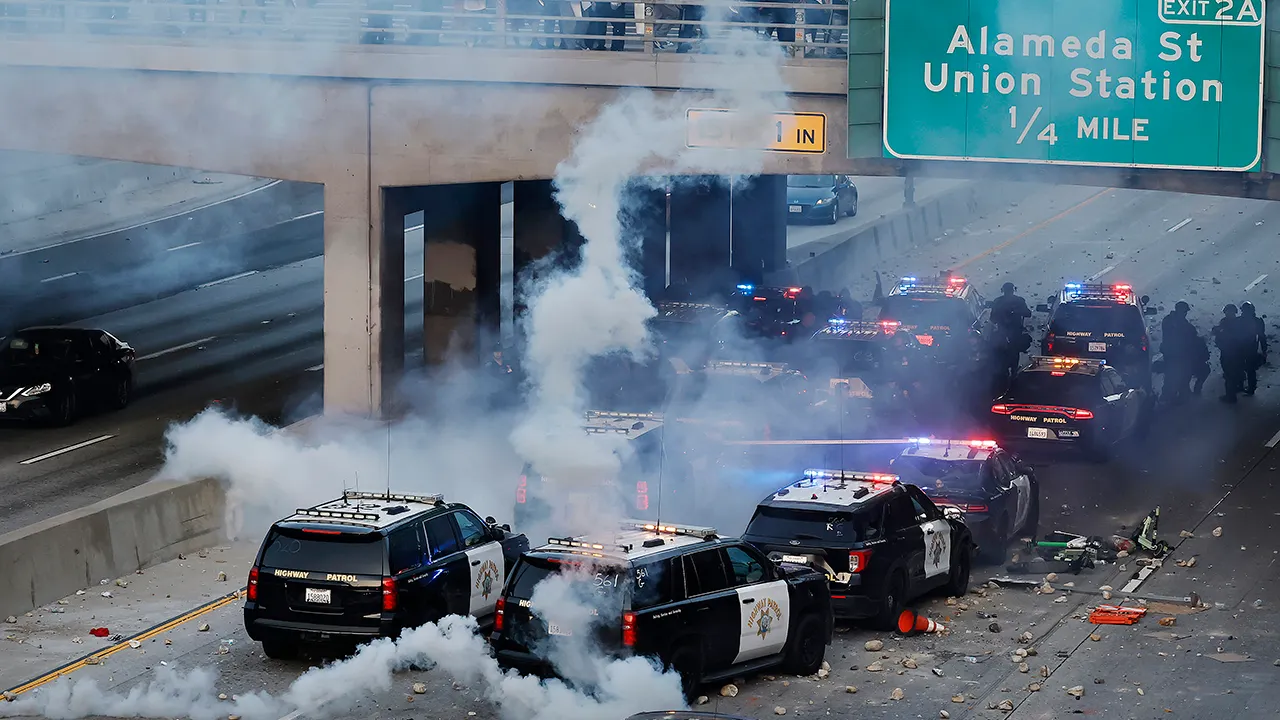
To understand the gravity of Vega’s actions, one must look at the terrifying scene that unfolded on the Main Street overpass above U.S. Highway 101, a major transportation artery flowing through the heart of Los Angeles. On that warm June night, the overpass became a high-altitude stage for an escalating confrontation as protests targeting federal immigration enforcement decayed into chaotic rioting. Below the overpass, California Highway Patrol officers found themselves in an incredibly vulnerable position, parked on the freeway side to manage traffic and protect the public while trapped beneath a hostile crowd. Prosecutors painted a vivid picture of the fear and danger in those moments when rioters on the overpass began raining down burning debris, fireworks, and heavy rocks onto the patrol cruisers below. Vega was not a passive bystander in this chaos; court records reveal he actively helped others ignite debris before setting a large piece of cardboard on fire himself. Looming over the concrete railing, Vega carefully lined up the burning mass with the hood of a CHP patrol car parked directly beneath him and dropped it. The sensory panic of that moment—the scent of burning cardboard, the sudden flashes of light, and the loud bangs of fireworks echoing off the freeway walls—created an environment of extreme danger for the officers trapped in their vehicles, who faced the real possibility of a catastrophic fire or serious physical injury.
This acts of aggression were not committed in isolation, but were fueled by a dangerous mob mentality where individuals egged each other on to commit increasingly reckless acts. As the cardboard dropped by Vega burned on the hood of the cruiser, 23-year-old Yachua Mauricio Flores entered the fray, pouring an accelerant liquid onto the flames to make the fire grow, while Vega stood nearby, actively gesturing toward the rising blaze as if celebrating the destruction. This toxic synergy between a 42-year-old man and a much younger co-defendant highlights how group dynamics can push people of different generations into acts of extreme violence they might never commit on their own. Vega also admitted to throwing multiple rocks at the officers who were desperately attempting to clear the overpass and restore order. The gravity of these actions is underscored by the legal fates of his co-defendants, with the federal government charging seven people in connection with the overpass attack. Flores, who is scheduled to be sentenced on August 3, faces up to five years in federal prison, while 40-year-old Adam Charles Palermo, identified by prosecutors as the lead defendant in the case, faces up to 20 years in prison after pleading guilty to assaulting, resisting, and impeding authorities with a dangerous weapon. These individuals, once ordinary citizens, now face decades of collective prison time, illustrating how a few hours of shared lawlessness can permanently alter the trajectory of multiple families.
Behind the legal jargon of court filings and sentencing memorandums lie the deeply human stories of the law enforcement officers who had to endure this assault. To humanize the incident, federal prosecutors highlighted the profound impact the attack had on the victims, presenting a moving statement from a veteran CHP sergeant with nearly three decades of dedicated service to his community. This seasoned officer described how the violence of that night deeply affected both him and his son, who was also connected to the law enforcement effort. For a father to watch his own child stand in the line of fire, while facing an angry crowd throwing burning debris and heavy stones from above, represents a unique kind of psychological trauma that does not heal when the shift ends. The sergeant’s testimony underscores the fact that the men and women wearing uniforms are not faceless agents of the state, but are parents, spouses, and children who desire nothing more than to return home safely to their families at the end of the day. The terror of being trapped under an overpass while heavy objects crash onto your vehicle is a form of violence that leaves deep emotional scars in addition to physical danger, reminding us that every stone thrown and every fire lit has a human target on the receiving end.
The harsh sentencing of Vega and his co-defendants takes place against a backdrop of intense national polarization regarding immigration enforcement and the role of agencies like Immigration and Customs Enforcement (ICE). Two days before the overpass attack, tensions in Los Angeles had already reached a boiling point when violence erupted against federal agents conducting immigration operations in local neighborhoods. This existing friction turned the Main Street overpass into a geopolitical tinderbox, where local frustrations with federal laws collided violently with state and local police officers who were simply tasked with keeping the freeways open and safe. While the right to protest is a sacred tenet of American democracy, the federal government’s aggressive prosecution of the overpass attackers serves as an absolute boundary line, emphasizing that political dissent can never justify the targeting of human lives with deadly weapons. The judicial process must walk a difficult line, acknowledging the intense emotions surrounding our national immigration debate while firmly holding individuals accountable when their protests devolve into criminal acts that put first responders in harm’s way.
As Ismael Vega begins his 37-month sentence in a federal penitentiary, his home neighborhood of Westlake is left to grapple with the quiet aftermath of a destructive chapter in the city’s history. Vega will spend the next three years isolated from his loved ones, experiencing the stark, daily realities of incarceration, while facing a mountain of debt that will likely take him decades to pay off. Meanwhile, the California Highway Patrol officers involved continue to patrol the busy freeways of Los Angeles, carrying the invisible weight of that terrifying night beneath the Main Street overpass. This case serves as a tragic microcosm of our current era: a cycle of political anger that yields no systemic solutions, but instead leaves a trail of ruined lives, traumatized public servants, and heavily divided communities. True progress on complex issues like immigration reform cannot be forged with fire, rocks, and violence on a highway overpass, but must be found in the slow, difficult work of peaceful dialogue and democratic engagement. Until that lesson is fully embraced, the courtrooms of America will continue to witness the tragic spectacle of citizens throwing away their futures in moments of misguided rage, leaving judges to piece together the shattered remnants of public safety and personal responsibility.