






The Illusion of the Golden Bolívar: Inside Washington’s High-Stakes Bet to Rebuild Venezuela
1. The Mirage of Prosperity and the Washington-Caracas Alliance
VENEZUELA'S SHIFTING POWER DYNAMICS┌────────────────────────────────────────────────────────┐
│ U.S. Treasury / Citibank │
│ (Controls Oil Revenues) │
└───────────────────────────┬────────────────────────────┘
│ Disbursed to
▼
┌────────────────────────────────────────────────────────┐
│ Preferred Private Banks & Elite │
│ (Banesco, Mercantil, BBVA, etc.) │
└───────────────────────────┬────────────────────────────┘
│ Exchanges $ at
│ parallel rates
▼
┌────────────────────────────────────────────────────────┐
│ Ordinary Venezuelans │
│ (Wages depleted by 524% inflation) │
└────────────────────────────────────────────────────────┘
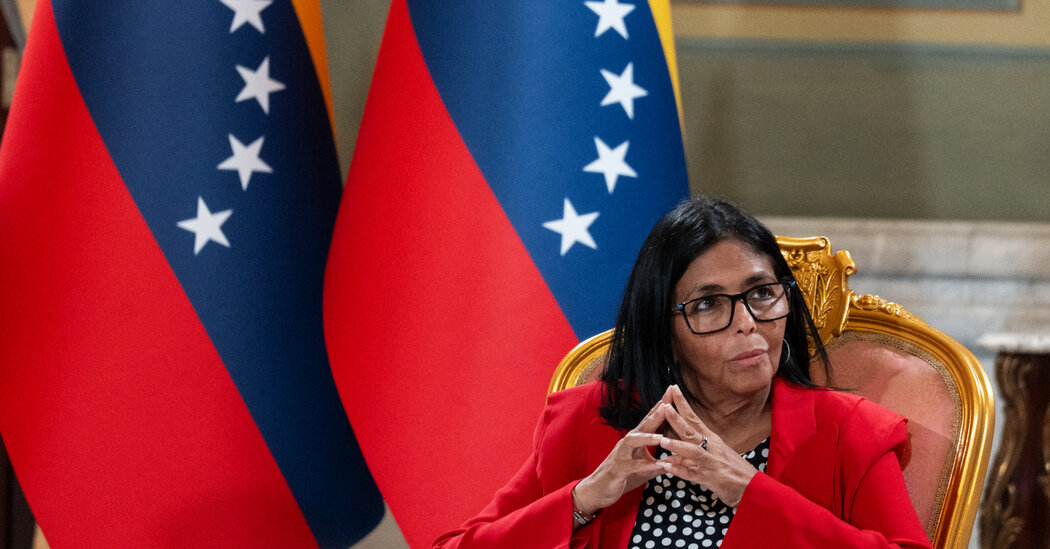
The triumphalist rhetoric echoing from the White House presents a picture of a nation transformed, yet the reality on the ground in Caracas tells a far more complicated story of geopolitical engineering and economic friction. Following the dramatic military operations of January that resulted in the capture and ouster of Nicolás Maduro, the Trump administration has aggressively championed its unlikely alliance with Venezuela’s newly installed leadership. President Trump recently declared that the South American nation “has become a happy country” because of the lucrative new trade flows unleashed by the removal of select American sanctions. This narrative of a swift, triumphant transition is actively projected on the global stage by Delcy Rodríguez, the handpicked president who has spent successive weeks traversing international capitals, showcasing her audiences with world leaders as proof of Venezuela’s diplomatic rehabilitation. Yet, beneath this manufactured veneer of rapid stabilization lies a precarious and deeply contested reality. The emerging administration in Caracas faces an almost impossible task: balancing the incompatible expectations of an increasingly restless Venezuelan citizenry, cautious multinational investors, and heavy-handed U.S. policymakers. This administrative friction exposes the structural vulnerabilities of Washington’s ambitious, high-stakes endeavor to establish what is effectively a resource-rich protectorate in South America, where the promise of sovereign recovery is constantly overshadowed by the reality of foreign oversight.
2. The Grim Reality on the Ground: Inflation, Devaluation, and Public Despair
While diplomatic delegations celebrate policy milestones in climate-conditioned boardrooms, average Venezuelans continue to navigate a daily struggle for basic survival that has changed very little since the fall of the Maduro regime. Although domestic anti-corruption efforts overseen by United States authorities have begun to dismantle the most egregious networks of state-sponsored graft, these administrative reforms have yet to produce tangible relief for the millions of citizens living outside the elite financial circles. The macroeconomic statistics remain grim: annual inflation continues to choke the domestic economy, holding steady at a world-topping 524 percent, while typical wages remain locked at poverty levels that fail to cover the cost of basic food baskets. The national currency, the bolívar, has persisted in its downward spiral under the stewardship of Ms. Rodríguez, further decimating the purchasing power of public servants and informal laborers alike. On the parallel, unofficial currency markets where the vast majority of Venezuelans are forced to convert their earnings, the U.S. dollar commands a premium of more than twenty-five percent over the official rate set by the Central Bank. This widening exchange-rate disparity functions as a massive inflationary engine, driving up the cost of imported goods, erasing minor wage increases, and encouraging continuous capital flight. The resulting popular frustration is palpable; Álvaro Espinoza, a 56-year-old jeweler operating in Los Teques, a working-class commuter town on the mountainous outskirts of Caracas, expressed the deep skepticism shared by many of his peers: “Let those American officials come here for three months without their armed bodyguards and try to buy food at a normal supermarket to see if things have actually improved. It’s all a lie.” This slow, agonizing pace of economic recovery is rapidly exhausting the patience of the populace, as evidenced by a recent AtlasIntel online poll conducted for Bloomberg News, which showed Ms. Rodríguez’s public approval rating tumbling to a meager 25 percent in May—marking her third consecutive month of political decline.
3. Washington’s Strategic Oversight and the Labyrinth of Currency Manipulation
                THE CURRENCY ARBITRAGE GAP

  Government Receives              Government Pays Out
     (At Weak Rate)                  (At Strong Rate)

     692 BOLÍVARES                    607 BOLÍVARES
     per U.S. Dollar                  per U.S. Dollar
           │                                 │
           └───────────────┬─────────────────┘
                           │
                           ▼
                85 BOLÍVARES SPREAD
           (Retained by State to Fund Budget)
In Washington, senior policymakers urge patience, arguing that the comprehensive economic transition designed for Venezuela is fundamentally sound but requires more time to dismantle decades of deep-seated structural decay. Secretary of State Marco Rubio defended the administration’s strategy in an interview with Fox News, asserting that the United States is actively working to “normalize” the country, ensuring for the first time in over a decade that Venezuela’s immense natural wealth actually benefits its citizens rather than a corrupt ruling clique. State Department representatives have pointed to marginal macroeconomic victories, such as May’s monthly inflation rate rising at its slowest pace since 2024, as clear evidence that the bilateral economic partnership is working. However, this optimistic assessment overlooks the highly distorted financial architecture that continues to define the domestic market. To keep strategic oil supplies flowing directly to American refineries, U.S. officials have waded deep into a labyrinthine economic system that has long incentivized currency speculation over productive domestic investment. Under the current financial framework, the consolidation of monetary control has inadvertently restricted the flow of U.S. dollars to a select group of politically connected Venezuelan firms and elite business owners who possess active banking relationships in the United States. Rather than being reinvested locally to build factories, repair crumbling infrastructure, or hire workers, the vast majority of these petrodollars are sitting dormant in foreign bank accounts, leaving the broader domestic economy chronically starved of liquidity. This dynamic perpetuates a closed economic loop where the benefits of renewed oil production are monopolized by a new financial class, leaving the structural roots of the economic crisis untouched.
4. Political Backlash and Sovereign Humiliation within the Socialist Party
The growing daily visibility of American authority within Venezuela is causing significant political friction, sparking an undercurrent of nationalistic resentment even among those who initially supported the transition. This tension reached a boiling point recently when U.S. military aircraft landed directly at the American Embassy in Caracas, followed by a highly public maneuver in which the Trump administration pressured the Venezuelan executive branch to bypass standard extradition protocols and hand over a prominent, high-ranking confidant of former President Maduro to face corruption charges in Miami. This dramatic bypass of local judicial processes has been described in private by multiple influential members of the ruling United Socialist Party as a humiliating capitulation that degrades Venezuela’s national sovereignty. These escalating violations of state autonomy have triggered quiet, intensive discussions among internal party factions regarding the viability of backing an alternative presidential candidate should Ms. Rodríguez’s government call for new national elections. Because of the highly sensitive nature of these internal fractures and the threat of political reprisal, most party insiders, financial executives, and local leaders interviewed for this report spoke only on the absolute condition of anonymity. These developments suggest that while Washington has successfully forced the compliance of the current executive leadership, it has done so at the cost of alienating the broader political class, setting the stage for potential domestic instability if public frustration continues to mount.
5. The Energy Paradox: Crude Oil Exploitation vs. a Collapsing National Power Grid
              THE ZERO-SUM ELECTRICITY CRISIS

                   ┌─────────────────┐
                   │  Power Demand   │
                   └────────┬────────┘
                            │
             ┌──────────────┴──────────────┐
             ▼                             ▼
 ┌───────────────────────┐     ┌───────────────────────┐
 │      Oil Sector       │     │    Domestic Homes     │
 │  (U.S. Joint Ventures)│     │  (Widespread Outages) │
 └───────────────────────┘     └───────────────────────┘
The administration’s aggressive push to rapidly scale up oil production to satisfy foreign partners has run headfirst into the reality of Venezuela’s deteriorated national infrastructure. The government currently faces a difficult zero-sum choice: allocate its severely limited energy resources to power the heavy industrial machinery of the joint-venture oil fields, or divert that electricity to keep the lights on in the homes of ordinary citizens. Over the past several months, widespread domestic power blackouts have worsened significantly, deepening public anger toward Ms. Rodríguez’s administration and feeding a surge of civic unrest. While independent energy analysts attribute the worsening grid failures in part to a severe regional drought that has dramatically lowered water levels at the country’s primary hydroelectric dams, they emphasize that the massive, prioritized power demands of the expanding petroleum sector are pushing the fragile grid to its absolute breaking point. In response, Ms. Rodríguez’s cabinet has implored foreign energy corporations to construct their own localized power-generation facilities and has actively courted overseas capital to rebuild the national grid. However, these stabilization efforts are being severely stymied by the lingering, complex web of non-targeted U.S. sanctions, as well as an acute global shortage of heavy electrical manufacturing equipment driven by the ongoing worldwide boom in data center construction. The resulting public despair has translated into a dramatic rise in social mobilization; according to data compiled by the Venezuelan Observatory of Social Conflict, a non-profit organization tracking domestic unrest, citizens staged an average of 20 distinct street protests daily during the first five months of this year—representing a staggering threefold increase compared to the same period in 2025.
6. The New Financial Oligarchy: How Restructured Corruption Leaves Ordinary Citizens Behind
PETRODOLLAR FLOW MECHANISM┌────────────────────────────────────────────────────────┐
│ International Buyers │
└───────────────────────────┬────────────────────────────┘
│ $ Payment for Crude
▼
┌────────────────────────────────────────────────────────┐
│ U.S. Treasury / Citibank Account │
└───────────────────────────┬────────────────────────────┘
│ $ Disbursed
▼
┌────────────────────────────────────────────────────────┐
│ Venezuelan Private Banks │
└───────────────────────────┬────────────────────────────┘
│ Private banks sell $ to
│ corporate clients; give
│ Bs. proceeds to State
▼
┌────────────────────────────────────────────────────────┐
│ Venezuela State Budget │
│ (Pays public sector in paper Bs.) │
└────────────────────────────────────────────────────────┘
At the core of Venezuela’s enduring economic inequality is a sophisticated financial mechanism that has effectively replaced the chaotic corruption of the Maduro era with a highly organized, institutionalized transfer of wealth. While the volume of domestic oil exports has risen for consecutive months, generating over $5.5 billion in the first five months of the year—a 44 percent surge compared to the previous year—very little of this capital filters down to the average citizen. Instead, under the current regulatory framework designed by the U.S. Treasury, global buyers deposit payments for Venezuelan crude directly into a centralized Citibank account maintained in the United States on behalf of the Caracas government. The U.S. Treasury then coordinates the release of these dollar reserves to Venezuela’s primary private financial institutions—including Banesco, Banco Mercantil, and BBVA Provincial—which distribute the hard currency exclusively to high-profile corporate clients. These private banks then return the equivalent value in bolívares to the Venezuelan state, which uses this rapidly depreciating local currency to fund its public sector payrolls and pay down outstanding administrative debts. This setup allows the Rodríguez administration to engage in highly lucrative currency arbitrage; the state routinely receives dollars from private financial institutions at a weaker exchange rate (such as receiving 692 bolívares per dollar) while calculating its payments to workers and domestic suppliers using a significantly stronger official rate (such as 607 bolívares per dollar), effectively retaining the difference to fund its own municipal budget. This dynamic ensures that while a new oligarchy of formal banks and elite corporate clients thrives, the wages of ordinary citizens continue to wither. As Tiotiste Herrera, a retired federal judge residing in Caracas, observed: “They removed a pawn from the board, but the entire board game remains exactly the same. The very same structural injustices persist, and in many ways, they have only become more entrenched.”