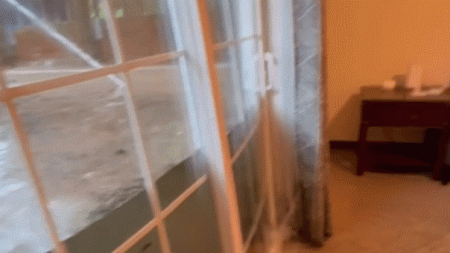





Through the glowing screen of a smartphone, the vast distance between a bustling New York City street food stand and a shaking high-rise in Maracay, Venezuela, dissolved into a moment of pure, unadulterated terror. Rosmarily Aponte, 48, was on a video call from Manhattan with her 50-year-old sister, Rosmary, when the earth began to tear itself apart. From thousands of miles away, Rosmarily watched in helpless horror as her sister’s apartment trembled, household items hurled themselves to the floor, and walls cracked. Her desperate screams of “Get out! Get out of there!” echoed in Spanish across the miles, a futile attempt to shield her sibling from danger. Rosmary dashed down fourteen flights of stairs into the chaotic streets, but midway through her descent, the call dropped, leaving Rosmarily suspended in an agonizing silence. This terrifying experience became a common nightmare for countless Venezuelan immigrants in the New York metropolitan area on Wednesday, as back-to-back earthquakes struck their homeland, leaving at least 920 people dead, 3,360 injured, and thousands of others suddenly homeless and searching for missing loved ones amidst the rubble.
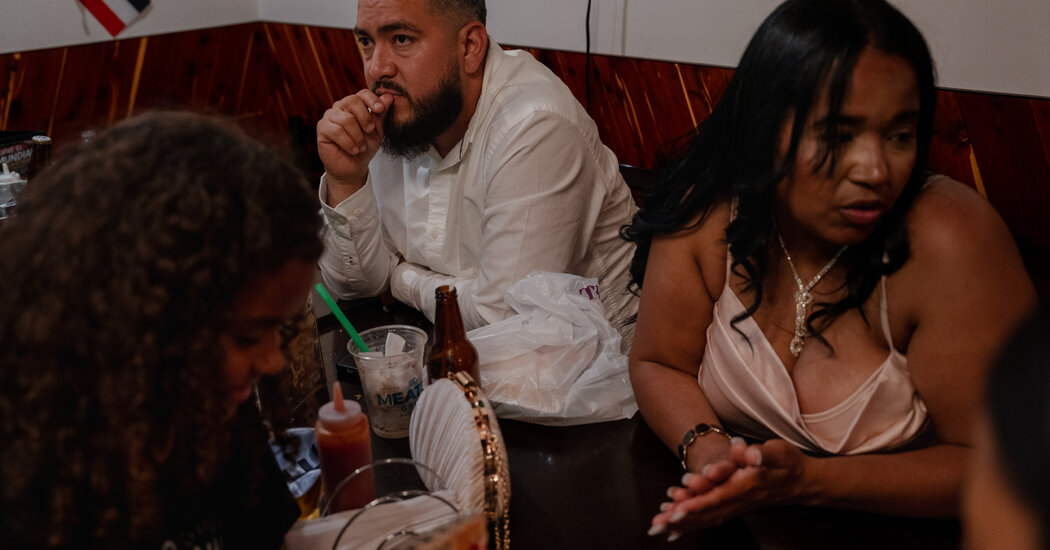
In the days following the disaster, a dense cloud of shock and desperation settled over New York’s rapidly growing Venezuelan community, transforming ordinary working hours into vigils of quiet grief. While Rosmarily eventually received the relieving news that her sister had survived—even though the structural damage to her building left her permanently locked out—many others remain trapped in a agonizing limbo of uncertainty. At the Greeley Square street food stand, Perros y Vainas, 23-year-old cashier Jesús Mendoza showed up to work with a heavy heart, unable to contact his cousin, Asyria Urbina, whose apartment building in the devastated state of La Guaira collapsed entirely. On Long Island, 60-year-old Doris Marrero described a similar, agonizing feeling of powerlessness as she searched for news of her cousin’s 23-year-old daughter, Constanza Caruso López, who had traveled to La Guaira for a quick vacation and vanished when her lodging was completely leveled. Families like Marrero’s are desperately posting names and photos on the makeshift website Desaparecidos Terremoto Venezuela, clinging to hope and refusing to imagine the worst. Yet, for others, the worst has already been confirmed: Alejandro Parra, a rideshare driver from Long Island, received word that his cousin’s ten-year-old daughter and the girl’s grandmother both perished when their building collapsed in La Guaira.
This sudden natural disaster strikes a community that was already deeply scarred by years of systemic hardship and displacement. Over the past decade, New York City has become a primary sanctuary for those fleeing Venezuela, which underwent one of the most severe economic collapses in modern history outside of wartime, hemorrhaging more than 70 percent of its economic production between 2012 and 2020 due to government mismanagement and corruption. Census data from 2023 highlighted this rapid demographic shift, noting that more than 19,000 Venezuelans living in New York had arrived in 2010 or later. For these new immigrants, the trauma of leaving behind their homeland is compounded by the knowledge that Venezuela’s decimated healthcare system, ruined basic services, and crippled infrastructure are entirely unequipped to handle a crisis of this magnitude. As Rossanna Figuera, the founder of Perros y Vainas, pointed out, the prospects for immediate recovery are incredibly grim because the Venezuelan government simply lacks the capacity to respond, meaning that the survival of those on the ground now depends entirely on a flood of external, grassroots aid.
Driven by a shared sense of duty and cultural grief, the Venezuelan diaspora in New York has quickly transformed local businesses into vital lifelines of relief and mobilization. At ChamolandiaNY, a popular food truck parked on Northern Boulevard in Queens, the air is filled not just with the aroma of home-cooked street food, but with a collective determination to help. The truck’s 33-year-old owner, Helmer Gelves, has turned his business into a donation drop-off site where customers and neighbors bring packages of bottled water, bags of rice, and bags of corn flour—the fundamental ingredient for the arepas that symbolize Venezuelan resilience. For Gelves and his patrons, these small contributions are a physical manifestation of a community refuse to be passive observers of their country’s pain, operating under the firm belief that unity and collective action are the only ways forward during such a dark hour. Meanwhile, Rossanna Figuera has partnered with New York-based activist Roberto Patiño of Alimenta la Solidaridad to set up digital donation web pages and QR codes at restaurant registers, allowing everyday New Yorkers to seamlessly chip in, even as Patiño himself navigates the harrowing reality that many of his nonprofit’s soup kitchen workers and aid recipients in Venezuela are currently among the missing.
This grassroots response is mirrored by more established humanitarian organizations in the city, where organizers are channeling their personal panic into structured, urgent relief campaigns. Jesus Aguais, the head of the nonprofit Aid for Life, which provides crucial support to Latin American migrant families, has been working tirelessly to solicit monetary donations online despite being in a state of personal shock after learning that a young former colleague of his in Venezuela has gone missing. Similarly, the nonprofit Healing Venezuela has mobilized its network to bypass bureaucratic bottlenecks and deliver critical medical supplies directly to front-line doctors struggling to treat thousands of wounded survivors in overwhelmed clinics. Erick Rozo, a board member of the organization’s U.S. branch, emphasized that even those who survived physical injury are facing a secondary crisis of exposure and displacement. Rozo’s own family members are safe but are forced to sleep out in the open because their damaged apartment building is no longer structurally sound, illustrating a harsh reality where basic shelter has suddenly become an inaccessible luxury for thousands.
Ultimately, the evolving tragedy highlights the enduring, invisible threads of love, duty, and resilience that bind Venezuelan immigrants to the families they left behind. Even when separated by vast oceans and political borders, the emotional proximity of these families remains unbroken, as demonstrated by Diego Ramírez, a 28-year-old waiter who stopped by the Queens food truck for a taste of home. Clad in a Yankees cap and wearing a look of profound, quiet distress, Ramírez shared that his mother and sister are currently sheltering inside their badly damaged apartment building in Los Teques, just outside Caracas, simply because they have nowhere else to seek refuge. Rather than letting despair paralyze him, Ramírez continues to work and send whatever support he can, offering his mother words of steady, long-distance reassurance: “I told my mom to stay calm, that she can rely on me.” It is this quiet, unwavering devotion—found in the prayers of rideshare drivers, the organizing power of activists, and the pennies saved by street vendors—that defines the Venezuelan diaspora’s response, proving that even in the face of unspeakable catastrophe, they will always find a way to stand together and support the home they carry in their hearts.