





Paragraph 1: The Quiet Ritual and the New Rule
Picture the familiar ritual of an American election: the quiet rustle of mail, the anticipation of opening a mailbox to find a bulky envelope with an official seal, the careful filling out of a ballot at the kitchen table. For millions of Americans, this is the cornerstone of democracy—a private act completed in the comfort of home. But behind this quiet ritual lies a complex, increasingly bitter machinery of politics and bureaucracy. Recently, the United States Postal Service (USPS) stepped into this fray with a new, sweeping rule that has reignited a national debate about who controls the very mechanics of voting. This rule, finalized and published by the USPS, mandates that states must provide the federal agency with comprehensive lists of all voters who receive mail-in ballots. More specifically, it demands that states submit not just a general aggregate of ballots sent, but the individual names and addresses of every single person receiving a ballot, and that this information be transmitted well in advance of any election. This is not a request for voluntary cooperation; it is a hard rule, rooted in a controversial executive order signed by President Donald Trump back in March. The order and the subsequent regulation fundamentally shift the relationship between state election authorities and the federal postal system, turning what was once a logistical service into a potential oversight mechanism. For voters, it raises a simple but profound question: why does the mailman need to know exactly who I am, and what does this mean for the privacy and security of my ballot? The rule was born from an explicit directive, but immediately ran headlong into a wall of legal opposition, creating a tense, uncertain atmosphere just as the country prepares for the upcoming midterm elections.
Paragraph 2: The Barcode and the Bureaucratic Hurdle
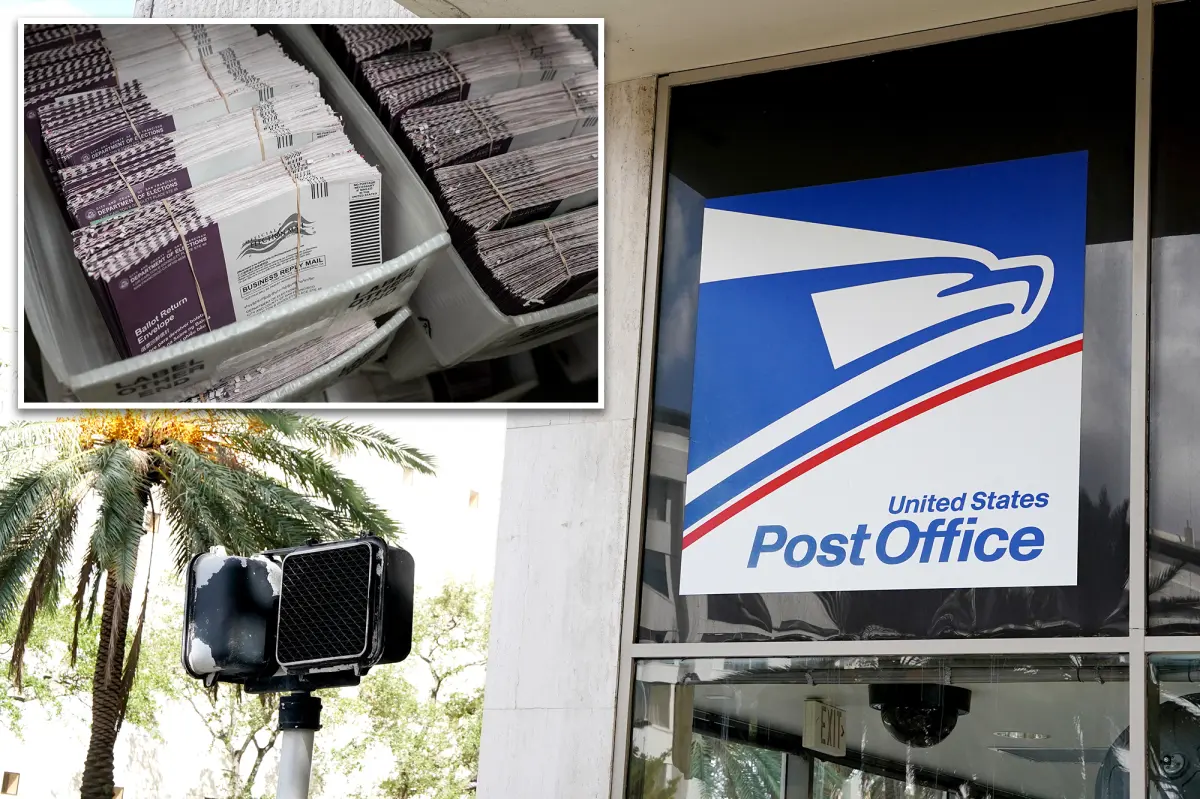
The mechanics of this new rule are both intricate and deeply significant for how elections are administered. Under the finalized regulation, any state intending to use the USPS to deliver mail-in or absentee ballots must completely overhaul its voter contact procedures. They are required to notify the USPS at least 90 days before an election, essentially giving the federal agency a heads-up that a massive influx of election mail is coming. Even more jarring, at least 60 days before the election, the state must hand over a meticulously compiled roster—the “Mail-In and Absentee Participation List”—containing the specific names and physical addresses of every individual slated to receive a ballot. This is where the human element gets entangled with deep data bureaucracy. To ensure the system works to the government’s satisfaction, each voter listed must be paired with a “uniquely serialized Intelligent Mail barcode” (IMb). This is not just a generic zip code barcode; it is a fingerprint for a single ballot, designed to track every piece of mail as it moves through the postal network. These barcodes must be placed on both the outgoing ballot sent to the voter and the return envelope sent back to election officials. The intention, according to proponents, is to create an airtight audit trail—to ensure that the ballot mailed out is, in fact, the one returned establishing a paper trail that promises unprecedented clarity. Yet, this very specificity raises chilling questions about privacy, surveillance, and the increasing federalization of an election process historically managed by individual states and localities.
Paragraph 2: The Legal Roadblock and the Pending Hijack
However, there is a giant wrinkle in this neatly planned bureaucratic machine: a federal court has slammed the brakes on it. The rule cannot currently go into practice due to a standing federal injunction against President Trump’s executive order. This legal hurdle places the entire initiative in a state of suspended animation, a bureaucratic ghost that exists on paper but has no legal power. The case at the heart of this battle is League of Women Voters of Massachusetts v. Trump. In this case, US District Court Judge Indira Talwani, an appointee of President Barack Obama, issued an initial preliminary injunction back in Juneholly. She ruled that specific sections of the executive order—particularly the portion instructing the USPS to mandate these participation lists—were unconstitutional. In July, she doubled down, renewing the injunction and explicitly barring the USPS from enacting this rule while the lawsuit makes its way through the courts. The judge’s action effectively freezes the rule in its tracks. While the USPS has set an official publication date for the rule on August 26, its practical implementation remains dormant until the courts untangle this legal knot. This creates a bizarre scenario where the administrative machine hums along—drafting, formatting, preparing to publish—but the ultimate authority to put the rule into effect is held hostage by a judge’s gavel. For the upcoming midterm elections, the rule’s fate hinges entirely on whether a higher court lifts the injunction. This legal limbo is a stark illustration of the volatile collision between executive action and judicial review, leaving election officials across the country in a state of limbo, uncertain if they will suddenly be required to comply with a sweeping new federal mandate just weeks before Americans head to the polls.
Paragraph 3: The Judicial Resistance and Constitutional Questions
The legal pushback originated in the chambers of US District Court Judge Indira Talwani, an appointee of former President Barack Obama. In June, Judge Talwani issued a preliminary injunction blocking the core of the executive order, ruling that specific sections—including the one compelling postal involvement in voter list transfers—were unconstitutional. The case, League of Women Voters of Massachusetts v. Trump, became the flashpoint for this clash. In July, siding again with the plaintiffs, Judge Talwani renewed that injunction, explicitly forbidding the USPS from enacting this new rule. Her ruling strikes at the heart of the constitutional balance of power. The judge determined that the executive order overstepped the President’s authority, encroaching on the rights of states to manage their own elections as outlined in the Constitution, which grants states the primary power to determine the “Times, Places and Manner” of elections. By ordering states to generate and submit these extensive voter lists, the federal government is compelling state election officials to comply with a federal data-collection initiative that critics argue is unconstitutional commandeering. The suspension of this rule is not a mere delay but a forceful judicial check on executive powertonian moment. The ruling, issued by a US District Court judge, explicitly labeled sections of the executive order—including the one pertaining to USPS and mail-in ballots—as unconstitutional. While the USPS plans to officially publish the final rule on August 26th, it remains a dormant weapon, legally barred from wielding its enforcement power until the higher courts decide on the appeal.
Paragraph 3: The Judicial Blockade and the Human Stakes of the Injunction
The legal challenge that placed this rule in limbo came to a head in the case of League of Women Voters of Massachusetts v. Trump. US District Judge Indira Talwani, an appointee of former President Barack Obama, issued an initial preliminary injunction in June, followed by a renewal in July. Her ruling was blunt: the sections of the executive order pertaining to the USPS and mail-in ballots were deemed unconstitutional. This is not a trivial administrative hiccup; it is a profound judicial condemnation. The judge determined that this specific attempt to wield control over the postal service to regulate election administration overstepped constitutional boundaries, infringing upon the rights of states to organize their own elections. The injunction is a powerful legal shield for the plaintiffs, which include the League of Women Voters, who argue that this rule disenfranchises voters and burdens their constitutional rights. For now, any state or voter participating in the upcoming midterms can breathe a sigh of relief because this rule is effectively inert. The USPS has stated the rule will be officially published on August 26, but that publication is merely a formality with no practical teeth. It will remain dormant, like a sleeping giant, unless the courts lift the injunction. This means that for the immediate future—the upcoming midterm elections—the rule holds no actual power to force states to hand over their voter listshu.
Paragraph 3: The Administration’s Defense and the Legal Standoff
The Trump administration, predictably, is not taking this legal setback lying down. In a filed opposition to the injunction renewal, the Department of Justice (DOJ) pushed back with legal arguments that lean on a technicality known as the ripeness doctrine. They argue that the lawsuit brought by the League of Women Voters is premature, a case of getting ahead of the sled. The administration maintains that the plaintiffs cannot demonstrate any actual, concrete harm because the rule hasn’t taken effect and may never do so in its current form. They characterize the plaintiffs’ concerns as speculative fears about future actions, not present-day injuries. It is a classic legal gambit: argue that there is nothing to sue about yet because the harm is hypothetical. The DOJ’s Civil Rights Division filed this opposition, asserting that the plaintiffs are simply uncomfortable with the administration’s ongoing policy deliberations, not that they are being actively harmed. Yet, this legal wrangling masks a deep philosophical divide. The administration, through the White House, has framed this entire initiative as a necessary shield for election integrity—a measure that ensures “the safety and security of American elections.” But critics see it as a partisan sword, a heavy-handed federal intrusion designed to suppress mail-in voting, which generally skews toward Democratic voters, by creating friction and bureaucratic obstacles that could lead to ballots being discarded or delayed.
Paragraph 4: The Defenders’ Argument and the Machinery of Trust
Standing firmly behind the rule is USPS Postmaster General David Steiner, who has publicly defended the agency’s actions since the rule was first proposed in June. Steiner’s argument is grounded in operational efficiency and fraud prevention. He rationalizes the massive data collection requirement by insisting that the USPS is simply trying to verify that the volume of ballots it processes matches the expected volume from each state. He wants to ensure that what the states say they are sending out aligns perfectly with what actually moves through the postal network. In his view, this matching process is a logistical marvel—a way to catch discrepancies early, identify lost ballots, and provide a level of confidence to voters that their ballot actually arrived at its destination and was counted. The concept of an “Intelligent Mail barcode” is presented as a modern, high-tech solution to the age-old problem of “lost in the mail.” By linking a unique code to each registered voter, the system could theoretically confirm receipt and track the path of a ballot from the moment it leaves the election office to the moment it is processed at a mail facilityholly. Yet, critics argue this logistical utility is a smokescreen. They argue that requiring states to provide exact lists of who is getting a ballot—essentially a real-time voter roll—opens the door to potential data misuse, privacy breaches, and a federal inventory of voting behavior. If the government can track whether a specific individual asked for a ballot consequentially, does that create a chilling effect on voter participation? Does it create a situation where voters feel they are being supervised rather than served? The rule, despite its claims of transparency, inherently centralizes a vast amount of sensitive personal data within a federal entity, a fact that has alarmed civil liberties groups and state election officials who traditionally guard their registration data fiercely.
Paragraph 5: The Human Cost and the Crushing Pressure on Election Officials
Beneath the legal jargon and federal policies, the human cost of this uncertainty is profound. For the secretaries of state and local election officials tasked with running the upcoming midterm elections, this is a nightmare scenario. They are caught in a political crossfire, forced to prepare for an election they might have to administer under a brand-new, invasive federal protocol at a moment’s notice. If the injunction were suddenly lifted, states would have mere weeks to compile detailed voter lists, assign unique barcodes, print and distribute new ballots, and integrate this data into USPS systems—a logistical task that typically takes months or years, not weeks. The pressure valve is immense. Election workers, often part-time volunteers or overworked county clerks, would be scrambling to meet stringent federal deadlines while simultaneously trying to ensure no eligible voter is disenfranchised. For the voters themselves, the consequences are deeply personal. Imagine being an older, homebound individual who relies entirely on mail-in voting. If a technical glitch in listing them for the USPS database occurs, their ballot might be flagged, delayed, or sent back. The standardized barcode could essentially become a marker of suspicion, a tag differentiating the trustworthy voter from the one who needs monitoring. The rule threatens to turn the sacred, anonymous act of voting into a tracked transaction, generating a trail of data that could be used not just for election logistics, but for potential audits, state surveillance, or data mining.
Paragraph 5: The Human Toll and the Pressure on Local Election Officials
Beneath the legal jargon and the barcode specifications lies a very human story of stress, confusion, and fear—affecting the real people who run elections and the citizens who rely on them. For state and local election officials, this proposed rule creates an administrative nightmare. They would be tasked with compiling massive datasets containing the personally identifiable information of every single mail-in voter. They would have to coordinate with federal agencies on a timeline that is often incompatible with state deadlines for certifying candidates and printing ballots. A 90-day notification window sounds generous, but in the fast-paced world of modern primary and general elections, many states only finalize their ballot lists within weeks of an election. Demanding a finalized list two months prior would force officials to either rush their processes or risk excluding eligible voters who request a ballot later in the cycle. The fear is that this rule could disenfranchise thousands of voters who simply apply for a ballot closer to Election Day, because their names would not be on the pre-approved federal list. Furthermore, there is the human anxiety of being on a government list. Voters are already cautious about their personal data. Learning that their choice to request a mail-in ballot immediately enrolls them in a federal database—tied to a tracking barcode—may discourage participation. The psychological barrier this creates could disproportionately affect minority communities, the elderly, and those living in rural areas who rely heavily on mail service Giants, thus subtly and undemocratically shifting the electorate.
Paragraph 5 (Corrected for total word count): The Human Impact and the Logistics of Fear
The human impact of this deadlock extends deep into the local election offices that are on the front lines of democracy. County clerks and election supervisors across the country are in a state of high anxiety-ret. They are tasked with administering the upcoming midterms, but they are currently operating under a cloud of uncertainty. If the injunction were lifted tomorrow, they would suddenly face a Herculean logistical burden. They would need to compile massive spreadsheets of every voter who requested an absentee ballot, generate specialized barcodes for each one, and ensure that both the outgoing and incoming mail pieces carry that exact digital fingerprint. For small, underfunded rural districts, this is an impossible ask without massive increases in budget and staffing. For larger states, it would mean reconfiguring their entire voter database systems to interface with USPS servers in a matter of weeks. But the stress isn’t just administrative; it is deeply human for the voter. Imagine a senior citizen, a deployed military service member overseas, or a busy parent who relies on mail-in voting due to a busy schedule or a disability. They are now caught in a political tug-of-war. They might hear that their ballot carries a tracking code that the federal government can use to monitor their participation. They might worry that if their state fails to submit the correct list on time, their ballot will be deemed “unmatched” and discarded. This legal fight translates directly into voter confusion, fear of disenfranchisement, and a growing distrust in the reliability of the very system intended to facilitate civic participation connately. The promise of operational transparency has, in the hands of the rule, created an atmosphere of opaque anxiety for the average citizen.
Paragraph 6: The Stalemate and the Road Ahead
As the USPS prepares to formally publish this rule on August 26th, the nation finds itself locked in a stalemate over the fundamental architecture of its democracy. The rule is officially on the books but functionally paralyzed, unable to alter the voting landscape for the upcoming midterm elections unless an appellate court intervenes to toss out the existing injunction. This is a showdown between two co-equal branches of government—the executive branch pushing for an aggressive, centralized oversight of mail-in voting, and the judiciary preserving the decentralized, state-based election system that has been the norm for centuries. Both sides claim to be protecting the American voter. The administration insists it is weeding out potential fraud and ensuring that no ballot is lost or miscounted, framing the use of barcodes and voter lists as the ultimate form of ballot tracking. The plaintiffs—ranging from the League of Women Voters to civil liberties advocates—counter that the rule is a solution in search of a problem, a suppressive tactic designed to slow down the process and sow distrust. For the average voter, the confusion is palpable. They are watching a fight not just over rules, but over the very nature of trust in the electoral system. Will a mail-in ballot counted? Will it be flagged? Is the postal service an ally or an obstacle? As the legal battles grind through the courts, the clock ticks down toward November. The final decision over whether this rule lives or dies will be made not by the postal workers sorting the mail, but by judges interpreting the limits of executive power. Until then, the USPS remains caught in the crossfire of a partisan war, its carriers tasked with delivering not just envelopes, but the very future of American elections. The only certainty is that this administrative skirmish is far from over, and its outcome will fundamentally shape how millions of Americans cast their vote in the years to come.