



A Geopolitical Watershed: United States Signals Major Sanctions Relief for Iran’s Crippled Energy Sector
In a diplomatic development that promises to fundamentally reshape the geopolitics of the Middle East and the dynamics of the global energy market, the United States has agreed to lift its stringent, long-standing economic sanctions on Iran’s oil industry upon the formal signing of a preliminary bilateral accord. For decades, the petroleum sector has served as the absolute lifeblood of the Iranian economy, but constant exposure to a suffocating web of Western financial restrictions and export bans has severely restricted Tehran’s ability to capitalize on its massive hydrocarbon reserves. This impending agreement, which represents one of the most significant foreign policy shifts in recent memory, will allow the Islamic Republic to systematically dismantle many of the punitive measures that have isolated its banking systems and crippled its domestic industry. According to details shared with reporters during a high-level briefing call on Wednesday, a senior U.S. administration official read directly from the preliminary text, confirming that the U.S. Department of the Treasury will officially issue wide-ranging oil export waivers. Under these technical provisions, Iran will once again be legally permitted to export crude oil, petroleum products, and various refined derivatives, while gaining legal access to crucial ancillary services including international banking transactions, marine insurance underwriting, and global maritime transportation networks. This structural shift not only promises an immediate influx of foreign capital to Tehran but also marks a profound strategic victory, suggesting that Iran may emerge from its recent intense period of regional instability on a vastly superior economic and geopolitical footing than when the conflict began.
Navigating the 60-Day Countdown: The Mechanics of Diplomatic De-escalation and Financial Unlocking
The preliminary agreement sets in motion an intense, high-stakes 60-day negotiation window, during which diplomats from both Washington and Tehran will attempt to codify these transient concessions into a permanent, legally binding international treaty. According to the disclosed text of the draft agreement, a successful outcome at the end of this bilateral sprint will commit the United States to permanently terminating all classifications of energy and financial sanctions aimed at Iran’s state-run entities. This aggressive timeline places a heavy burden on negotiators who must successfully resolve deeply entrenched disputes regarding nuclear verification, regional security guarantees, and oversight mechanism frameworks while facing domestic political pressure on both sides. For the Biden administration, defending this diplomatic pivot requires demonstrating that easing economic pressure will foster long-term state stability and encourage diplomatic compliance, rather than simply enriching a long-time regional adversary. Conversely, for the political leadership in Tehran, the potential to shed these economic chains offers an unprecedented lifeline to a population weary of rampant inflation, currency devaluation, and domestic instability. If the political architecture of this delicate framework remains intact through the transition, the reintegration of Iranian financial institutions into the SWIFT global payment network could quickly alter traditional capital flows throughout Western Asia, transforming what was once a highly restricted, clandestine barter economy into an open, globally connected hub of trade.
Dismantling the Shadow Empire: How Free Trade Will Replace Underground Chinese Pipelines and Ghost Fleets
For years, the aggressive enforcement of U.S. secondary sanctions forced the Iranian regime to construct a highly complex, underground trading system to bypass the watchful eye of Western regulators. Stripped of access to traditional European and Asian buyers, Tehran became almost entirely dependent on independent refineries in China, colloquially known as “teapots,” which willingly purchased discounted crude while operating outside the reach of the American financial system. To move millions of barrels of crude across the oceans undetected, Iran relied on an elaborate “shadow fleet”—a sprawling, unregulated armada of aging tankers operating under flags of convenience, frequently disabling their automatic identification transponders, falsifying cargo manifests, and conducting risky ship-to-ship oil transfers in international waters. Because these clandestine transactions could not utilize standard clearinghouses, Iran was routinely locked out of dominant global trade currencies like the U.S. dollar and the euro, forcing the country to accept unfavorable barter arrangements, illiquid local currencies, or complex gold-exchange schemes that further eroded the value of its exports. By officially removing the threat of U.S. Treasury retaliation, this new bilateral agreement effectively dismantles the economic justification for this expensive, high-risk shadow supply chain. Legitimate international buyers will soon be in a position to compete openly for high-quality Iranian light and heavy crude grades, enabling Tehran to eliminate the steep discounts it previously offered to Chinese refineries and demand current, competitive global market prices paid in fully convertible hard currencies.
Restoring the Lifeblood: The Decayed Infrastructure and Technical Hurdles Facing Iran’s Energy Fields
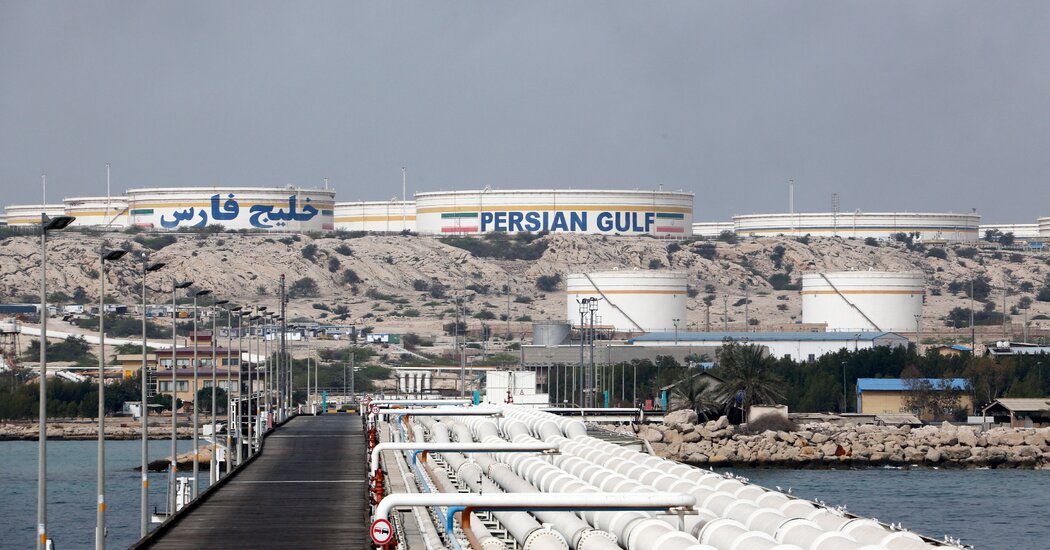
Despite the immense financial freedom and market access that Iran stands to reclaim through this diplomatic breakthrough, the country’s energy sector must first overcome a series of daunting physical and structural challenges. Years of isolation under Western sanctions have deprived Iranian oilfields of crucial capital injections, modern digital technologies, and high-tech Western machinery, leaving much of the nation’s energy infrastructure in a state of severe disrepair or technological obsolescence. Furthermore, the prolonged blockade on Iranian crude exports forced state engineers to shut down or sharply curtail production at numerous aging oil wells, a process that can cause permanent geological damage to underground oil reservoirs and make subsequent extraction both technically difficult and highly expensive. Revitalizing these dormant fields requires more than just turning the valves back on; it demands complex reservoir management, enhanced oil recovery (EOR) technologies, and modern horizontal drilling techniques that are currently difficult to source domestically. Additionally, repairing key infrastructure damaged in recent regional shadow wars—including pipelines, storage terminals, and refining facilities—presents an immediate operational bottleneck. Experts estimate that restoring Iran’s upstream production capabilities to pre-sanction levels and modernizing its outdated transport infrastructure will require an injection of tens of billions of dollars in foreign direct investment, a level of capital that will remain out of reach until international oil conglomerates receive ironclad guarantees that the political landscape has permanently stabilized.
Global Market Dynamics and the Limits of Immediate Growth under the IEA Look-Ahead
As the global energy market prepares for the potential return of millions of barrels of un-sanctioned Iranian crude, international energy analysts are urging caution regarding expectations of a sudden, destabilizing supply glut. In its highly anticipated monthly market monitoring report published on Wednesday, the International Energy Agency (IEA) projected that Iran’s domestic oil production will likely remain relatively stable through the coming fiscal year, representing approximately three percent of the total global oil supply. This conservative forecast underscores the reality that boosting output from fields that have suffered from chronic underinvestment is a highly gradual process, regardless of how quickly legal restrictions are lifted. This projected stability provides a degree of comfort to the OPEC+ alliance, which has spent the last year carefully managing production cuts to prevent a collapse in global crude prices amid slowing demand in major importing economies like China and Europe. However, if Iran successfully secures the external technical expertise and capital equipment needed to rehabilitate its aging infrastructure, its long-term potential to expand market share remains a wild card for global supply-demand balances. Over the next twelve to eighteen months, the critical factor for global oil traders will not simply be the physical volume of oil Iran can pump out of the ground, but rather how quickly the country can clear out its substantial floating storage—the millions of barrels of crude currently stored on stationary tankers waiting for legal clearance to enter international ports.
Building Bridges through Barrels: The Path Toward Regional Diplomacy and Long-Term Hydrocarbon Stability
Ultimately, the long-term success of Iran’s ambitious economic rehabilitation depends on a fundamental and lasting transformation of its foreign policy, moving beyond bilateral agreements with Washington to establish stable, cooperative relations with its neighbors across the Persian Gulf. For international oil conglomerates and global financial institutions to confidently commit capital to long-term joint ventures in the Iranian energy sector, they must see a clear mitigation of the geopolitical risks that have characterized the region for decades. This reality creates a powerful economic incentive for Tehran to pursue sustained diplomatic engagement with regional rivals, particularly Saudi Arabia and the United Arab Emirates, with whom agreements must be reached to maintain regional security and manage joint production quotas within OPEC+. If these diplomatic efforts succeed, the energy sector could transition from a historical source of geopolitical friction and proxy warfare into an unexpected foundation for mutual economic interdependence and shared regional prosperity. Conversely, if the current de-escalation proves to be a temporary pause rather than a fundamental policy shift, any progress made during the 60-day negotiation window could quickly unravel, triggering a snapback of U.S. sanctions and leaving Iran’s energy infrastructure exposed to renewed economic isolation. For now, the global energy industry watches with cautious optimism as the preliminary deal begins to take shape, fully aware that the upcoming weeks will determine whether Iran’s vast oil reserves will flow freely into the global economy or remain locked beneath the surface of a fractured diplomatic landscape.