

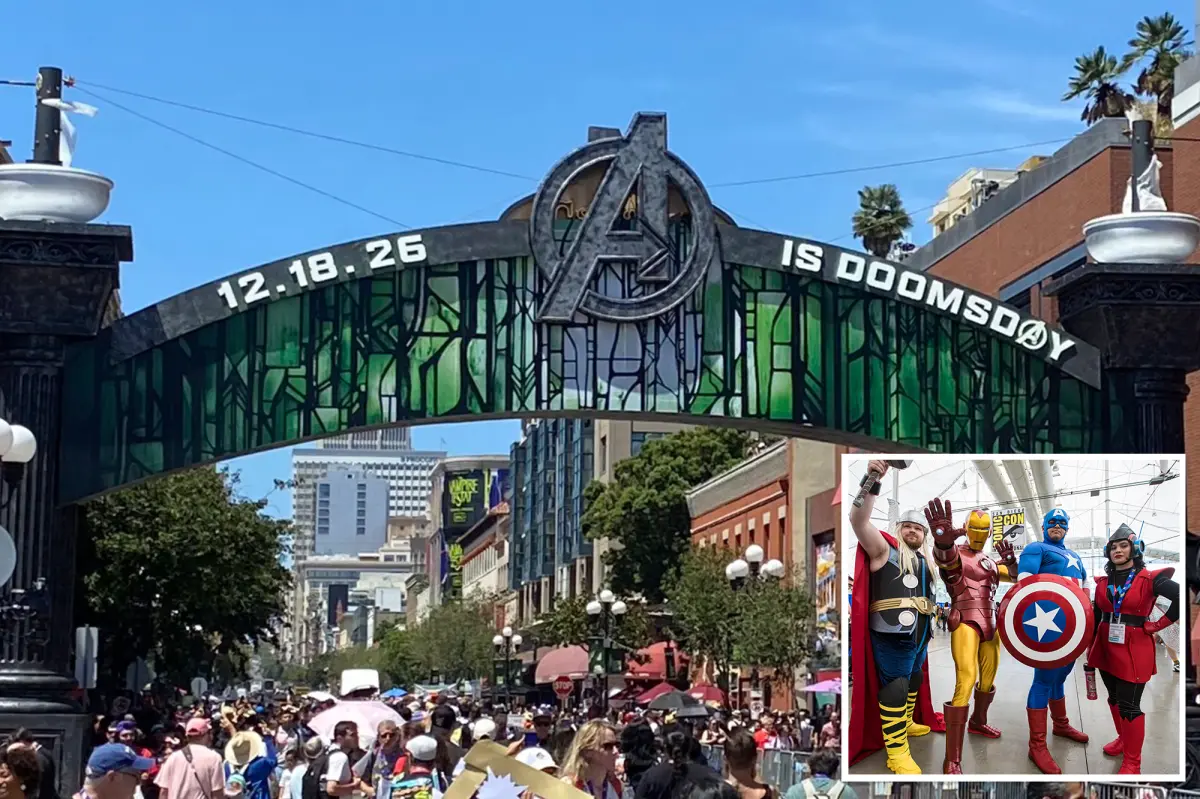
Every summer, the coastal city of San Diego undergoes a kaleidoscopic transformation as over a hundred thousand pop culture enthusiasts, dedicated cosplayers, and entertainment industry giants descend upon its downtown streets for Comic-Con. At the heart of this vibrant chaos lies the historic Gaslamp Quarter, anchored by its iconic, six-ton neon archway that has long served as the welcoming gateway to the weekend’s festivities. This year, however, the beloved local landmark became the center of a high-stakes showdown not between onscreen superheroes and villains, but between the corporate titan Marvel Studios and local municipal officials. In an audacious display of guerrilla marketing, Marvel, alongside the Los Angeles-based advertising firm Elevue Outdoor, enveloped the historic arch in a massive, imposing green-and-black display to promote their highly anticipated blockbuster Avengers: Doomsday. Despite explicit, pre-emptive warnings from San Diego city authorities urging them not to proceed due to structural and safety concerns, the massive branding went up anyway, creating an immediate visual and physical bottleneck in one of the most heavily congested pedestrian zones in the city and setting the stage for a dramatic clash between the unstoppable force of Hollywood marketing and the immovable object of local public safety regulations.
To understand the city’s frustration is to understand the immense logistical challenge of managing a crowd that rivals the population of a medium-sized city packed tightly into a few historic downtown blocks. San Diego officials were not merely playing the role of bureaucratic spoilsports; they were genuinely concerned that the heavy, unauthorized temporary structures wrapped around the historic, aging arch could come loose under the strain of coastal winds or the constant jostling of dense crowds, posing a severe physical hazard to the thousands of fans walking underneath. Furthermore, the installation included bulky black columns wrapped around the arch’s support pillars, which actively narrowed the heavily trafficked sidewalk on Fifth Avenue and restricted the flow of pedestrians shuffling through the area. When the contractors knowingly ignored the warnings and refused to address the safety risks, the city deployed a compounding financial penalty system designed to pinch even a wealthy advertiser’s pockets. What began as a $10,000 fine on Tuesday, before the convention even officially opened its doors, quickly escalated each day the display loomed overhead, racking up another $10,000 on Wednesday, $20,000 on Thursday, $30,000 on Friday, $40,000 on Saturday, and a final $50,000 on Sunday, culminating in a jaw-dropping $160,000 penalty.
While a six-figure fine would be a catastrophic financial blow to any ordinary citizen or small business, in the stratosphere of multi-million-dollar Hollywood promotional campaigns, such penalties are often viewed merely as a calculated line-item expense—the literal cost of doing business. Neither Marvel Studios nor Elevue Outdoor has publicly confirmed who will ultimately take responsibility for paying the mounting fines, but the gamble highlights a fascinating, albeit controversial, trend in how modern entertainment empires command public attention. In an digital era where online advertisements are easily swiped away or ignored, physical, unmissable spectacles in the real world hold immense, irreplaceable value for brand awareness. The forbidden “Doomsday” arch instantly became an inescapable backdrop for thousands of fan selfies, viral TikToks, and international news broadcasts, generating an organic level of global publicity that money simply cannot buy through traditional channels. By choosing to seek forgiveness rather than permission, the minds behind the campaign recognized that dominating the visual landscape of Comic-Con’s main thoroughfare was worth far more than the $160,000 penalty imposed by the city, illustrating the aggressive lengths to which modern entertainment brands will go to command the cultural conversation.
Interestingly, this massive Avengers stunt was not an isolated incident, but rather the crown jewel of a much broader, highly aggressive regulatory crackdown by San Diego code enforcement during this year’s convention. In total, the city handed out an additional $48,500 in fines to other advertisers who wrapped local hotels and historic downtown buildings in towering promotional vinyls without securing the proper permits—a figure that more than doubled the fines issued during the previous year’s event. Among those caught in the city’s regulatory crosshairs were major marketing campaigns promoting AMC’s The Walking Dead and Crave’s Yaga, which adorned prominent buildings like the Hilton San Diego Gaslamp Quarter and the popular local eatery Lou & Mickey’s, resulting in a joint $7,000 fine. This sudden surge in strict municipal enforcement signals a changing tide in how San Diego views its relationship with the convention’s ever-expanding commercial footprint. What was once a relatively relaxed, wild-west atmosphere where studios could easily plaster the city in promotional materials has evolved into a highly policed environment, as local authorities strive to reclaim control over the public right-of-way and ensure that the commercialization of the city does not compromise the safety of its citizens.
The regulatory drama unfolding on the sunny streets stood in stark, ironic contrast to the sheer, unadulterated triumph happening just a few hundred yards away inside the convention center’s legendary Hall H. There, Marvel Studios pulled off one of the most electric presentations in Comic-Con history, sending shockwaves through the global pop-culture landscape by announcing the return of Oscar-winner Robert Downey Jr. to the Marvel Cinematic Universe—not as his iconic Iron Man, but as the villainous Doctor Doom. Flanked by an ensemble of beloved Hollywood royalty including Chris Evans, Paul Rudd, Vanessa Kirby, and Kelsey Grammer, the studio cemented its absolute dominance over the weekend’s news cycle. To ensure the 7,000 ecstatic fans inside the hall felt like active participants in this dark new cinematic era, Marvel distributed complimentary Doctor Doom masks to everyone in attendance, transforming the crowd into a sea of metal-faced disciples. This massive, coordinated fan experience mirrored the very aesthetic of the controversial green-and-black archway outside, making the illegal street-level installation feel to fans like a physical, tangible extension of the fictional, theatrical takeover Marvel was actively staging inside the convention walls.
As the dust settles on another massive Comic-Con, the hefty fines have sparked a passionate debate among locals, business owners, and tourism experts about the delicate balance between public safety and economic hospitality. Carl Winston, the founding director of San Diego State University’s school of hospitality and tourism management, voiced concerns that the city’s increasingly adversarial penalization tactics could alienate its most valuable partners, warning that San Diego risks developing a reputation as a city that actively drives its biggest customers away. For a city that relies heavily on the hundreds of millions of dollars in economic impact generated by Comic-Con visitors each year, maintaining a cooperative and welcoming relationship with major corporate stakeholders like Marvel is crucial for long-term success. Ultimately, the $160,000 “Doomsday” fine serves as a poignant modern parable about the intersection of corporate ambition, public safety, and municipal pride, leaving both fans and city planners wondering how future conventions will navigate the thin, blurry line between spectacular public celebration and regulatory chaos.