






The Chokepoint Crisis: How US Strikes in Southern Iran Expose the Fragility of Middle East Peace Talks
Amid the sterile, high-stakes diplomatic chambers of Doha, Qatar, where delegates had just begun convening to iron out an elusive peace deal, the quietude of regional diplomacy was shattered on Monday by the roar of American fighter jets launching sudden military operations in the Persian Gulf. According to official dispatches from U.S. Central Command, American forces conducted what were characterized as highly targeted “self-defense strikes” in southern Iran, a preemptive kinetic intervention specifically designed to neutralize immediate, localized threats to coalition personnel deployed throughout the area. Striking missile launch sites and fast-moving Iranian vessels attempting to scatter naval mines across critical waterways, the military action underscored the incredibly volatile environment wherein tactical skirmishes constantly threaten to derail delicate diplomatic initiatives. Captain Tim Hawkins, speaking on behalf of Central Command, maintained a tone of measured resolve, asserting that the American military remains committed to defending its assets while exercising historic restraint under the terms of a six-week-old, yet highly fragile, bilateral cease-fire. This latest flare-up highlights the persistent, deeply rooted volatility of the Middle East geopolitical crisis, as Washington walks a tightrope between defensive posturing and avoiding a catastrophic collapse of the peace process. President Donald Trump has repeatedly signaled that a durable resolution in Doha could finally reopen the Strait of Hormuz, providing much-needed relief to a global economy reeling from the most severe international energy disruption experienced in modern history.
Guarding the Gulf: The Mechanics of the US Navy Blockade and the SAM Threat
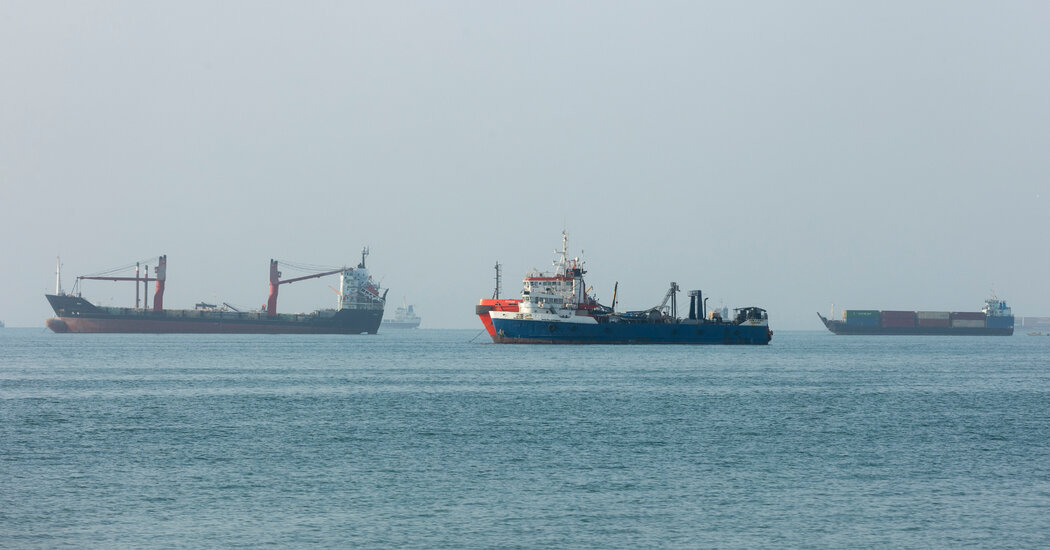
The sparks that ignited Monday’s aerial offensive can be traced directly to the dense concentrations of military hardware stationed in the Gulf of Oman and the Arabian Sea, where the U.S. Navy has maintained a chokehold on Iranian commerce. A senior U.S. military official, speaking on the condition of anonymity, revealed that key Iranian surface-to-air missile batteries had begun actively targeting or “painting” nearly two dozen U.S. warships—including two primary aircraft carriers and their accompanying strike group escorts—which have spent weeks enforcing a tight defensive cordon. This aggressive posture by Iranian coastal defense forces triggered an immediate tactical response, prompting US military strikes southern Iran targeting facilities near Bandar Abbas, a highly fortified deepwater port that serves as the crown jewel of Iran’s conventional navy and maritime logistics network. The sheer scale of this maritime operation is staggering: under the authority of the blockade initiated on April 13, American naval assets have intercepted, boarded, or redirected more than 100 commercial ships, disabled four non-compliant vessels, and processed the safe passage of 26 humanitarian aid carriers. By maintaining this strict cordon, the United States has successfully choked off illicit weaponry and oil smuggling, but the persistent threat of maritime confrontation remains. This has transformed the shipping lanes of the Arabian Sea into a high-stakes chessboard, where even a minor misjudgment by regional actors could ignite a wider conflagration.
The Intelligence Disconnect: Restored Arsenals and the Fallout of Public Victory Laps
Monday’s kinetic escalation has cast a stark, unforgiving light on the gap between optimistic political messaging in Washington and the reality on the ground, as detailed in classified intelligence assessments. For weeks, President Trump, Defense Secretary Pete Hegseth, and senior military commanders have assured the public that a devastating 38-day joint American-Israeli bombing campaign had successfully shattered Iran’s offensive capabilities, reducing its missile depots to smoldering ruins. Yet, highly confidential briefings delivered to policymakers early this month present a far more sobering reality: despite enduring weeks of relentless bombardment, Iranian forces have successfully restored operational access to 30 of the 33 heavily fortified missile launch installations lining the strategic Strait of Hormuz. Intelligence analysts report that while the initial air strikes caused undeniable cosmetic and structural damage, the core of the Iranian missile threat remains largely intact. This is due to subterranean engineering designs and hidden arterial networks that shielded critical assets from aerial devastation. This resilience has caught many coalition planners off guard, revealing that while the coalition won the battle for air superiority, they have yet to fully dismantle the deeply entrenched defensive infrastructure that Iran has spent decades constructing beneath its rugged coastal mountain ranges.
Asymmetric Endurance: How the IRGC Retained Its Offensive Punch
To understand how Iran survived a month-long, state-of-the-art military siege with its offensive capabilities mostly intact, one must analyze the strategic doctrine of the Islamic Revolutionary Guard Corps (IRGC), which prioritized asymmetric survivability above all else. While coalition forces successfully sent the bulk of Iran’s conventional fleet to the ocean floor, the IRGC saved its highly agile, low-tech assets—most notably hundreds of heavily armed speedboats—housing them in camouflaged coastal caves and shallow inlets where they can easily evade radar detection. These small craft present a constant, low-cost threat, capable of swarming commercial vessels or rapidly deploying undersea mines that could easily trigger a cataclysmic Strait of Hormuz oil tension event. Furthermore, current intelligence estimates indicate that Iran has retained roughly 70 percent of its prewar missile stockpiles, along with 70 percent of its mobile launcher inventory, which can be concealed in sophisticated underground bunkers and rapidly deployed to launch sites via hidden rail systems. This dual-threat arsenal comprises heavy ballistic missiles capable of strike missions across regional capitals, alongside cruise missiles designed to skim the water’s surface and target coalition warships at close range. This distribution of offensive power ensures that even under the pressure of a sustained blockade, Iran maintains the capability to retaliate at a moment’s notice.
The Munitions Dilemma: Pentagon Supply Crises and the Art of Underground Siegecraft
Behind the closed doors of the Pentagon, high-ranking military officials are grappling with a quiet but growing logistical crisis: critically depleted stockpiles of precision-guided, heavy bunker-busting weapons. Destroying deeply buried, reinforced concrete command centers and missile silos requires specialized heavy ordnance—such as the massive GBU-57 Massive Ordnance Penetrator—but weeks of sustained conflict have left American stockpiles depleted, prompting anxieties about long-term readiness in other potential global theaters. Facing these supply constraints, military planners previously opted for lighter, precision-guided munitions designed to collapse tunnel portals and access roads rather than attempting complete destruction of the underground facilities. This strategy, intended to seal Iranian forces inside their subterranean bases, underestimated the rapid-response engineering capabilities of specialized IRGC construction crews, who utilized heavy equipment and manual labor to dig out of blocked tunnels far faster than Western intelligence predicted. This dynamic cat-and-mouse game has forced military strategists to reconsider their approach, acknowledging that without a massive influx of heavy bunker-busting munitions, they cannot permanently neutralize these underground launch pads. This reality has left coalition naval forces vulnerable to sudden, surprise bombardments from coastal positions that were previously deemed neutralized.
Chokepoint Diplomacy: The High Stakes of the Strait of Hormuz and the Doha Peace Talks
As representatives gathered in Qatar to find a diplomatic resolution to this destructive war, the events near Bandar Abbas served as a stark reminder of the immense economic consequences at play. Prior to the outbreak of hostilities, the Strait of Hormuz functioned as the primary artery of international energy commerce, carrying roughly 20 percent of the world’s daily petroleum supply and serving as an essential corridor for global economic stability. The current blockade and the constant threat of naval skirmishes have driven oil prices to unprecedented heights, triggering a global energy disruption that has strained Western economies, disrupted manufacturing supply chains, and placed intense political pressure on the White House to secure a peaceful solution. The Doha negotiations represent more than just a diplomatic effort; they are a critical attempt to restore basic economic security to a fragile global market. Yet, Monday’s “self-defense strikes” demonstrate that the path to peace is fraught with danger, where tactical military actions can easily derail diplomatic progress. As negotiators struggle to find common ground, the global community is left to watch the Persian Gulf, where the thin line between a historic diplomatic breakthrough and an all-out regional war continues to be tested with every missile launch and naval maneuver.