





For years, the picturesque peninsula of Crimea, stretching out luxuriously into the warm waters of the Black Sea, existed under a fragile illusion of permanent serenity. Even after its controversial annexation by the Russian Federation in 2014, the region was portrayed by Moscow as an untouchable stronghold of leisure and safety, insulated from the violent realities of the mainland conflict. That illusion, however, was shattered with terrifying finality on a recent Friday when local authorities were forced to declare a peninsula-wide state of emergency. The declaration followed an unprecedented and relentless campaign of Ukrainian air attacks, culminating in a colossal overnight assault that Russian defense officials described as one of the largest coordinated drone offensives since the war began. According to statements from the Russian Defense Ministry, air defense systems scrambled to intercept an astonishing 660 Ukrainian drones across Crimea and roughly a dozen other bordering regions in a single night, followed by an additional 46 drone interceptions the very next morning. While the ministry remained deliberately tight-lipped regarding the exact casualties or structural damage, the sky over Crimea had transformed from a canopy of summer stars into a chaotic grid of air-defense fire, tracer rounds, and explosive detonations, leaving the local population to wake up to a stark and terrifying new reality where the frontlines of the war had finally arrived at their doorsteps.
The immediate fallout of this massive aerial bombardment has completely crippled the infrastructure of Crimea, turning the mundane tasks of daily life into exhausting battles for basic survival. For the ordinary residents who call this contested territory home, the air raids have triggered a domino effect of domestic catastrophes that have systematically dismantled the comforts of modern existence. Gas stations across the peninsula have run entirely out of fuel, leaving desperate motorists stranded in mile-long queues at the few remaining pumps that still have reserves to sell. Compounding the misery, severe electricity shortages have triggered rolling power outages across cities and rural communities alike, plunged entire neighborhoods into sudden darkness, and silenced the electric water pumps that millions rely on for plumbing and drinking water. Perhaps the most heartbreaking toll of this sudden escalation, however, is felt by the region’s children. Summer camps—long cherished as a joyful rite of passage in Crimea’s sunny coastal towns—have been abruptly canceled mid-season, and hundreds of children have been evacuated from recreational centers under the anxious watch of soldiers and volunteers. What was supposed to be a season of laughter, campfire songs, and swimming has been replaced by the sterile, frightening atmosphere of emergency evacuation buses, as parents grapple with the gut-wrenching realization that their children’s sanctuaries are no longer safe.
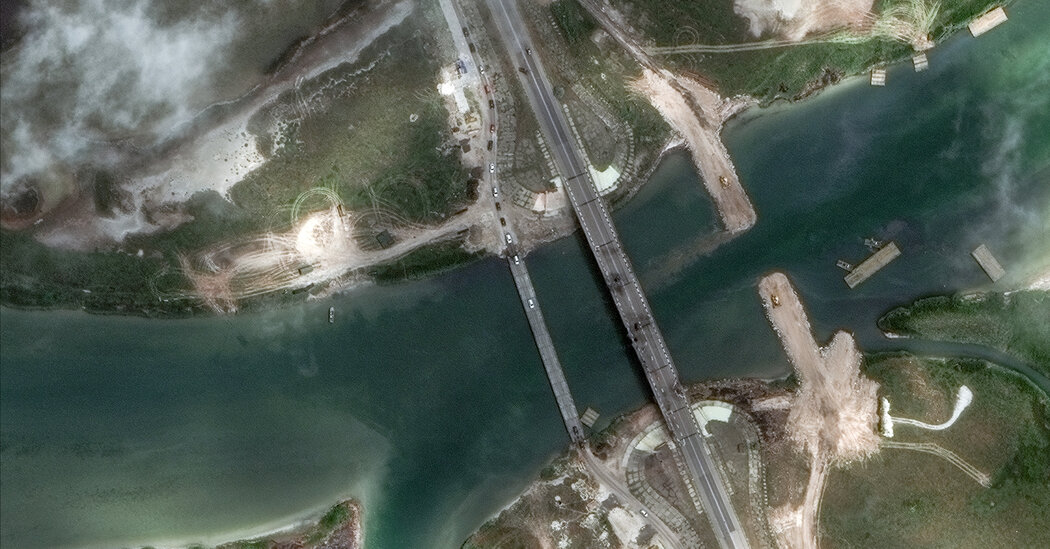
This dramatic decay of safety has also dealt a devastating blow to Crimea’s identity as Russia’s premier vacation paradise. For generations of Russian families, a summer trip to the Crimean Riviera was a coveted tradition, a place of pebble beaches, historical palaces, and sun-soaked relaxation. Today, those dreams of leisure have evaporated into panic and flight. Thousands of tourists who had traveled hundreds of miles to enjoy their vacations found themselves packing their bags in a frenzy, cutting their trips short as explosions shook the nearby coastlines. On the Crimean side of the towering Kerch Strait Bridge—the multi-billion-dollar engineering marvel that physically links the peninsula to the Russian mainland—the scene was one of sheer gridlock. Exhausted families sat trapped in their cars for hours, creating a massive, agonizingly slow-moving column of vehicles stretching far into the horizon, all desperate to cross back into the safety of Russia proper. In a haunting visual contrast that underscored the peninsula’s sudden isolation, officials noted that while the lanes leading out of Crimea were choked with fleeing vacationers, the lanes heading into the territory were entirely empty, serving as a silent testament to the fact that the flow of tourism, and perhaps the region’s economic lifeblood, had ground to a complete and terrified halt.
In the midst of this escalating chaos, the political leadership of the region scrambled to project an aura of control, even as their administrative actions signaled a profound crisis. Sergei Aksyonov, the Russian-appointed governor of Crimea, appeared in a somber video address on Friday to officially announce the state of emergency, attempting to frame the drastic measure in sterile, bureaucratic terms as a necessary step to “streamline financial, monetary, credit, and contractual relations.” Shortly thereafter, Mikhail Razvozhayev, the governor of Sevastopol—Crimea’s largest city and the historic home of Russia’s Black Sea Fleet—issued a mirroring declaration for his municipal district. Behind this clinical, administrative language lies a grim legal reality: the state of emergency effectively transitions the civilian government into a wartime administration. It grants local officials sweeping, unchecked powers to bypass standard democratic and bureaucratic protocols. Under these emergency provisions, authorities can now unilaterally bypass public bidding processes to fast-track military and infrastructure spending, seize private resources for public use, and, most tellingly, orchestrate mandatory civilian evacuations. The implementation of these laws reveals that beneath the calm, official press releases, the leadership is quietly preparing for the very real possibility of a prolonged, high-intensity siege.
This relentless air campaign is not a series of random strikes, but rather a deeply calculated component of Ukraine’s broader military strategy to isolate Crimea and break the Russian public’s sense of immunity from the horrors of the war. By targeting critical bridge infrastructure, logistical corridors, fuel depots, and military bases, Ukraine seeks to turn the peninsula from an offensive launching pad into an unsustainable liability for the Kremlin. Increasingly, these strikes have begun to spill over into the Russian mainland itself, systematically dismantling the bubble of peace that many ordinary Russian citizens had managed to maintain since the invasion began in 2022. Just a week prior to the Crimean emergency, Ukraine executed its most audacious drone raid on the Moscow region since the start of the conflict. That attack paralyzed the capital’s aviation network by forcing the temporary suspension of flights at all four of Moscow’s international airports, heavily damaged a vital oil refinery, and brought the physical violence of the war directly to the doorsteps of the Russian elite. Yet, the military utility of these strikes is continuously overshadowed by the profound human tragedy they leave in their wake; the Moscow raid left at least 17 people severely wounded and claimed the life of an innocent eight-year-old girl, offering a devastating reminder that in this modern war of drones and air defenses, the ultimate price is paid by those who have no say in its waging.
As Crimea settles into an indefinite state of emergency, its people are left to contemplate a deeply uncertain and perilous future. The peninsula, which for a decade was championed by Russian state media as a shining symbol of successful integration and unshakeable peace, has now become a central theater of a grinding, destructive war. The heavy iron dome of air defense that once promised total security has proven porous, and the peaceful daily rhythms of the local population have been replaced by the constant, low-grade dread of the next siren, the next blackout, or the next empty water tap. The vacationers have fled, the children have been sent away, and the highways are clogged with those looking for a way out. For the millions of ordinary citizens trapped in the middle of this geopolitical tug-of-war, the romanticized allure of Crimea’s coast has been replaced by the bleak reality of a garrison state. They are left to survive in a land where the skies are no longer a source of summer beauty, but a constant vector of threat, and where the promise of a return to normalcy seems more distant with every passing day.