





The Great Digital Partition: Inside Britain’s Historic Move to Ban Social Media Under 16
A Christmas Decree: The Political Spark Behind Starmer’s Digital Shield
               THE PROPOSED U.K. DIGITAL SHIELD (2027)

 [ COVERED IN BAN: UNDER 16 ]               [ EXEMPT FROM BAN ]
+———————————+ +—————————+
| • Instagram • TikTok | | • WhatsApp |
| • Snapchat • YouTube | | • Signal |
| • X • Gaming Streams | | • Basic Messaging Tool |
+———————————+ +—————————+
│ │
▼ ▼
Subject to Age Verification, Permitted for peer-to-peer
Curfews & Infinite Scroll Bans emergency communication
In a sweeping legislative gambit designed to fundamentally rewrite the rules of modern adolescence, Prime Minister Keir Starmer announced on Monday that the British government intends to legally prohibit all children under the age of 16 from accessing social media platforms. Speaking to reporters at a closely watched news conference, Starmer revealed that the landmark legislation would be formally introduced to Parliament before Westminster rises for the Christmas recess, with the absolute prohibition scheduled to take effect in the early months of 2027.
The scope of the proposed restrictions, which represents one of the most interventionist regulatory measures in the history of the Western internet, is not limited to conventional social networks; it will also engulf livestreaming applications, interactive gaming platforms, and various other public-facing digital spaces where minors regularly congregate.
“I am not prepared to compromise on the safety and happiness of our children, and that is why this ban must happen,” Starmer declared, casting the decision as an urgent moral imperative rather than a mere policy preference.
The Prime Minister’s resolve, however, cannot be separated from the complex domestic political landscape. The announcement comes at a juncture of acute vulnerability for Starmer, who has faced intense internal scrutiny and threats to his leadership from factions within his own Labour Party following a string of devastating losses in May’s local elections. Critics argue that the timing of the ban is highly calculated—a powerful populist maneuver engineered to recapture political momentum, unite a fractured electorate, and respond to a rapidly crystallizing public consensus demanding unprecedented state intervention online.
Drawing the Digital Line: Scope, Curfews, and the Fight Against Infinite Scrolls
PROPOSED REGULATORY TIMELINE:
March 2024 Mid-2024 Dec 2024 Early 2027
Public Consultation Grassroots Surge Legislation Table Full Enforcement
Launched (Mumsnet/SFC) in Parliament Takes Effect
──────┼───────────────────┼───────────────────┼───────────────────┼──────►
│ │ │ │
▼ ▼ ▼ ▼
116k+ Responses Public Outcry Bipartisan Debates Age Gates Active
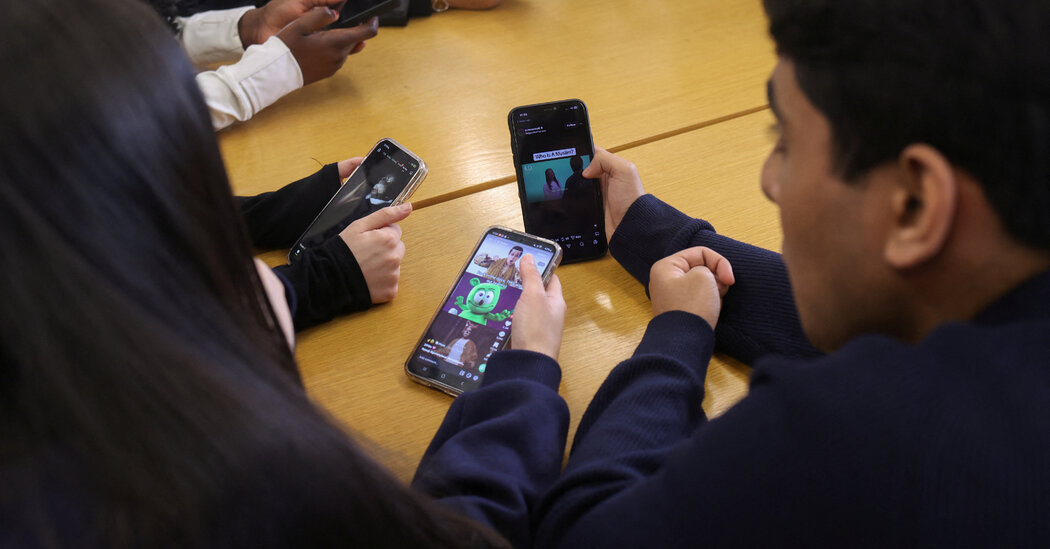
Underpinning this historic regulatory push is a comprehensive blueprint designed to sever young teenagers from the algorithmic feedback loops that have come to dominate their daily routines. According to Whitehall officials, the ban will operate under a model similar to the pioneering legislation passed by Australia, creating a strict legal boundary that will block under-16s from mainstream networks including Snapchat, TikTok, Instagram, Facebook, and X.
Crucially, the British government intends to exclude utility-based, encrypted messaging networks like WhatsApp and Signal from the absolute ban, acknowledging that secure peer-to-peer communication remains a vital practical necessity for modern families.
However, the architecture of the proposed regulations goes far beyond simple app blockades. The government’s upcoming legislative deck, expected to be unveiled in full detail next month, will target the broader gaming ecosystem where millions of children regularly interact with unverified adults across multiplayer landscapes.
Additionally, policymakers are actively drafting provisions to enforce strict overnight curfews and legally mandate the elimination of “infinite scrolling” features for all minors under 18. By targeting these specific design mechanisms—frequently criticized by psychologists as digital equivalents of slot machines—the government hopes to systematically dismantle the addictive hooks that keep the nation’s youth tethered to screens late into the night, thereby addressing sleep deprivation and attention fragmentation at their structural source.
A Mandate of Exhaustion: How Public Grief and Parental Anxiety Reshaped Policy
The impetus for this dramatic policy shift is rooted in a profound groundswell of public anxiety and collective exhaustion among British parents, who feel they have been left to police an uncontrollable digital frontier on their own. The sheer scale of this domestic consensus was laid bare in a landmark YouGov survey, which revealed that 74 percent of adults across the United Kingdom supported an outright ban on social media access for children under the age of 16.
This statistical reality was further validated by a massive public consultation exercise launched by the government, which drew an unprecedented 116,000 responses from parents, educators, youth advocates, and mental health professionals. Within this vast repository of direct testimony, an overwhelming 90 percent of responding parents expressed active support for a strict minimum age threshold of 16, while 85 percent declared that the demonstrable psychological risks of social media ownership vastly eclipsed any educational or social benefits.
Yet, as the state moves to codify this anxiety into law, it faces powerful warnings from those who have suffered the most catastrophic outcomes of the digital age. Ian Russell, whose 14-year-old daughter, Molly, tragically ended her life in 2017 after being systematically served algorithmic content related to self-harm and suicide, emerged as a prominent critic of the government’s strategy. Russell, who has spent years campaigning for robust platform accountability, warned that a “politically expedient blanket ban” serves as a dangerous distraction.
By simply locking young people out of platforms, Russell argues, the government is effectively letting multi-billion-dollar tech conglomerates off the hook, allowing them to preserve their unsafe, toxic algorithmic ecosystems for older users rather than forcing them to redesign their products to be fundamentally safe for human consumption.
YOUGOV & PUBLIC CONSULTATION INSIGHTS: PARENTAL SENTIMENT[ Support 16+ Minimum Age ] ==================================== 90%
[ Risks Outweigh Benefits ] ================================== 85%
[ General Public Support ] =============================== 74%
The Echo of the Kitchen Table: Grassroots Jubilation and the Fight Against Big Tech
Despite these warnings, for a significant and vocal segment of the British parenting community, the government’s decisive stance represents an extraordinary victory in a cultural war they felt they were desperately losing. For years, the prevailing consensus advocated for individual parental responsibility, leaving families to negotiate device contracts and manage complex monitoring software in isolation.
Justine Roberts, the founder and chief executive of Mumsnet—the UK’s most influential online forum for parents—hailed the Prime Minister’s announcement as a watershed moment for children’s online safety. Roberts noted that the proposed law provides an invaluable hand of support to millions of parents who have spent years feeling utterly powerless in the face of addictive technologies specifically engineered to hold children captive to their screens.
This sentiment was passionately echoed by Smartphone Free Childhood, a prominent grassroots charity founded in 2024 by three exhausted parents that quickly grew into a massive national movement. Joe Ryrie, one of the organization’s co-founders, described the proposed ban as a critical turning point that shifts the burden of child protection from the shoulders of individual families to the state.
Ryrie argued that under the current paradigm, parents have been forced into an impossible, daily combat with global tech monopolies possessing infinite psychological and financial resources. By establishing a uniform, legally binding age limit of 16, the government effectively establishes a domestic peace treaty, removing the immense peer pressure that forced parents to capitulate to their children’s digital demands simply to prevent them from becoming social outcasts in the schoolyard.
The Enforcement Dilemma: Lessons from Australia and the Tech Industry Backlash
SERVERS AGE VERIFICATION GATEWAY DEVICES+————+ +—————————-+ +————+
| Social | | • Government ID Check | | User is |
| Media |◄────┼───• Biometric Facial Scan |◄────┼─── Under |
| Platforms | | • Device OS-Level Token | | Age 16 |
+————+ +—————————-+ +————+
▲ │
│ ▼
[ Hard Bypass ] [ Access Denied / ]
[ via VPN? ] [ Offline Safety ]
As the initial euphoria of the announcement subsides, both Westminster and Silicon Valley are bracing for an incredibly complex implementation battle, haunted by the mixed epidemiological results of similar international experiments. Analysts have pointed out that in Australia—where a parallel ban was codified into law—early data suggests the ban has faced immense enforcement hurdles. Six months into the trial, reports indicate that a vast majority of underage teenagers continue to access their accounts via basic Virtual Private Networks (VPNs) and alternative identity profiles.
This reality has emboldened the global technology lobby to mount a fierce defense against Britain’s proposed legislation. The Computer and Communications Industry Association (CCIA), which represents the interests of the world’s largest digital platforms, warned that a blunt, blanket prohibition is a crude tool that threatens to cause severe unintended consequences. Matthew Sinclair, the CCIA’s senior director in the UK, warned that locking teenagers out of regulated, mainstream platforms will simply drive them to seek out unregulated, highly dangerous alternative spaces on the dark web or unmoderated forums where parental controls are nonexistent.
Concurrently, tech majors like Meta and Google have begun outlining their own plans to challenge or redirect the legislation’s enforcement mechanisms. Meta, the parent company of Instagram and Facebook, issued a defensive statement highlighting its existing suite of teen-safety protections while arguing that any age verification mandates must be integrated directly into mobile operating systems—such as Apple’s iOS and Google’s Android—rather than requiring individual companies to collect sensitive government identification from millions of users.
Meanwhile, YouTube defended its track record by pointing to more than a decade of active, expert-led investments in age-appropriate content filters, describing its platform as an indispensable educational resource for British students. These strategic maneuvers signal a prolonged, highly technical lobbying battle ahead, as the government attempts to define exactly what technological standards tech platforms must adopt to verify their users’ ages without violating fundamental domestic privacy laws.
An Unfinished Global Evolution: Reclaiming the Boundaries of Childhood
| Country / Region | Regulatory Approach to Under-16 Social Media | Key Enforcement Mechanism |
|---|---|---|
| United Kingdom | Proposed blanket ban (takes effect early 2027) | Platform limits, curfews, scroll bans |
| Australia | Enacted statutory ban | Rigid device & ID-based check pilots |
| European Union | Active continent-wide debate on digital age minimums | GDPR age-consent & Digital Services Act |
| United States | Fragmented state-level age gates and parental consent laws | Ongoing judicial challenges (1st Amendment) |
The unfolding legislative battle in London is part of a much larger, global paradigm shift, as democratic societies everywhere struggle with the profound sociological consequences of the smartphone era. The debate has reached the highest corridors of international diplomacy, serving as a central point of discussion at a recent meeting of the Group of 7 nations in Evian, France.
Addressing world leaders, Ursula von der Leyen, the president of the European Commission, neatly reframed the entire issue, stating that the primary debate is no longer whether young people should have access to digital tools, but rather whether predatory business models should have unrestricted access to the developing brains of children. This philosophical shift highlights a growing determination among global policymakers to roll back the unregulated expansion of the internet and re-assert state sovereignty over the mental health of future generations.
In the face of relentless skepticism from tech advocates and civil libertarians who argue that determined teenagers will easily bypass any digital gate, Prime Minister Keir Starmer remains defiant. Addressing critics who claim that age verification systems are inherently leaky systems that can never fully succeed, Starmer drew an uncompromising, analog parallel to traditional public safety laws.
“They get around other laws, too, but we don’t say, ‘Oh, look, a teenager managed to get a drink somehow, so let’s not bother banning alcohol sales to children,’” Starmer argued, dismissing the defeatist narrative as entirely illogical.
As the United Kingdom embarks on this historic regulatory experiment, the world will be watching to see if a modern nation-state can successfully decouple the experience of childhood from the addictive power of the screen, or whether the digital tide has already risen too high to be turned back by an Act of Parliament.