


Diplomatic Fury: UK Summons Iranian Envoy Over Alleged Incitement of Violence Amid Rising Tensions
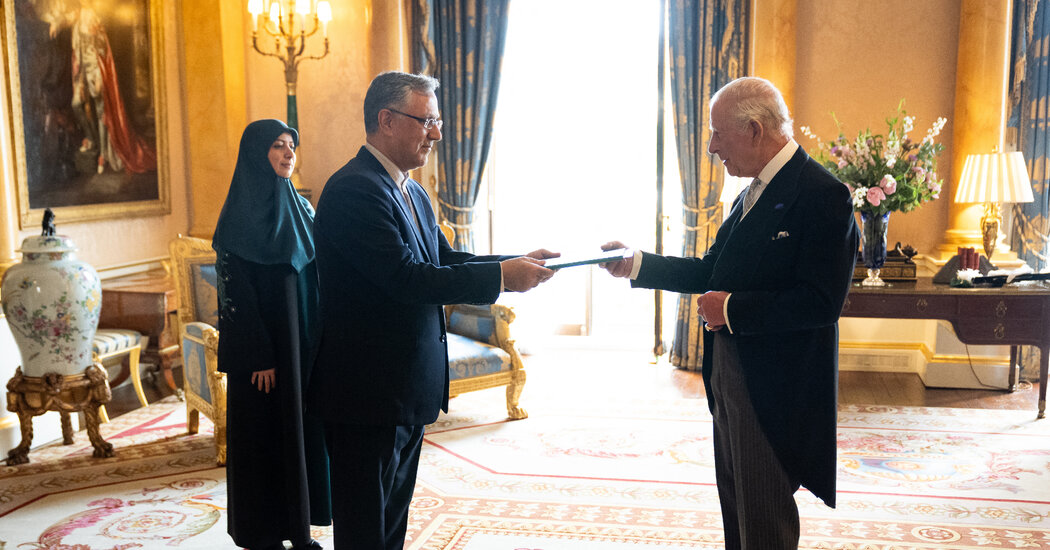
In a swift and pointed diplomatic maneuver, the British government has summoned the Iranian ambassador to London, casting a spotlight on the deteriorating relations between two nations entrenched in geopolitical strife. This action, unveiled on Tuesday, stems from what the UK Foreign Office describes as “unacceptable and inflammatory comments” disseminated by the Iranian Embassy’s official social media channels. As the war in the Middle East escalates, Britain’s Middle East Minister Hamish Falconer conveyed the stern message that such rhetoric must cease, warning it could be misconstrued as an encouragement for violence within the UK or on the international stage. The incident underscores a broader pattern of distrust, where accusations of espionage, cyber threats, and state-sponsored mischief have strained ties, prompting London to bolster defenses against what it perceives as hostile state actions from Iran and beyond. This diplomatic showdown not only highlights the volatility of international relations but also raises questions about the boundaries of embassy communications in an era when words on platforms like Telegram can ignite real-world conflicts.
Diving deeper into the heart of the controversy, the Iranian Embassy’s post—a rallying call posted earlier this week—invites Iranians residing abroad to sign up for its “Sacrifice for the Homeland” campaign. Phrased in emotive terms, the statement urges “all proud sons and daughters of Iran” to embody unity and patriotism, culminating in a pledge to “stand together, ready to sacrifice our lives, for it is better than surrendering our country to the enemy.” While the embassy’s intent appears to foster national solidarity in the face of perceived threats to Iran’s territorial integrity, authorities in Britain view it through a lens of alarm. Foreign Secretary David Lammy’s team has publicly lambasted the message, arguing that its vague language leaves room for interpretation that could spur unrest. Experts in international diplomacy note that such calls, especially when aimed at diaspora communities, often blur the line between symbolic patriotism and operational encouragement, potentially violating host country laws against incitement. As one analyst from the Chatham House think tank remarked, “In times of heightened tensions, what starts as a metaphorical rallying cry can embolden fringe elements, leading to unintended escalations.” This episode echos past instances where state rhetoric has fueled diasporic fervor, from historical revolutions to modern-day proxy conflicts.
The Iranian response, issued promptly, vehemently denies any ulterior motives, labeling Britain’s interpretation as a “misleading and inaccurate” distortion. A statement from the embassy clarifies that the campaign is purely symbolic, designed to inspire moral readiness against foreign aggression without any plans for violent actions abroad. Ambassador Seyed Ali Mousavi, who has faced similar chastisement before, reiterated that the initiative promotes cohesion among Iranians worldwide, emphasizing themes of loyalty and defense. This defensive stance reflects Iran’s longstanding narrative of self-protection, particularly amid Western sanctions and regional rivalries with Israel and Saudi Arabia. Diplomats familiar with Tehran-London exchanges suggest that such rebuttals are part and parcel of a propagandistic playbook, where accusations are deflected with charges of bias. Yet, for observers, the question lingers: in a globalized world where social media amplifies voices instantly, how far does an embassy’s prerogative extend before it crosses into provocation? Legal experts point out that while embassies enjoy certain immunities under the Vienna Convention, inciting harm remains a red line, potentially inviting reprisals like reduced diplomatic privileges or even expulsions.
Compounding the unease are reports of espionage and retaliatory attacks that paint a picture of Iranian influence probing Western soil. Just months ago, the ambassador was summoned following accusations that Iranian nationals conducted surveillance on Jewish community sites in north London, a move tied to Tehran’s alleged efforts to monitor dissent. This wasn’t an isolated event; across Europe— from Germany’s synagogues to France’s cultural landmarks—a wave of arson incidents has been claimed by an enigmatic online group suspected of Iranian affiliations. Britain’s Jewish community, concentrated heavily in north London, has borne the brunt, with over half of the UK’s roughly 300,000-strong population residing there. Counterterrorism chief Vicki Evans has not ruled out state links, stating that police are investigating whether these acts represent “recruiting violence as a service,” reminiscent of Iran’s use of proxies in the region. Such tactics, she warns, echo the regime’s methods in Yemen and Syria, where criminal networks serve geopolitical ends. As investigations unfold, the incidents highlight a creeping shadow of state-sponsored unrest, where digital campaigns could morph into physical threats, challenging law enforcement’s capacity to preempt.
Amid this backdrop, the broader context of the Middle East conflict looms large, with Britain’s warnings of threats from Iran and Russia signaling a recalibration of national security postures. The Iran-Israel proxy war, fueled by Hamas’s October attacks and Tehran’s ballistic showcases, has forced Western powers to applaud alliance partners while grappling with domestic fallout. Reports suggestMoscow and Tehran have intensified cooperation on everything from drones to cyber operations, raising alarms in NATO circles. For UK Prime Minister Keir Starling’s government, this summons serves as a lodestar, reinforcing commitments to safeguard British borders and communities. Analysts at the International Institute for Strategic Studies argue that ratcheting up diplomatic pressure deters further aggression, but it risks retaliation, such as economic sanctions or tit-for-tat expulsions in Tehran. Public sentiment in Britain, already wary post-Brexit, is inflamed by these developments, with polls indicating growing fears of foreign meddling in elections and infrastructure. This diplomatic friction, therefore, is not merely bilateral; it’s a microcosm of wider fractures, where global powers vie for influence in an increasingly interconnected tapestry of conflict.
Looking ahead, this episode may herald tougher measures from London, including enhanced monitoring of foreign embassies’ online activities and closer collaboration with allies like the US and EU partners. Experts predict that as Middle East hostilities persist—potentially with Israeli strikes on Iranian proxies—these tensions could metastasize, affecting trade, travel, and even cultural exchanges. For Iranian expats in Britain, caught in the crossfire, the campaign’s ambiguity poses personal dilemmas, balancing homeland loyalty with life in a host nation that demands allegiance to its laws. Reporters Yeganeh Torbati from Istanbul and Sanam Mahoozi from London have noted a palpable shift: where once visas flowed freely, now scrutiny prevails. Ultimately, as Falconer insists, diplomacy thrives on mutual respect, but when lines are blurred, summonings like this remind all parties that words wield power—and consequences. In a world teetering on the edge of escalation, understanding these nuances could be key to averting the next chapter of international discord.