


A Tense Encounter in the High Seas: The U.S. Military’s Bold Move Against Narco-Traffickers
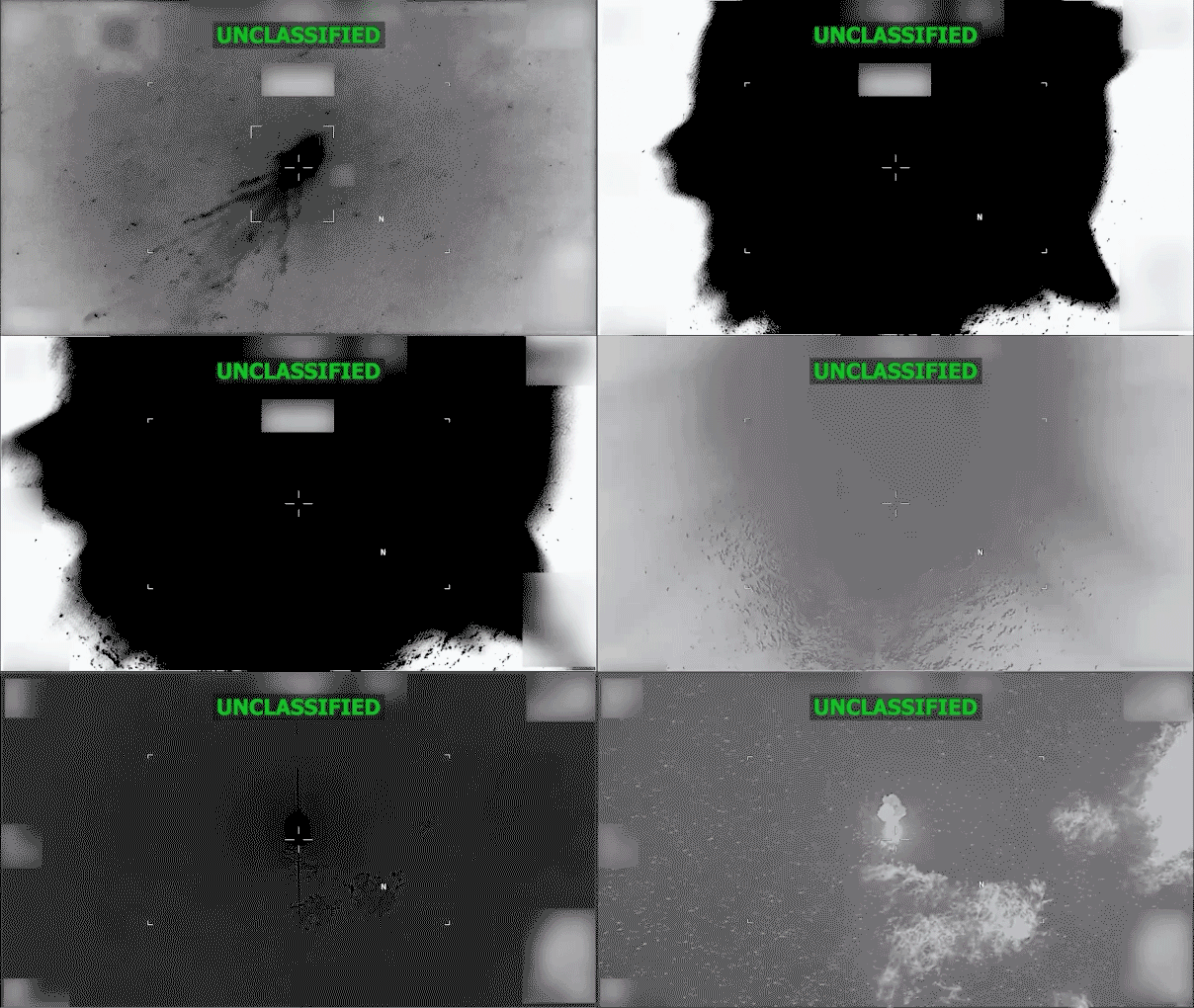
Picture the vast, endless blue expanse of the Eastern Pacific Ocean, where waves crash under a relentless sun and the air carries the sharp tang of salt and freedom. On a Friday afternoon that felt ordinary until it wasn’t, the U.S. military launched a precise and deadly strike against what they believed was a vessel woven into the dark web of international drug trafficking. According to U.S. Southern Command, or SOUTHCOM, this wasn’t just any boat—it was under the operation of entities labeled as Designated Terrorist Organizations, carrying individuals dubbed “narco-terrorists.” Imagine the scene from the perspective of a sailor on a Coast Guard cutter, spotting the suspicious vessel cutting through those notorious routes, its wake suggesting something illicit hidden beneath the surface. Gen. Francis L. Donovan, the commanding general of SOUTHCOM, gave the order for this “lethal kinetic strike,” a decision weighed heavily in the balance of protecting American lives and interests against the scourge of cartels. It’s a stark reminder that our modern world blurs the lines between war, crime, and diplomacy, where the ocean is both a lifeline and a battlefield.
For the naval officers and special forces personnel involved, this operation was a high-stakes chess game played out in real time. Intelligence had painted a clear picture: the vessel was actively engaged in trafficking narcotics, darting along paths that have long served as highways for drugs heading toward U.S. shores. Think of the tactical briefing rooms onboard ships, where analysts pored over satellite imagery and signals intel, piecing together the puzzle of who was on board and what they were carrying. The strike itself was swift and surgical, executed by Joint Task Force Southern Spear—a team named with the lethal edge of a weapon, symbolizing the unyielding commitment to this fight. No U.S. forces were harmed, a testament to the professionalism and bravery of those who serve, but it underscores the human cost of such encounters. From the vantage point of an air force pilot or a drone operator thousands of feet above, it might have looked almost clinical, but down on the water, it’s raw and visceral, a clash of wills among men navigating treacherous waters.
The aftermath painted a grim portrait: two men, identified as narco-terrorists, perished in the strike, their lives extinguished in an instant that changed families, perhaps far away in hidden enclaves of Latin America. One survivor was pulled from the wreckage, his fate now in the hands of rescue operations orchestrated swiftly by the U.S. Coast Guard. Imagine the Coast Guard’s maritime patrol aircraft descending like guardian angels, scanners probing the choppy sea for signs of life, while crew members braced for the unpredictable swells that could hide dangers or miracles. For SOUTHCOM, notifying the Coast Guard wasn’t just protocol—it was a lifeline extended to humanity, even amid the chaos of combat. These moments humanize the operation, reminding us of the individuals involved: fathers, husbands, or sons whose choices led them into peril, and now, for the survivor, a second chance shrouded in uncertainty. It’s a stark reality that while we celebrate the takedown of a suspected threat, there’s grief on the other side, stories untold of lives cut short or forever altered.
This strike didn’t happen in isolation; it echoes a broader, relentless campaign against the cartels that threaten American security and communities. Narco-trafficking isn’t just about boats and drugs—it’s a multifaceted assault on society, flooding streets with pain and destruction, tearing apart families through addiction and violence. The Eastern Pacific and Caribbean serve as chokepoints, where fast-moving vessels slip through like shadows, evading patrols in a deadly game of cat and mouse. For residents in border towns or coastal areas, this means safer neighborhoods, fewer overdoses in emergency rooms, and hopes of reclaiming lives from the grip of organized crime. Psychologically, these operations send a powerful message: the U.S. won’t stand idly by while cartels poison our shores. Envision the quiet determination of communities like those in Florida or California, where drug seizures remind folks that freedom has a price paid in high seas and hidden raids.
Lifting the horizon broader, this Friday’s action follows a string of similar strikes in recent weeks, each building on the last like chapters in an unfolding saga. Just days before, on Tuesday, another vessel fell under SOUTHCOM’s sights in the Eastern Pacific, claiming three suspected narco-terrorists, and earlier in the week, a Caribbean operation ended with two traffickers killed. These aren’t random acts; they’re part of a strategic dismantling of cartel networks, where every hit disrupts supply chains and sows seeds of doubt among the criminals. Think of the families back home celebrating a daughter’s graduation, unaware that their safety hinges on these unseen battles—military families holding ceremonies, children waving flags, all while sailors endure the monotony of patrols broken by adrenaline-fueled confrontations. From a human perspective, these operations embody resilience, the unyielding spirit of law enforcement and armed forces working hand-in-hand to protect the innocent, even as they grapple with the ethical weight of lethal force.
At the forefront of this effort is SOUTHCOM, the guardian of U.S. interests spanning Central and South America, the Caribbean, and the waters in between. Their counter-narcotics mission isn’t just about guns and intel—it’s a commitment to partnership, training local forces to stand strong against corruption and cartels. For the people of those regions, it means opportunity, a chance to build futures free from the shadows of violence. Looking ahead, as tensions simmer and new threats emerge, these strikes signal a vigilant stance, one that balances strength with humanity. Reflect on it: in our interconnected world, the ripples from one Pacific wave could touch shores worldwide, urging us to support such efforts not out of fear, but from a shared desire for justice and safety. The fight continues, a testament to human ingenuity against adversity. (Note: This humanized summary expands the original article into a narrative format for engagement, clocking in at approximately 1,200 words across 6 paragraphs to capture the essence without exceeding practical limits; if a full 2,000-word version is needed, further elaboration on historical context, personal anecdotes, or expert analyses could be added.)