






The Brink of War and the Path of Diplomacy: Inside the High-Stakes Negotiations Reshaping US-Iran Relations
A Nation on the Edge: The High-Stakes Balancing Act of Coercion and Conciliation
The geopolitical landscape of the Middle East has long been defined by a volatile cycle of escalation and fragile détentes, but the past week pushed the long-running confrontation between Washington and Tehran to a dangerous, razor-thin edge. As the United States repeatedly threatened to unleash a devastating campaign of air strikes targeting Iran’s core infrastructure, the newly reconstituted leadership in Tehran responded with a sophisticated, dual-track stratagem. On one front, Iran’s state apparatus organized a highly visible, aggressive campaign of domestic mobilization and martial posturing designed to project a posture of total readiness for an all-out, asymmetric military conflict. Simultaneously, behind this wall of curated defiance, Iranian diplomats engaged in a frantic, high-stakes diplomatic marathon, utilizing European, regional, and international intermediaries to construct an emergency exit from the precipice of war. By Saturday, this high-pressure gamble appeared to yield a dramatic breakthrough, signaling that the quiet avenues of backchannel diplomacy were successfully outpacing the immediate march to kinetic warfare. The shift became palpable following an optimistic social media announcement from President Donald J. Trump indicating that an agreement was close to completion, a claim quickly corroborated by three senior Iranian officials who, speaking on the condition of anonymity to discuss highly sensitive negotiations, revealed that Tehran had formally agreed to a landmark memorandum of understanding. This sudden diplomatic pivot, punctuated by statement-making declarations of “peace with strength” from Deputy Foreign Minister Kazem Gharibabadi, offers the most substantial evidence since last month’s tenuous cease-fire that both capitals are actively seeking an off-ramp from a catastrophic regional war.
The Geopolitical Blueprint: Reopening the Strait of Hormuz and Dismantling the Naval Blockade
At the strategic heart of this newly proposed memorandum of understanding lies a grand transactional bargain that directly addresses the economic and military bottlenecks currently strangling the Persian Gulf. Under the terms outlined by the Iranian officials, Tehran has agreed to a critical, albeit temporary, concession: allowing international commercial shipping to navigate the Strait of Hormuz—the world’s most vital maritime choke point for global oil and liquefied natural gas shipments—entirely free of the punitive tolls, aggressive boardings, and transit fees that Iran had recently threatened to impose. In reciprocal fashion, the United States has agreed to lift its suffocating naval blockade, an aggressive containment measure that has effectively paralyzed Iran’s remaining maritime commerce and starved its domestic markets of basic imports. This mutual de-escalation is not merely a bilateral relief valve; it is designed to freeze active hostilities across multiple operational theaters, establishing a comprehensive Middle East cease-fire that extends to the war-torn borders of Lebanon. For months, the persistent exchanges of rocket fire and ground incursions between the Israeli military and the Iran-backed militant group Hezbollah have threatened to spark a multi-front conflagration, making the inclusion of Lebanon in this memorandum of understanding an essential pillar for broader Persian Gulf security. If successfully implemented, this framework will temporarily stabilize global energy markets, which have been plagued by volatility and soaring maritime insurance premiums, while providing both Washington and Tehran a much-needed breathing space to evaluate their long-term strategic objectives.
The Nuclear Question Postponed: Shifting the Uranium Deadlock for Capital Relief
While the immediate priority of the memorandum is to halt the kinetic exchange of fires and restore safe passage through global shipping lanes, the agreement achieves this temporary peace by deliberately decoupling the most explosive issue in modern international relations: the future of the Iran nuclear program. According to the senior official sources, rather than demanding immediate, sweeping concessions on Tehran’s controversial nuclear development as a prerequisite for any deal, negotiators from both sides agreed to postpone this highly complex dispute, setting a strict 30-to-60-day window to negotiate a comprehensive plan for Iran’s substantial stockpile of highly enriched uranium. The United States has maintained an unyielding, long-standing demand that Iran must completely dismantle or surrender this near-weapons-grade materials stockpile; however, by deferring the implementation of this demand, diplomats secured a vital window of opportunity while simultaneously unlocking a crucial economic incentive for the Iranian state. As part of this transitional diplomatic choreography, the agreement paves the way for the release of approximately $25 billion in Iranian state assets that have been frozen in overseas financial institutions under the weight of primary and secondary American sanctions. Although lingering questions remain regarding whether the specific draft formally accepted by the Iranian leadership aligns in every detail with the version referenced by President Trump in his public statements, the timeline of events suggests a highly synchronized effort, with Tehran dispatching its finalized draft to the White House for presidential approval only hours before the American president took to social media to signal that a historic breakthrough was at hand.
A Theater of Defiance: Domestic Mobilization and the Rhetoric of Deterrence
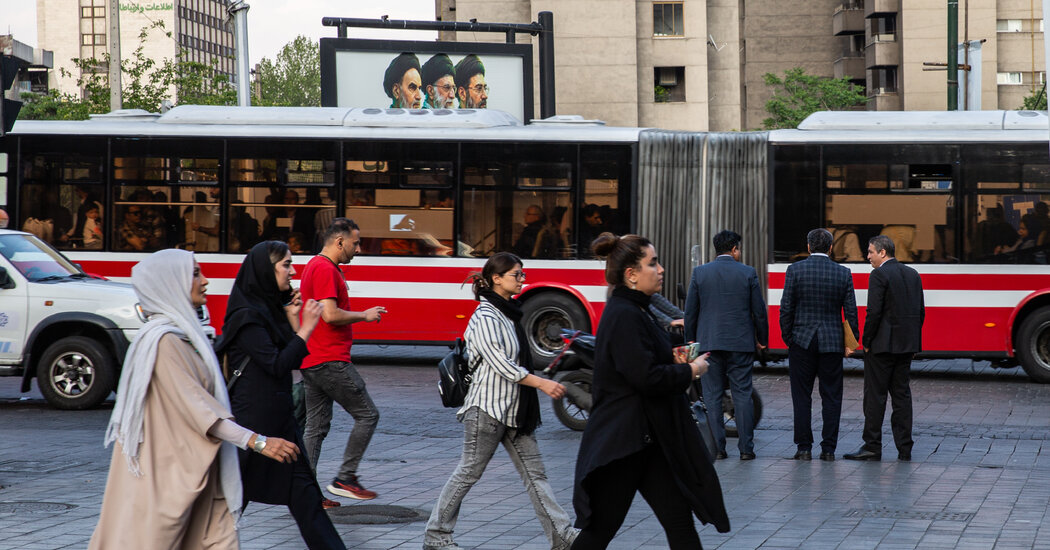
The quiet, structured progress of these diplomatic negotiations stands in stark, almost surreal contrast to the aggressive display of martial pride and hyper-nationalist theater that dominated Iranian civil society and state media over the preceding week. This public-facing belligerence was a calculated exercise in strategic deterrence, designed to reassure internal hardliners and regional allies that diplomacy was not born of weakness, while warning neighboring Arab states of the immense costs of aiding American military action. On state television, the rhetoric reached a fever pitch when a prominent news anchor, holding an automatic machine gun, fired live ammunition into a flag of the United Arab Emirates—the Gulf nation that has borne the destructive brunt of recent economic and cyber retaliations. Meanwhile, military commanders openly threatened to reduce the critical infrastructure, desalination plants, and petrochemical hubs of Gulf neighbors to ash if the United States executed its threats to strikes Iran’s power grids. This aggressive posture was mirrored across the country’s urban centers, where local mosques converted their courtyards into improvised training grounds, providing firearms training to groups of volunteer fighters, including women and teenagers, as state television cameras captured the scenes to broadcast a message of national resilience. In Tehran’s public squares, bizarre spectacles of state-sanctioned pageantry unfolded, such as mass weddings where newlywed couples paraded on military transport vehicles adorned with floral arrangements, loudly proclaiming that the brides’ traditional dowries would consist of domestic combat drones. These highly choreographed displays of domestic defiance, synthesized with Parliament Speaker Gen. Mohammad Bagher Ghalibaf’s stern warnings that the armed forces had used the previous cease-fire to radically rebuild their offensive capabilities, were intended to project an image of an unyielding nation prepared for prolonged, total warfare.
Backchannel Intermediaries and Iran’s Shifting Corridors of Power
Beyond the public bluster and military posturing, the realization of this diplomatic breakthrough required a highly complex, carefully coordinated network of international intermediaries and a significant realignment of authority within the highest echelons of Iran’s political structure. Foreign Minister Abbas Araghchi led a tireless diplomatic offensive, conducting near-constant communication with European diplomats, regional counterparts, and United Nations Secretary-General António Guterres, all while Tehran hosted a high-level state visit from Pakistani Prime Minister Shehbaz Sharif and his powerful army chief, Field Marshal Syed Asim Munir, who acted as critical, trusted conduits between Washington and Tehran. This intense flurry of international mediation was further complicated by deep structural transformations inside Iran’s opaque ruling apparatus, following the transition of supreme authority to Ayatollah Mojtaba Khamenei, who has remained strictly in hiding after sustaining significant injuries during the opening phase of the war. To circumvent the bureaucratic paralysis often associated with absolute clerical rule, the reclusive Supreme Leader took the extraordinary step of delegating full executive negotiating authority to General Ghalibaf, empowering the pragmatic parliamentary speaker to make binding decisions on the parameters of the agreement and setting clear limits on the geopolitical concessions Iran was authorized to yield. This pragmatic reassessment of the ongoing conflict highlights a hard-headed realization among both regional analysts and domestic scholars that, as Omid Memarian of the Washington-based think tank DAWN observed, threats and maximum pressure campaigns yield far fewer tangible concessions than structured, mutually respectful diplomacy, especially when the astronomical material and human costs of continued warfare become completely unsustainable for all parties involved.
The Human Cost of Conflict: Economic Devastation and the Relief of an Exhausted Public
While the geopolitical maneuvers, diplomatic memorandums, and military calculations are discussed in the sterile briefing rooms of Washington and Tehran, the true urgency of these peace talks is felt most acutely by the ordinary citizens of Iran, who have endured the devastating economic and psychological fallout of this protracted conflict. Shaken by a crushing combination of relentless bombardment and a suffocating naval blockade, the Iranian population is currently grappling with a severe economic crisis characterized by skyrocketing hyperinflation, massive workplace layoffs, and critical shortages of basic necessities, including essential pharmaceuticals, medical supplies, and domestic gasoline. With the country’s physical infrastructure suffering an estimated $300 billion in direct and indirect damage, the average citizen has spent the past several weeks in a state of perpetual terror, anxiously anticipating the promised resumption of American airstrikes on power plants and civil infrastructure that would plunge the nation into total darkness. In the residential neighborhoods of Tehran, families spent their nights preparing for the worst, hoarding dry goods, purchasing emergency batteries, and debating whether to abandon the capital entirely for rural provinces before the bombs began to fall once more. The announcement of a potential diplomatic resolution and the lifting of the maritime blockade was met not with political triumphalism, but with a profound, collective sigh of relief from an exhausted public, captured poignantly by Nazanin, a 56-year-old engineer in Tehran, who described the immense emotional toll of waiting for a war that seemed entirely unavoidable. For millions of people like her, this fragile, preliminary agreement represents far more than a complex victory on a diplomatic chessboard; it is a vital, desperate lifeline that offers a temporary reprieve from the constant shadow of destruction and the hope of rebuilding a normal life amid the ruins of a devastating conflict.