



A Crucible of Modern Diplomacy: High-Stakes US-Iran Peace Talks Convene in Switzerland
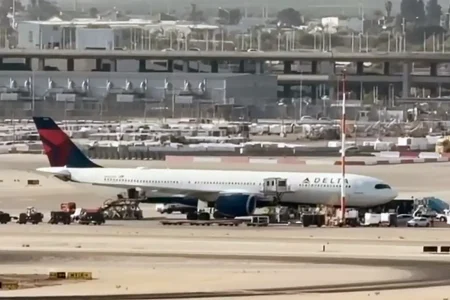
Against the backdrop of a highly volatile Middle East and a rapidly shifting global order, a critical diplomatic gamble is unfolding in Switzerland as senior American and Iranian officials assemble for high-stakes peace talks aimed at salvaging a fragile preliminary deal. The arrival of an elite Iranian negotiating team at Zurich International Airport on Saturday, captured in stark images of state aircraft touching down against a gray European sky, marked the commencement of a feverish diplomatic effort to defuse a conflict that has threatened to engulf the entire region. Within hours of their landing, United States Vice President JD Vance departed from Joint Base Andrews, signaling the Trump administration’s readiness to engage directly in a process that represents either a historic breakthrough or a prelude to deeper confrontation. This Swiss rendezvous comes in the wake of a grueling, unsuccessful 21-hour marathon of negotiations in Islamabad, Pakistan, where representatives from Washington and Tehran exhaustively debated terms but ultimately failed to reach an agreement. The decision to reconvene so quickly in a neutral European venue underscores the profound urgency felt by both administrations, as the international community watches to see if Switzerland’s legacy of quiet, backchannel mediation can prevail where other bilateral efforts have fractured under the weight of decades-old animosities.
Architects of Peace: The Power Brokers Negotiating Behind Closed Doors
The composition of the delegations currently gathered in Switzerland reveals the complex domestic and international crosscurrents shaping these highly sensitive talks. Leading the Iranian delegation is General Mohammad Bagher Ghalibaf, the influential speaker of Iran’s parliament and a prominent conservative figure who has emerged as Tehran’s premier negotiator, bringing with him a potent mix of military authority and legislative leverage. Ghalibaf is flanked by Foreign Minister Abbas Araghchi, a seasoned diplomat intimately familiar with the nuances of prior international accords, and Foreign Ministry spokesperson Esmail Baghaei, representing a unified front of Iran’s political and military establishment. On the American side, the presence of Vice President JD Vance is bolstered by two of President Trump’s most trusted foreign policy envoys, Steve Witkoff and Jared Kushner, both of whom had already arrived in Switzerland to lay the groundwork for these intense discussions. This formidable diplomatic lineup is facilitated by seasoned mediators from Pakistan and Qatar, who have played an invaluable role in bridging the deep trust deficit between the two primary adversaries. It remains a matter of intense speculation whether these sessions will transition into direct, face-to-face negotiations or maintain the indirect, proximity-style format that characterized the previous efforts in Islamabad, where intermediaries shuttled proposals between closed rooms.
The Levantine Shadow: How the Israel-Hezbollah Conflict Frays Diplomatic Threads
The progress of these diplomatic negotiations is deeply complicated by the intensifying conflict on the ground in the Middle East, which has repeatedly threatened to derail the peace process entirely. The current round of talks in Switzerland was originally scheduled to commence on Friday, but was abruptly postponed following a series of devastating military exchanges between Israel and the Iran-backed militant group Hezbollah in Lebanon. Tehran immediately condemned the Israeli airstrikes as a flagrant violation of the mutual understanding underpinning the peace initiative, highlighting the structural fragility of a diplomatic framework where the principal combatants on the ground are not formal signatories to the agreement. Although a bilateral ceasefire was announced on Friday, explosions continued to echo across Lebanon on Saturday as both Israel and Hezbollah traded blame for violating the truce, exposing the limits of Washington and Tehran’s ability to control their respective allies and proxies. As Vice President Vance boarded his flight to Europe, he openly acknowledged the complexity of the situation, expressing a guarded hope that negotiators could make tangible progress on the Lebanese ceasefire, even as critics point out that without formal commitments from either Jerusalem or Hezbollah’s command structure, any agreement reached in Switzerland may exist only on paper.
The Maritime Chokepoint: Strait of Hormuz and the Threat to Global Commerce
Adding a dangerous economic dimension to an already fraught security crisis, the Iranian military announced on Saturday that it had taken steps to close the Strait of Hormuz, a critical maritime corridor that handles approximately one-fifth of the world’s petroleum consumption. This aggressive move, framed by Tehran as a defensive response to Israeli military activity and a perceived lack of American compliance with the interim agreement, immediately sent shockwaves through international energy markets and elevated the stakes of the Swiss summit from a regional dispute to a global economic crisis. By threatening the free flow of commerce through this highly strategic waterway, Iran has effectively introduced a powerful bargaining chip into the negotiations, challenging the Trump administration’s resolve and testing the limits of its “maximum pressure” foreign policy doctrine. The potential closure of the Strait of Hormuz places immense pressure on Vice President Vance and his negotiating team, who must now balance the pursuit of a long-term diplomatic resolution with the immediate necessity of protecting global trade routes and preventing a catastrophic spike in global energy prices that could destabilize Western economies.
The Nuclear Conundrum and the Burden of Unfulfilled Commitments
At the heart of the diplomatic impasse in Switzerland lies a series of unresolved, highly technical disputes regarding Iran’s nuclear capabilities and the enforcement of international sanity checks. The interim agreement brokered by the Trump administration intentionally bypassed the most controversial aspects of Iran’s nuclear development and completely omitted any restrictions on Tehran’s ballistic missile programs, choosing instead to focus on immediate de-escalation in the hopes of addressing the nuclear issue in subsequent rounds of talks. This strategy is now being tested, as the Iranian delegation, vocalized by spokesman Esmail Baghaei, insists that they will not engage in discussions regarding a final, comprehensive treaty until the United States demonstrates a concrete commitment to its existing obligations, specifically regarding sanction relief and the containment of regional hostilities. Vice President Vance has signaled that the United States intends to push for major concessions on the nuclear front during his brief stay in Switzerland, setting up a fundamental clash of priorities where Washington demands immediate security guarantees while Tehran demands verifiable economic relief as a prerequisite for any further negotiations.
A Fragile Horizon: The Geopolitics of Reconciliation in an Age of War
As the sun sets over the Swiss Alps, the diplomatic delegations face an uncertain and treacherous path forward, with the outcome of these talks poised to reshape the geopolitical landscape of the Middle East for a generation. The success of this summit depends on the ability of American and Iranian negotiators to transcend decades of mutual suspicion, domestic political pressures, and the disruptive actions of regional actors who view any potential rapprochement with deep hostility. For the Trump administration, a successful conclusion to the talks would represent a crowning foreign policy achievement, validating its unorthodox approach to high-stakes international deal-making; for Tehran, it offers a crucial lifeline to rescue its struggling domestic economy from the suffocating impact of international sanctions. However, if the talks collapse under the weight of the unresolved maritime blockade in the Strait of Hormuz and the ongoing violence in Lebanon, the region could slide toward an uncontainable conflict, leaving Switzerland’s historic peace talks as a missed opportunity in an increasingly dangerous world.