






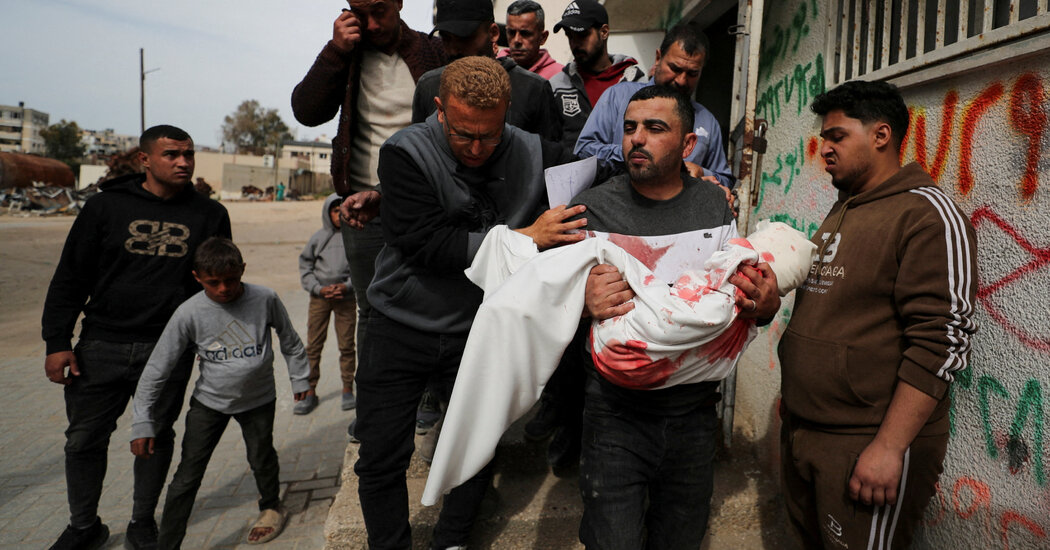
In the delicate and hauntingly quiet aftermath of the October 2025 cease-fire in the Gaza Strip, a fragile, collective hope emerged across the international community that the devastating, relentless loss of young lives might finally draw to an end. However, a searing United Nations report released on Tuesday has shattered this optimism, accusing Israeli security forces of conducting systematic abuse and deliberate killings of Palestinian children in the eight months following the truce. Compiled by an independent commission of three highly respected international jurists, the extensive investigation paints a grim picture of a systematic campaign that reaches far beyond the chaotic, accidental collateral damage of active urban warfare. The report concludes with chilling gravity that these persistent killings and systemic abuses are not isolated operational errors, but rather are part of a deliberate, calculated strategy designed to destroy the future of Palestinians in Gaza; a pattern of behavior the commission asserts constitutes genocidal intent. Furthermore, the jurists documented severe violations and targeted killings of children in the occupied West Bank, labeling these actions as war crimes. Under the leadership of commission chairman Srinivasan Muralidhar, the inquiry emphasizes that the preservation, protection, and basic survival of minor lives are fundamentally and inseparably tied to the larger, inalienable right of a population to exist and self-determine. When children are systematically targeted, the very architecture of a society’s long-term survival is pulled apart, transforming what should be a peaceful cease-fire into a continuous, agonizing struggle against existential erasure.
To understand the human dimension of this conflict is to look directly into the statistical abyss of lost innocence documented by the commission, which defines a child as anyone under the age of eighteen in strict alignment with international human rights standards. While the report does not explicitly dissect the possibility that some older adolescents might have participated in the hostilities, it uncovers a highly disturbing pattern: a vastly disproportionate number of adolescent boys have been targeted and killed. The commission assesses that this reflects a chilling military mindset that preemptively views young Palestinian boys not as vulnerable school-children, but as “future terrorists” whose potential growth must be lethally contained. Though the report does not provide an exact, all-inclusive death toll for the months directly following the truce, the real-world impact is illuminated by organizations working on the ground. Last week, UNICEF reported that an average of one Palestinian child has been killed every single day since the cease-fire was declared, rendering the truce what spokesperson James Elder called a “cruel and deadly illusion.” These children were not casualties of distant, abstract battlefields; they were killed while engaging in the ordinary, precious rituals of youth—sleeping in their living rooms, studying in damaged classrooms, playing football in dusty alleyways, or fishing along the Mediterranean shore. This daily attrition adds to the towering historical weight of the two-year Gaza war, during which local health officials estimate that more than 21,000 children lost their lives, including 5,031 toddlers under the age of five, 1,029 infants under one year, and some 420 fragile newborns whose lives were cut short before they could even begin.
The publication of these devastating findings has ignited a fierce administrative and diplomatic battle, highlighting the irreconcilable narratives that define the modern Israeli-Palestinian conflict. Israel’s United Nations mission in Geneva immediately and aggressively rejected the commission’s work, branding the document a “libelous sham” designed solely to vilify and isolate the Jewish state through a structurally biased U.N. apparatus. Similarly, the Israeli foreign ministry launched sharp criticisms on social media, accusing the independent jurists of completely erasing the memories and realities of Israeli children who were brutally murdered, traumatized, or taken hostage by Hamas during the October 7, 2023, attacks. The Israeli government further defended its military operations by reiterating that Hamas routinely and cynically deploys Palestinian youth as tactical human shields, manipulating civilian suffering and placing weapons in schools and civilian areas to secure geopolitical leverage. To construct its report amidst this severe polarization and a total lack of official cooperation—having received zero responses to thirteen formal requests for information sent to Israeli authorities since the conflict began—the commission painstakingly assembled its case from alternative channels. They gathered testimonies from on-the-ground healthcare workers, legal scholars, academics, and journalists, while conducting delicate, trauma-informed interviews with surviving minors whenever possible. The resulting document stands as a testament to the immense friction between institutional denials and the raw, unedited stories of survival gathered from those navigating the ruins of their homeland.
To humanize these dense legal and geopolitical arguments, the commission’s report zooms in on individual, devastating narratives that expose the heartbreaking reality of life under occupation, particularly in the West Bank where there is no active war with Hamas. In one harrowing account from 2025, the report details the senseless death of a fourteen-year-old Palestinian boy living in the Al-Faraa refugee camp, a dense community already heavily marked by decades of displacement. The teenager had merely stepped outside the front door of his family home, eager to play a simple game with his cousin and a neighborhood friend, when he was shot by Israeli soldiers. What followed was an excruciating forty-five-minute ordeal captured on video: the young boy lay bleeding on the dusty ground while Israeli soldiers stood nearby, failing to render aid. When the boy’s frantic mother tried to run to her dying son, soldiers fired warning shots directly at her to force her back, while simultaneously blocking a arriving ambulance from reaching the scene to provide life-saving intervention. When pressed on the specifics of this incident, the Israeli military presented a vastly different narrative, asserting that their forces had identified a “terrorist” who attempted to attack them during a security operation in the camp. According to their statement, forces shot and wounded the individual, then immediately provided him with initial medical treatment—a sanitizing official account that stands in stark, irreconcilable contrast to the video evidence and eyewitness statements documented by the international investigators.
Beyond the immediate violence of airstrikes and sniper fire, the U.N. report shines a harsh light on the quiet, terrorizing pipeline of military detention that systematically targets adolescent Palestinian boys. The commission revealed that Israeli security forces have continued to systematically round up and detain minors, dragging them away from their families and placing them in highly restrictive military prisons. Once inside these facilities, these children are routinely subjected to systematic physical violence, severe psychological torture, and in some documented cases, humiliating sexual abuse. Cut off entirely from the outside world, these young detainees are denied the fundamental human rights of consulting with legal counsel or speaking to their terrified parents, while military authorities routinely withhold information regarding their physical whereabouts. This practice of forced separation and unchecked custody leaves families in a state of perpetual, agonizing limbo, not knowing if their children are alive, healthy, or safe. By stripping these minors of their rights and subjecting them to the harsh realities of adult incarceration, the military system inflicts deep, invisible psychological wounds that persist long after any physical scars have healed. This institutionalized containment of youth serves as a powerful instrument of control, ensuring that even those who survive the physical bombings of the war are left with fractured spirits, deeply traumatized by a prison apparatus designed to break their resolve before they ever reach adulthood.
Perhaps the most devastating long-term indictment presented by the independent commission is the deliberate and systematic destruction of the maternal and pediatric healthcare infrastructure in Gaza. By targeting major medical centers, dismantling specialized neonatal clinics, and destroying maternity wards, the military operations have effectively strangled the primary lifelines for the region’s most vulnerable new lives. This systematic degradation, coupled with a tight military siege that restricts vital imports of food, fuel, spare medical parts, and clean water, has resulted in a quiet humanitarian catastrophe characterized by widespread hunger and chronic infant malnutrition. Over the course of the two-year conflict, the birthrate in Gaza has plummeted dramatically—a trend the commission warns severely threatens the generational continuity and survival of the Palestinian population. Even as limited food supplies trickle across the border post-ceasefire, severe restrictions on basic medicines mean that wounded children are forced to endure unimaginable pain, face a high risk of preventable infections, and undergo traumatic amputations with insufficient anesthesia. The commission’s report takes the unprecedented step of identifying eleven specific Israeli military units directly linked to these actions, offering a concrete roadmap for future international accountability. Ultimately, the document leaves the global community with a profound and troubling moral question: how can a society ever hope to rebuild, heal, and self-determine when its very cradle has been systematically dismantled?