






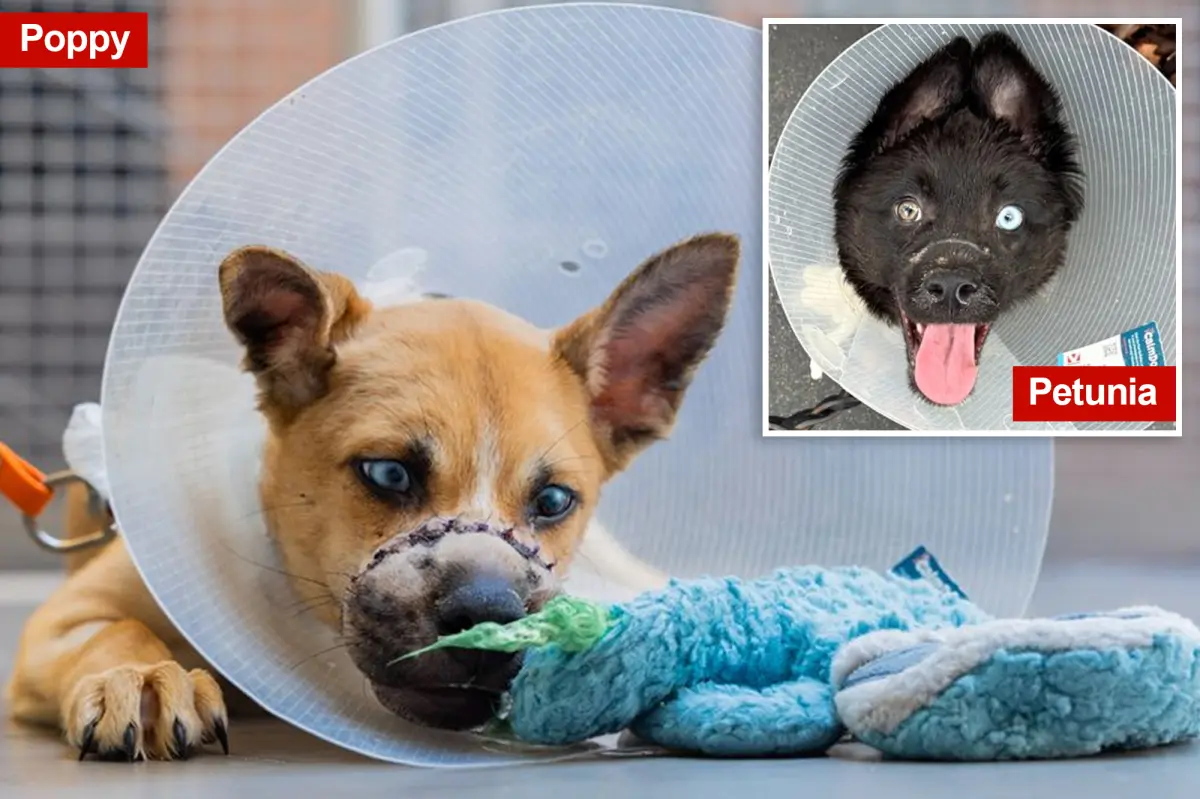
In the sprawling urban landscape of Queens, New York, where the relentless rhythm of city life often drowns out the quiet cries of the vulnerable, a harrowing tale of cruelty and resilience has surfaced from the most unlikely of settings—a grimy dumpster in the Flushing neighborhood. It was a sweltering afternoon in mid-July, with temperatures spiking and humidity thick enough to suffocate, when a routine trip to discard trash turned into a horrifying revelation that would galvanize a community and spark a statewide outcry. Tucked behind piles of refuse, hidden away like discarded objects rather than living beings, were two tiny, four-month-old puppies. Their names, they would later learn, would become Poppy and Petunia—but at that moment, they were simply anonymous victims of inexplicable malice. The puppies were found in appalling conditions: their mouths had been cruelly and deliberately wired shut. This act wasn’t random; it was a sadistic measure to ensure they couldn’t bark for help, couldn’t whimper, couldn’t open their jaws to eat or pant to cool down in the oppressive heat. The wire had been cinched so tightly that it cut into their tender gums and cheeks, leaving painful, festering gashes. Both pups were dangerously underweight, their ribs protruding starkly against their matted fur, a physical testament to forced starvation. Crouched in terror, their large, mismatched eyes—one a crystalline blue, the other a warm brown—darted wildly, filled with confusion and fear, unable to comprehend why their world had become a place of pain. The heat was a palpable menace, making the act of being unable to pant even more treacherous. These were not stray mongrels; they were infants in the canine world who should have been playing fetch and nuzzling their mothers, not fighting for breath in a pile of garbage. However, fate intervened in the form of a compassionate Good Samaritan. Rather than walking past yet another grim urban scene, this individual felt the pull of empathy, investigated the scene, and immediately called the police, triggering a chain of rapid intervention that would ultimately save their lives.
The police response was swift, and upon discovering the foul play, they wasted no time in contacting the American Society for the Prevention of Cruelty to Animals (ASPCA), whose emergency veterinary teams are specially equipped to handle such heinous cases of abuse. Poppy and Petunia were rushed to an emergency veterinary center, where the initial diagnostics painted a bleak picture. Beyond the severe underweight and the harrowing facial wounds, they exhibited signs of dehydration and potential infection, their immune systems compromised by weeks of neglect and trauma. The emergency team worked diligently to stabilize them, carefully removing the cruel wire and cleaning the deep lacerations that had become infected. It was a delicate procedure, requiring sedation and meticulous care to avoid exacerbating their pain. Once stabilized, they were transferred to the ASPCA’s Animal Recovery Center (ARC) in Manhattan—a facility synonymous with hope and healing for abused animals. There, they entered a structured recovery program tailored to their specific needs. Daily rounds involved cleaning their wounds, changing sterile dressings, and administering a regimen of antibiotics to combat the bacterial infections that threatened to overwhelm their tiny bodies. Their feeding schedule had to be adjusted; due to their immature and injured jaws, they were initially provided soft, nutritious gruel that required minimal chewing. Slowly, agonizingly, they began to put