




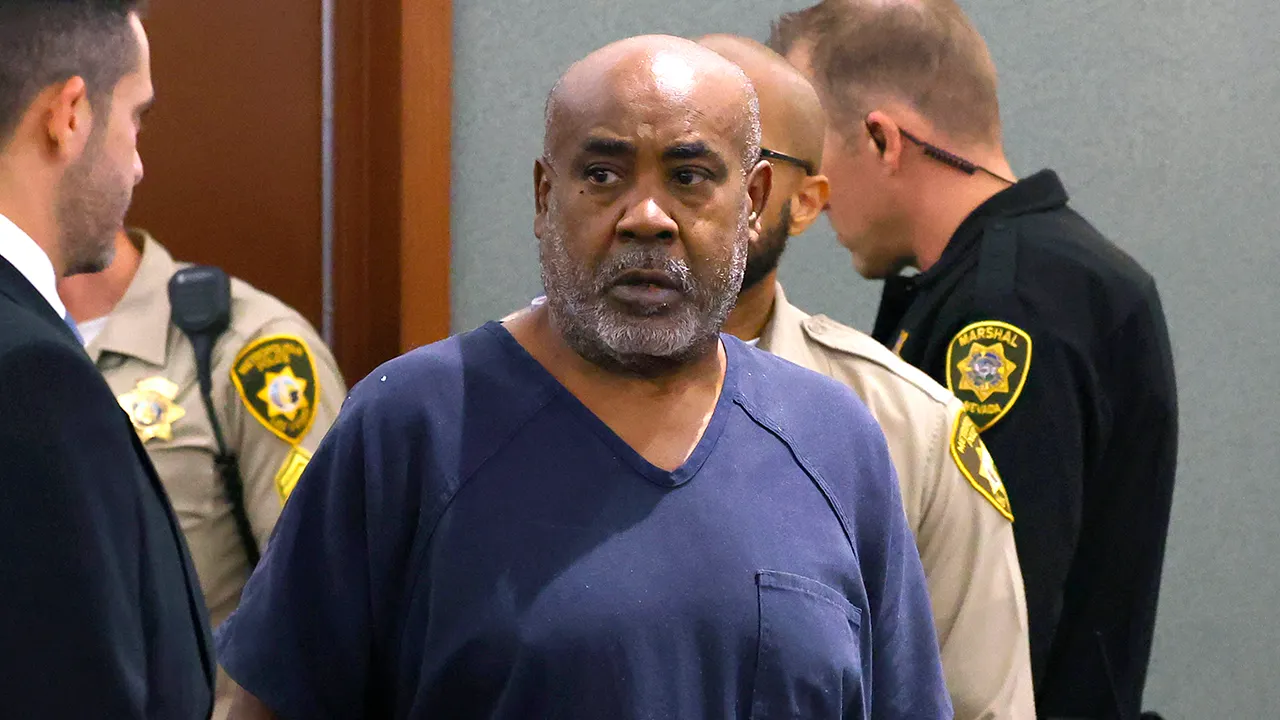
For nearly thirty years, the murder of Tupac Shakur has existed somewhere between history and myth—a cold case that haunted hip-hop, a wound that never truly closed. This week, Las Vegas finally opened that wound in a courtroom, as Duane “Keffe D” Davis, now 63, sat before a jury accused of providing the murder weapon in the 1996 drive-by shooting that killed Shakur and wounded Death Row Records founder Marion “Suge” Knight. Davis is not accused of pulling the trigger; prosecutors say he supplied the gun and helped orchestrate the retaliation that ended Shakur’s life. The trial, which began on a Monday and is expected to last four to five weeks, quickly revealed the extraordinary challenge of prosecuting a case nearly three decades old. Most of the key players are dead. Others who are still alive have refused to cooperate, either out of loyalty, fear, or the old gang code that says you never talk to police. And the prosecution’s case rests heavily on one uncomfortable reality: the defendant’s own words. Over the years, Davis spoke to investigators, gave interviews, and wrote a memoir, and now those words may be the very thing that convicts him. It is a strange and deeply human paradox—a man who could not stop telling the story, and who may end up imprisoned by it.
The prosecution’s narrative is rooted in revenge, and it was laid out plainly by Chief Deputy District Attorney Binu Palal on the first day of trial. The story began on September 7, 1996, at the MGM Grand casino, where after a Mike Tyson fight, Davis’s nephew, Orlando “Baby Lane” Anderson, was beaten by Knight’s entourage. That beating, prosecutors say, was the spark. Davis, a former leader of the South Side Compton Crips, was part of a gang locked in a bloody rivalry with Knight’s Mob Piru Bloods. The assault on his nephew was an intolerable humiliation, and the response, the state argues, was murder. Davis obtained a gun, helped track down Shakur’s car, and handed the weapon into the back seat of the Cadillac from which shots were fired. Anderson, who is now dead, was identified by Davis himself as the man who pulled the trigger. “Remarkably, you will learn that from Duane Davis himself,” Palal told jurors. The state’s case is built on a bizarre foundation: the admissions of the man on trial. Those admissions were amplified on Thursday when prosecutors played hours of Davis’s 2008 police interview. On the recording, Davis calmly described riding in the Cadillac, holding the gun at first, and passing it toward the back seat before the gunfire erupted. It is not the confession of a remorseful man; it is the bragging of a street legend, a man who wanted credit for a crime that defined an era. And now that bravado has become legal ammunition.
But the defense sees the same words very differently. Michael Sanft, Davis’s attorney, told jurors that what the prosecution calls admissions are actually fiction—exaggerated stories, carefully crafted for attention, for street credibility, and for book sales. “What they are telling you, they’re representing it to be a fact when it really is fiction,” Sanft said in his opening statement. He accused police of failing to properly investigate Davis’s claims while other suspectswere still alive, and argued that no physical evidence links Davis to the shooting. The defense asks a pointed question: why would a smart man who managed to avoid charges for decades suddenly confess to murder? The answer, Sanft suggests, is that Davis was not confessing—he was performing. He was a man who had spent his life cultivating a reputation, writing a memoir titled Compton Street Legend, sitting for documentary cameras, and narrating his own myth. The problem, the defense argues, is that police and prosecutors took the myth too seriously. There is a tragic irony to this defense: it paints Davis as both a liar and a legend, a man who talked too much and now finds his own words twisted into shackles. In a case with no definitive forensic evidence connecting Davis to the trigger, no eyewitness willing to testify against him, and no cooperative co-conspirators, the trial has become a battle over the meaning of a man’s voice—whether it is the voice of a perpetrator or the voice of a storyteller.
The deep difficulty of the case was made even more obvious by the parade of witnesses who were either dead, hostile, or unwilling. Three other men believed to have been in the suspect vehicle with Davis are dead, including Anderson, the alleged shooter. Suge Knight, who was wounded in the same attack and is listed as a witness, has said in interviews that he does not intend to cooperate; he is currently serving a 28-year prison sentence for a separate deadly Compton dispute. When James “Mob James” McDonald, a former Mob Piru associate, took the stand, he asked the court to “treat me as a hostile witness.” Later, he looked at Davis directly and said, “I don’t want to send you to prison.” That moment captured the central obstacle of the prosecution: the culture of gang silence, what former FBI assistant director Chris Swecker compared to the old La Cosa Nostra code of omertà. “They had that same culture as the La Cosa Nostra, which was, you know, ‘we don’t talk to the cops,’” Swecker said. He added that in such a culture, even victims refuse to cooperate. “You would think a victim would say, ‘Hey, that’s who shot me.’ Not the case in that culture. And that’s partly why nobody was charged originally with the crime.” This is the human truth beneath the legal strategy: for decades, the streets protected the guilty, and the dead were left to be mourned without justice. Now, the only person who ever broke that code is sitting in the defendant’s chair, and the prosecution is betting that his need to talk, to brag, to claim credit, will finally outweigh his need to stay free.
Other testimony painted an even more tangled picture. Former LAPD Detective Daryn Dupree testified that during an interview about the murder of Christopher Wallace, better known as the Notorious B.I.G., Davis denied involvement in that killing by saying “we did the other one”—a phrase Dupree said he understood as a reference to Shakur. Dupree also described Davis’s claim that Sean “Diddy” Combs was supposed to provide money for the murder of Shakur. Combs, who is currently in prison after being convicted of federal prostitution charges, has never been charged in either killing, but his name hovered over the trial like a shadow, a reminder of the sprawling web of rivalries, alliances, and accusations that defined the era. Then there was Yusef Jah, the ghostwriter who worked with Davis on his memoir. Jah is on the witness list, and retired LAPD Detective Moses Castillo has suggested that the ghostwriter could be the key to the case—a witness to Davis’s admissions in real time, perhaps someone who can testify about what Davis truly meant when he told his own story. The trial also heard from Thomas Kern, a former Las Vegas crime scene analyst who was present at Shakur’s autopsy. Kern testified that the forensic pathologist determined the death to be a homicide caused by multiple gunshot wounds to the chest and abdomen. The clinical detail of the autopsy testimony stood in stark contrast to the ghostly images shown in court, including surveillance video from the MGM Grand showing the initial fistfight involving Knight’s entourage and Anderson, and a photograph taken by Leonard Jefferson, one of the last known images of Shakur alive. In that photograph, the rapper is still full of life, unaware that within hours he would be gone.
As the trial moves forward, it feels less like a legal proceeding and more like a reckoning with an entire era. The streets of Los Angeles and Las Vegas in the 1990s were stained with blood, and the East Coast–West Coast rivalry became a war that consumed its most famous soldiers. Shakur was only 25 when he died, his voice still echoing through rap songs and his face still emblazoned on posters in bedrooms across the world. The case against Davis is not really about forensic certainty; it is about accountability for a crime that has been hidden for decades under layers of gang loyalty, fear, and silence. The prosecution’s strongest evidence is Davis’s own voice, recorded, transcribed, published, and played for the jury. The defense’s strongest argument is that Davis was a liar whose stories changed with the wind. But the jury must now decide which version of Duane Davis is real—the ruthless gang leader who orchestrated one of the most infamous murders in music history, or the aging man who fashioned himself into a celebrity by claiming crimes he did not commit. No verdict can bring Tupac back, and no sentence can truly mend the grief of a family that lost a son, a brother, and a friend too soon. But after nearly thirty years, a court is finally listening. The trial is not just about one man’s guilt or innocence. It is about whether America can still find justice in the tangled, heartbreaking, self-serving stories that make up our memory of a fallen icon. And it is about the strange, fragile nature of truth—a truth that has been waiting all these years to be spoken, even if the person speaking it is the one who did the wrong.