


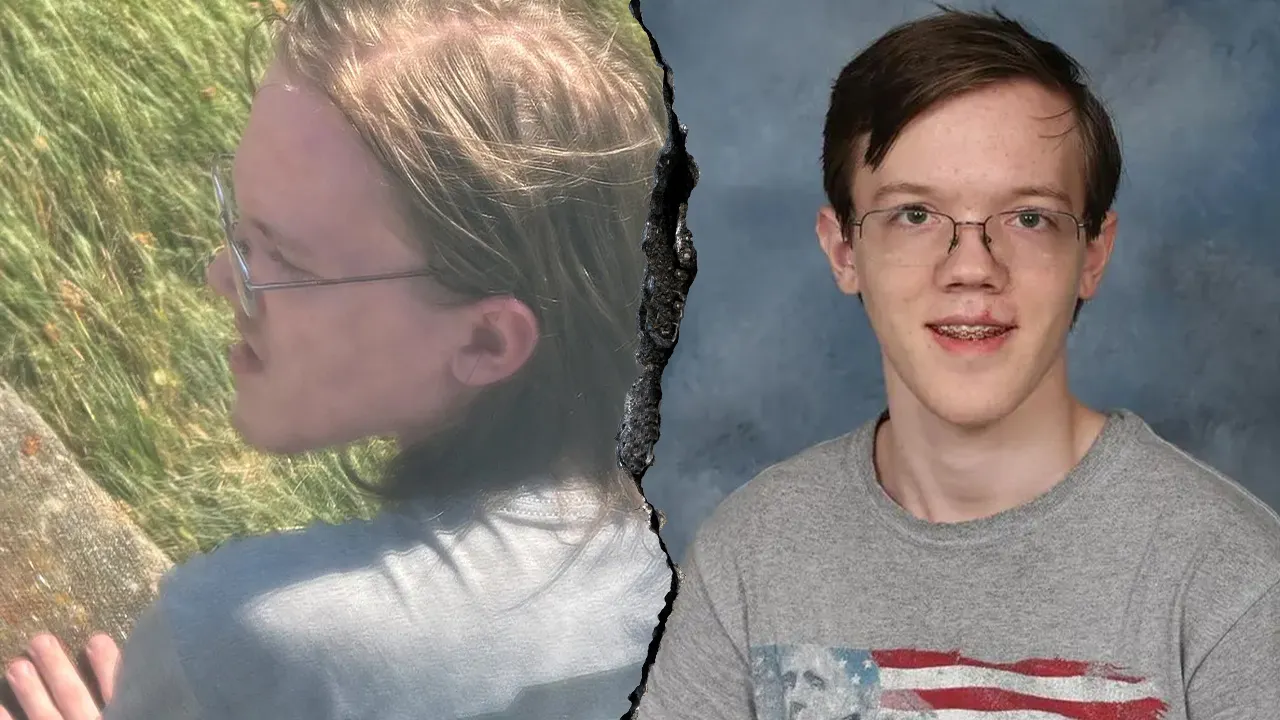
In the months before July 13, 2024, the quiet, unremarkable life of Thomas Matthew Crooks was slowly turning into something darker, more secretive, and harder to explain. The 20-year-old who would later climb onto a rooftop in Butler, Pennsylvania, and open fire at a rally for President Donald Trump left behind a digital trail that investigators and the public are still trying to understand. The records, released by Judicial Watch, show a young man engaged in strange conversations, coded messages, and a fascination with 3D printing and drones. There is something deeply unsettling about these fragments. They don’t tell a simple story of a radicalized loner or a clear political extremist. Instead, they reveal a person who lived in the margins of ordinary life, exchanging odd messages with someone the FBI cannot fully identify, receiving packages from across the world, and spending hours photographing familiar places from the sky. The human tragedy is that so many of these signs meant little to anyone until it was too late.
Among the most haunting pieces of this puzzle are the text messages. On February 9, 2023, an individual described only as an “unknown contact” asked Crooks: “Did you 3D print the parts?” Crooks answered matter-of-factly: “Yes, except for the fan blades.” The contact replied, “Woah that looks cool,” before asking about those same parts in response to a message that the FBI has completely redacted. It is impossible to know what those “parts” were for, or why the exchange felt so important to the shooter. Later, between May 21, 2023, and January 3, 2024, Crooks sent a long, bizarre string of one- and two-word messages: “Hello … Hello red … Hello red … Hdudhdbdbbd … 7888ejdj … Yolo … Ddodjjf … 890 … Hdjd … Djdj … red … Yup red … Hello … Jhhhuuh … Hhdj … Jjjjjjjjjjjj … Hello red … Red red.” The FBI redacted any replies from the other party, leaving only Crooks’s own voice echoing into the void. To read those messages is to feel the strangeness of a mind that may have been testing something, reaching out, or simply falling apart. The phrases sound like nonsense, but to someone desperate to hide meaning in plain sight, every word might have mattered. The human desire is to look at these words and find a pattern, a reason, a common thread. But the redactions leave more questions than answers.
Other details in the released documents add texture to a portrait that remains frustratingly incomplete. Investigators found a notification from DHL about a package Crooks received from Hong Kong, suggesting a connection to international goods that could have been used for equipment or experimentation. More striking are the forty drone photos Crooks took between February 6, 2024, and February 27, 2024. The images included aerial views of PNC Park, where the Pittsburgh Pirates play, and Acrisure Stadium, home of the Pittsburgh Steelers. At first glance, these are ordinary city landmarks—ballparks, rivers, bridges, streets. But in the context of an aspiring assassin, they take on a different meaning. Was Crooks doing reconnaissance? Was he looking for places where a shooter might find cover, open sightlines, and an escape route? Or was he just a young man interested in flying a drone over familiar places, recording what his town looked like from above? The truth likely lies somewhere between the innocent and the sinister. What makes it so disturbing is that the same technology that brings joy to hobbyists and marvel to tourists can be weaponized by someone willing to turn ordinary places into targets. Crooks’s fascination with drone photography, much like his obsession with 3D printing, shows how easily the tools of daily life become instruments of violence when placed in unstable hands.
Long before the assassination attempt, Crooks had experimented with making his own firearm. His father, Matthew Crooks, told investigators that his son had used a 3D printer, carbon fiber plastic, a dryer, and a toaster oven to create a Glock 19 handgun. It was an extraordinary admission, not just because of the gun itself, but because of what it reveals about the relationship between a father and son. Matthew Crooks, in his account, was not proud of the weapon. He was afraid. He feared the homemade gun would explode upon use, and he forbade his son from firing it. That moment, a father setting a boundary to protect his child, now feels hauntingly fragile. The young man complied at the time, but the knowledge of that creation lingered. The fact that Crooks had a 3D printer and used it to build guns is not illegal in itself. Many gun enthusiasts and hobbyists explore such projects legally. But in this case, it becomes part of a pattern: an obsession with technology and machinery, a willingness to experiment in secret, and a family’s desperation to keep the situation under control. Looking back, some former FBI agents point to these behaviors as red flags that should have triggered a deeper investigation. But at the time, a young man with a 3D printer and a strict father was not necessarily cause for alarm. It is only now, after so much blood was shed, that these details feel like warnings.
The violence of that July day is still painfully fresh for the families of the victims. Corey Comperatore, a fifty-year-old fire chief, was killed in an instant while shielding his wife and daughters from the bullets. He made a choice that any parent would hope to make—to put his body between his family and the fire—and he paid for it with his life. His story became one of heroism, and his death remains a wound in the community of Butler. Another victim, James Copenhaver, was a seventy-six-year-old veteran who survived the shooting but was gravely wounded. He was shot in the triceps and midsection, suffering damage to his kidneys and colon. For a time, it seemed he would recover. He left the hospital about a week after the attack, eager to return to some semblance of normal life. But the injuries never fully released him. In the years that followed, he experienced complications that continued to affect his health. On September 23, 2026, Copenhaver died as a result of those complications. His death is a reminder that the blast of a gun does not end when the last shell casing lands. For some survivors, the trauma becomes a slow, painful countdown. The attack in Butler did not claim only those who died on the ground that day; it also claimed James Copenhaver, who carried the weight of his bullets for more than two years before finally letting go. The toll of political violence is never fully measured in the immediate death count.
Judicial Watch president Tom Fitton captured the frustration of many when he said that the latest records “reveal more pieces of the puzzle surrounding Thomas Crooks” but that the FBI should stop the “slow drip of heavily redacted records and immediately provide the full investigative record.” His call for transparency is about more than accountability for bureaucrats. It is rooted in the human need to understand what happened and why. The families of the victims deserve to know everything the government knows. The public deserves a complete picture of how a young man from a comfortable suburb became an assassin. And the country needs a full accounting of the failures that allowed him to take his shot. The redacted messages and hidden responses feel like a closed door in a room where a crime was committed. Every released document gives only a glimpse through a keyhole. The official story is still incomplete, and that incompleteness feeds anxiety, suspicion, and conspiracy. In a democracy, transparency is not a gift from the government; it is a right, especially when lives have been lost. For the people who loved Corey Comperatore and James Copenhaver, every hidden detail is a second wound. For the nation, the slow release of information makes healing harder. The full truth will not bring anyone back, and it will not erase the horror of that sunny Pennsylvania afternoon. But it may help people understand how one man’s obsession turned into an attack on a president, and why so many broken signs went unseen until it was too late.