

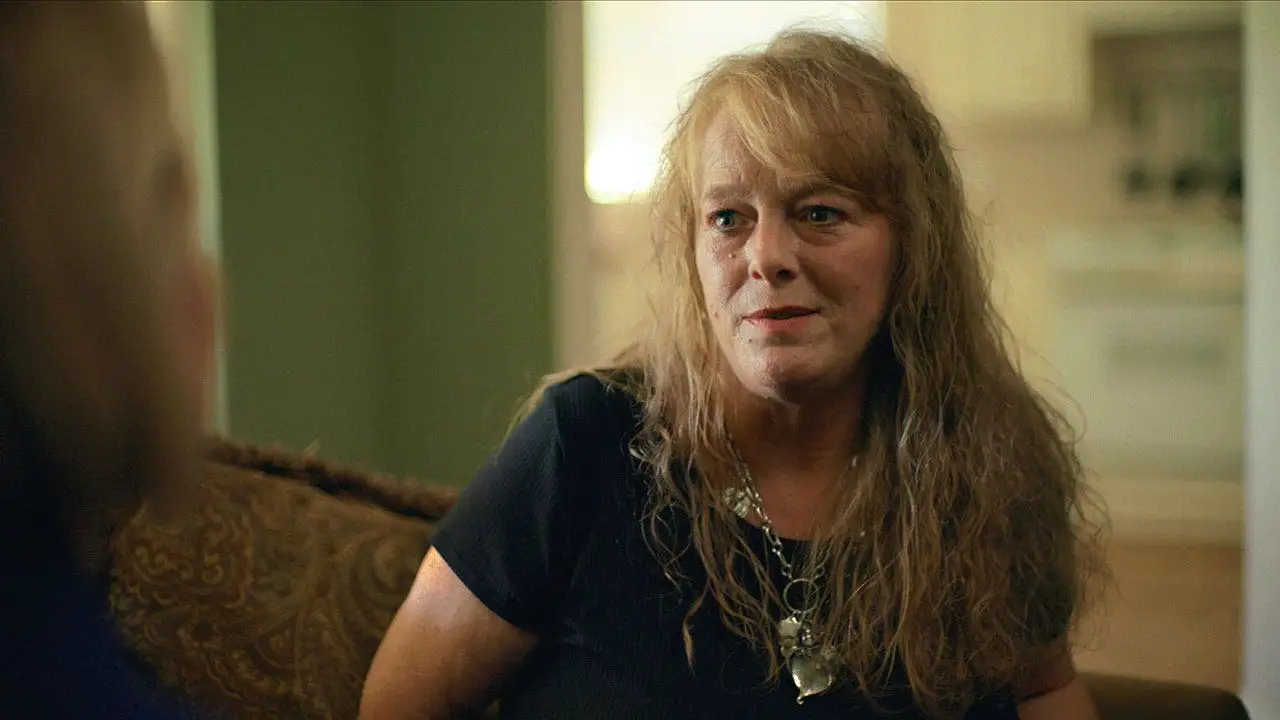
For decades, Jon Bon Jovi had been the soundtrack to Leslie Pickett’s life, a voice she had loved since she was fourteen years old, a symbol of youth, passion, and the kind of rock-and-roll romance that felt larger than life. But in late 2024, that lifelong admiration became the doorway to a nightmare. Pickett, a Louisiana resident who described herself as more comfortable on Facebook than on newer social platforms, was introduced to Instagram by her daughter. Browsing one day, she found what appeared to be Bon Jovi’s verified account and left a comment, a small, hopeful gesture from a fan who never expected a reply. Five minutes later, she was stunned to receive a personal response from an account that seemed to belong to the rock star himself. Although the account was not verified with a blue checkmark, Pickett was not savvy enough to understand the significance of that detail, and the voice on the other side was warm, thoughtful, and deeply attentive. He answered her questions carefully, remembered details from their earliest exchanges, and made her feel seen. In a world where loneliness can creep in quietly, this sudden connection felt like a miracle. “I genuinely thought it was him,” she later said, admitting that she had doubts but chose to believe because the dream was too beautiful to let go.
What followed was a slow and deliberate seduction, one that lasted months rather than hours. The impostor, posing as Bon Jovi, told Pickett that the real musician wanted to connect with fans on a more personal level, but that if his management ever discovered the secret account, he would be forced to shut it down. That warning transformed the relationship into a shared conspiracy, a private world where Pickett was special, trusted, and needed. The two exchanged messages several times a day and often late into the night, talking about music, everyday life, and the kind of ordinary things that make a person feel truly known. The scammer remembered small details from their earliest conversations, sent her recorded videos, had flowers delivered to her home, and eventually joined her on live video calls. Pickett, unaware of how convincing generative AI had become, saw a man who looked like Bon Jovi, heard a voice that sounded like him, and even received customized videos on request. Once, to test him, she asked him to pull on his right ear, cross his eyes, and stick out his tongue. Within five minutes, he sent a video doing exactly that. It was a stunning demonstration of how artificial intelligence can be weaponized to manufacture trust. The scammer also spun a heartbreaking story: he and his wife had quietly filed for divorce but were keeping it hidden to protect his public image, leaving him lonely and craving someone normal, someone who didn’t want fame or money. For Pickett, it was as if all her dreams had collided with a new and unexpected emotional bond. “It was like talking to my best friend,” she said.
The money requests began only after seven months of emotional investment, a fact that Mariana van Zeller, the Emmy Award-winning journalist who explores the story in the National Geographic documentary special “Super Scam Me,” emphasizes as crucial to understanding how romance scams work. This was not an immediate, obvious con. The impostor did not approach Pickett and ask for cash on day one. Instead, he waited until trust had become the foundation of their relationship, until she felt so connected to him that helping him felt natural, even necessary. The first request was framed around an exclusive Bon Jovi performance in Nashville, a concert with only a thousand tickets available. Pickett tried to buy tickets but they sold out in four minutes. When she told him, he suggested a meet and greet, something that seemed entirely plausible for a famous artist. Then he directed her to contact his “management” through email addresses he provided, and he walked her through every step. The payments started small, one hundred dollars, one hundred and fifty dollars, sent through Venmo, PayPal, Cash App, and eventually cryptocurrency, a method Pickett had never even heard of before. When she questioned why she was not using a regular website, he reassured her that crypto was the safest way because regular sites get hacked all the time. He put her at ease. She continued sending money, sometimes staying up late into the night trying to figure out how to complete the transactions. It never felt abnormal until she realized that none of the money was coming back to her, and by then, her bank account was bleeding.
Van Zeller, who went undercover to investigate online scams for the documentary, describes the interaction as a “slow burn,” noting that by the time the scammer asked for money, he was not a stranger to Pickett. In fact, for many victims of romance scams, the connection with the fraudster may span months or even years before any financial request is made. The emotional manipulation is so powerful that victims often continue to rationalize the red flags even as they appear. In Pickett’s case, the evidence was mounting: the unverified account, the secret communication, the bizarre payment methods, and a story about security breaches that sent her from one obstacle to another. Yet she held on, partly because she had invested so much of herself in this imaginary love story, and partly because the man she believed she was talking to had promised her a future. In July 2025, the scammer told her he was flying to Louisiana for their long-awaited meeting. He sent photos of himself seated at a table in a hotel she recognized, with matching light fixtures, furniture, carpet, utensils, and even napkin rings. The staging was meticulous, an elaborate theatrical production designed to keep her believing. But then came one final obstruction: he told her they needed to complete a security clearance check through Google Chat before they could meet in person. When she tried to join the video call, he hung up abruptly, claiming that his management thought she was trying to record the conversation. He then asked her to pay an even larger amount of Bitcoin to arrange another security check. At that moment, Pickett’s heart sank. “I knew I had been duped,” she said. It was the end of the dream, but also the beginning of a much harder journey.
With her savings depleted and her home facing foreclosure, Pickett reached out to Mariana van Zeller for help, and together they began to unravel the truth. Working with a former hacker, they traced the scammer’s IP address, a digital breadcrumb that pointed across the Atlantic to Lagos, Nigeria. Using a carefully designed trap to lure the impostor into claiming more Bitcoin, they were able to pinpoint his location even further. With Google Earth, they identified what they believed to be the very house from which the man had been messaging Pickett for months, a place thousands of miles away from the Louisiana home where she had poured her heart out to a ghost. By that point, she had lost more than ten thousand dollars, a devastating sum for someone working a full-time job and living on the edge of financial stability. But the financial damage was only part of the pain. “I was devastated,” Pickett recalled. “When Mariana got confirmation, it rocked my world. He could have just come clean, but he just took advantage of my kindness. That’s what crushed me.” The realization that the entire relationship had been fabricated, that every tender word, every video, every bouquet of flowers was a calculated tool in a cruel scheme, left Pickett shattered. She had been willing to give him the benefit of the doubt, but there was nothing there except ill intent. The betrayal was not just about losing money; it was about losing the love she thought she had found, and the part of herself that had dared to believe in something beautiful.
Today, Leslie Pickett is still rebuilding, still working her full-time job, still struggling to make ends meet and to repair the damage that the scam inflicted on her credit, her home, and her sense of security. The emotional scars have proven even harder to heal, leaving her wary of trusting others and prone to moments of profound sadness and shame. She describes wanting to crawl under a rock, consumed by the feeling that she had been utterly fooled. But instead of letting the experience destroy her, she has channeled her pain into purpose, becoming an advocate for scam victims and using social media to warn others about the dangers of interacting with unverified accounts and the sophisticated ways that scammers use artificial intelligence to create false intimacy. Her story is now featured in “Super Scam Me,” a National Geographic documentary special that highlights the alarming rise of romance scams in an era when technology has made deception easier and more convincing than ever before. Van Zeller notes that one in seven Americans has reported losing money to romance scams, making it one of the fastest-growing and most devastating forms of financial crime in the world. For Pickett, the ultimate goal is not just to recover what she lost, but to slow down the entire scam industry. “It devastated my family. It devastated me. It put me in financial dire straits. It affected me emotionally,” she said. “No one should ever feel that way. I would never want anyone to go through what I went through.” Her story is a cautionary tale for the digital age, a reminder that behind glowing screens and smiling faces, there may be predators waiting to steal not only your money, but your heart. Yet it is also a story of resilience, a portrait of a woman who refused to be silenced by her shame and who now uses her voice to protect others from falling into the same trap. In a world increasingly built on artificial connections, Pickett’s greatest hope is that her experience will inspire others to pause, question, and remember that the most beautiful love stories cannot be bought with Bitcoin, and that trust, once broken, is the hardest thing of all to rebuild.