




The Trump Doctrine on Iran: A Glimpse Behind the Battle Lines
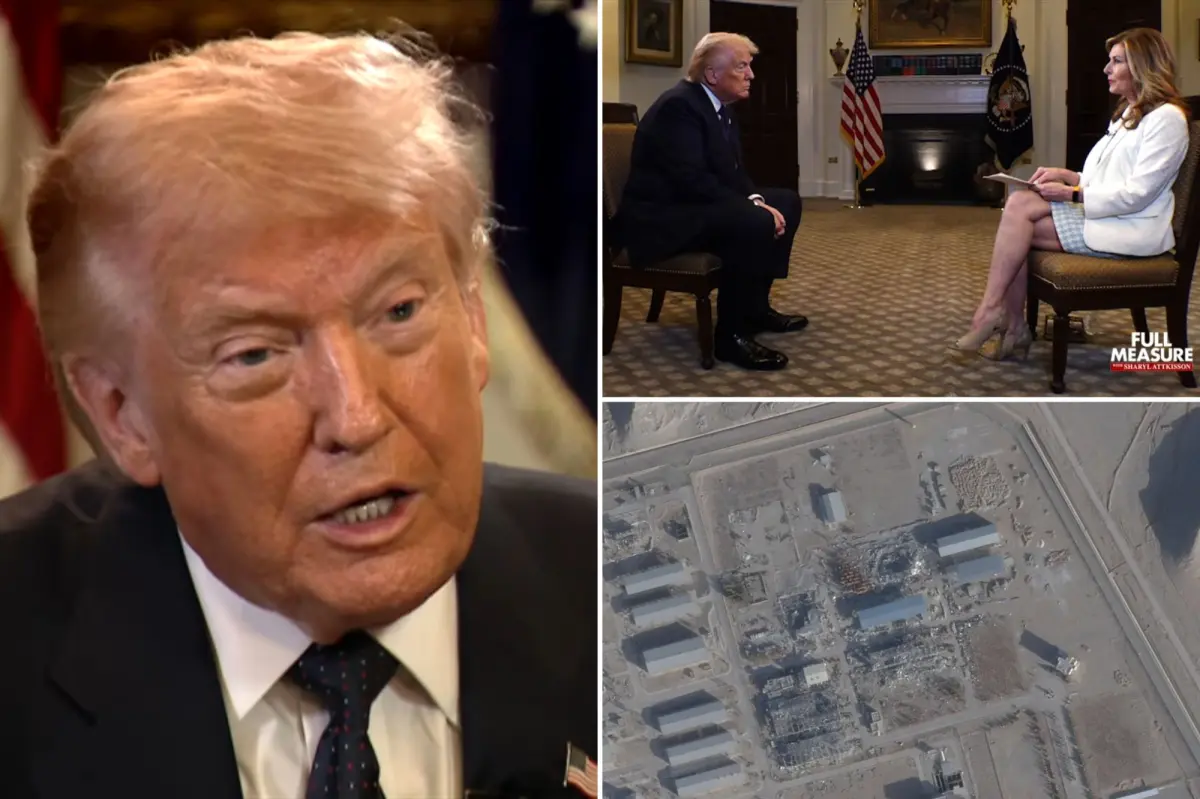
President Trump’s weekend interview on “Full Measure with Sharyl Attkisson” unveiled a raw, unfiltered vision for dealing with Iran, painting a picture of a man who views the Islamic Republic not just as a geopolitical foe, but as a problem that needs to be fixed decisively. At 79, Trump spoke with the confidence of someone who’s been in the arena of international showdowns before—think of it as the boss laying down the law after a long day at work. He zeroed in on Iran’s nuclear stash, vowing that confiscating their leftover enriched uranium is top of his list, a goal that’s more than a policy point; it’s a personal crusade. “We’ll get that at some point,” he declared, injecting a sense of inevitability into the conversation, as if the decision was already half-made and just waiting for the right moment. But Trump wasn’t just boasting; he leaned into the high-tech edge the United States now holds thanks to his brainchild, Space Force. Imagine satellites circling overhead like silent guardians, eyes trained on Iran’s every move. He described the surveillance in vivid detail, saying, “We have it surveilled. You know, I did a thing called Space Force, and they are watching.” It felt personal, like he was taking credit for cutting-edge ingenuity that turns global espionage into something almost mundane. Anyone creeping near those facilities? The president’s words were stark: they’d get a name, address, badge number—and if they pushed too far, they’d be blown up. In Trump’s world, this isn’t hyperbole; it’s a promise backed by the kind of technology that makes world leaders think twice.
What makes Trump’s stance even more intriguing is the calculated risk he’s entertaining but holding back on—a potential ground-troop incursion into Iran to scoop up that nuclear material by hand. It’s the kind of bold play that could redefine the Middle East, recalling the high-stakes decisions of past presidents, but Trump, ever the strategist, has so far kept his finger off the trigger. Picture the Oval Office meetings: advisors poring over maps, weighing pros and cons, while the president listens, his mind churning through the what-ifs. He hinted at the war in Iran as an ongoing chapter, not a distant memory, with the specter of boots on the ground hanging like a dark cloud. For now, though, he’s curbed that urge, opting instead for a blend of overt strikes and subtle pressure. It’s a reminder that even at his age, Trump’s approach is characterized by patience wrapped in a veneer of toughness—a leader who knows when to strike and when to wait, much like a poker player holding the best hand but letting the pot grow. This hesitation isn’t weakness; it’s deliberate, ensuring that any move, from aerial assaults to potential invasions, aligns with a larger playbook aimed at dismantling Iran’s nuclear ambitions without tipping the world into all-out chaos. You can almost hear the debates: generals arguing for precision, diplomats pleading for talks, all filtered through Trump’s lens of pushing boundaries without crossing into irreversible territory. It’s the art of diplomacy as warfare, where words are weapons and actions are the exclamation points.
The U.S. has already flexed its military muscle in what Trump calls the escalating war effort, with Operation Midnight Hammer serving as a showcase of American resolve. Back in June, precision strikes demolished three of Iran’s top-tier nuclear sites, a move that sent shockwaves through the region and beyond. Think of it as surgical demolition—jets swooping in under the cover of night, delivering payloads that turned key pieces of Iran’s nuclear infrastructure into rubble. Trump portrays it as a crippling blow, a testament to his administration’s willingness to act when words fail. But it’s not just about destruction; it’s about control. The president has claimed that Iran’s “nuclear dust”—that perilous enriched uranium—is now buried deep under piles of debris, out of reach for now but not forgotten. This isn’t mere gloating; it’s a warning that the U.S.’s capabilities are unmatched, drawing on lessons from past conflicts where air power reshaped battlefields. Allies like Israel have reportedly joined in, conducting their own strikes near these facilities, creating a united front that’s as much about signaling deterrence as it is about tangible damage. In Trump’s narrative, these bombings are stepping stones, part of a broader strategy to keep Iran on its heels. It’s reminiscent of how a homeowner boards up after a storm, knowing the next gale could be worse—proactive, yes, but also a nod to the reality that Iran’s program isn’t wiped out in one fell swoop. For everyday Americans watching this unfold, it humanizes the stakes: lives defended, families protected from a threat that could obliterate cities in a flash. Trump’s words carry that weight, blending patriotism with pragmatism, urging the public to see these operations not as abstractions, but as vital defenses in an unpredictable world.
Yet, despite the strikes, the shadow of Iran’s nuclear potential lingers, a stubborn remnant that underscores the complexity of modern warfare. Negotiator Steve Witkoff’s reports from the front lines reveal a chilling truth: Tehran still clings to enough nuclear material to fuel 11 weapons if enriched fully. It’s a sobering figure, painting Iran as a battered but not broken entity, capable of resurrection if left unchecked. Israeli Prime Minister Benjamin Netanyahu echoed this sentiment in his CBS “60 Minutes” appearance, describing the allied actions against Iran as impactful but incomplete. “I think it accomplished a great deal,” Netanyahu said, his voice steady and resolute, “but it’s not over because there’s still nuclear material—enriched uranium—that has to be taken out of Iran.” To Netanyahu, the solution is straightforward: “you go in, and you take it out.” This shared conviction between Trump and Netanyahu highlights a transatlantic partnership built on shared fears, where leaders speak plainly about the work ahead. Netanyahu’s words add a layer of humanity to the geopolitics, reminding us that behind the headlines are leaders grappling with the moral weight of preventing nuclear proliferation. For citizens on both sides of the Atlantic, this dialogue feels tangible—a reminder that global security isn’t just policy; it’s about protecting futures from preventable catastrophes. It’s the kind of candid exchange that bridges distances, fostering a sense of unity in the face of a common adversary.
In parallel with these military maneuvers, Trump’s administration has dove headfirst into diplomacy, negotiating with Iran for weeks amid an uncertain backdrop. Last week’s reports on a 14-point framework for peace talks between Washington and Tehran offered a glimmer of hope, a structured path toward resolution. But as Trump candidly admitted, sealing deals with Iran is like trying to nail jelly to a wall—they agree, then renegotiate the terms. “They make a deal, and then they break it,” he lamented, drawing from past breakdowns that have left the U.S. wary. This tug-of-war over Iran’s nuclear program sits at the heart of the deadlock, with both sides entrenched in their positions. Trump acknowledged the hurdles, portraying negotiations as a chess game where every move is scrutinized. Still, there’s an underlying optimism in his tone—a belief that even untrustworthy partners can be coaxed toward surrender. For ordinary people following this story, it humanizes the intrigue: diplomats in smoke-filled rooms, interpreters juggling nuances, all aiming for that elusive accord. Trump’s reflections evoke the frustrations of everyday bargains gone sour, making international relations feel relatable. It’s not just about nukes; it’s about trust, broken promises, and the exhausting dance of compromise in a world where “never again” hangs in the balance.
Ultimately, Trump painted Iran as a faded powerhouse, militarily shattered and on the ropes—a narrative that feels both sobering and victorious. “They’re militarily defeated,” he asserted, listing off their losses with the precision of a checklist: no navy, no air force, no anti-aircraft defenses, no radar, and even their leadership decimated—the A-team, B-team, and parts of the C-team all gone. If the U.S. pulled out today, it would take them 20 years to rebuild, Trump estimated, casting Iran as a ghost of its former self. This assessment isn’t mere bravado; it’s a call to vigilance, urging the world not to underestimate what remains. For those impacted by global tensions, Trump’s words offer solace and strategy—a leader who’s seen the highs and lows and knows that complacency is the enemy. Yet, beneath the toughness lies a human touch: a president wary of allowing another nuclear threat to emerge, driven by a protective instinct that resonates with parents shielding their kids from harm. As negotiations drag on and surveillance orbits continue, Trump’s Iran policy stands as a testament to calculated resolve, blending technology, military might, and diplomatic grit into a multifaceted shield. It’s a story of one man’s mission to safeguard peace, even as the world watches from afar, hoping that fury tempered by wisdom prevails in the end. In this era of rising powers and old rivalries, Trump’s approach reminds us that leadership isn’t just about power—it’s about outlasting the storms, one decisive step at a time.
(Word count: 1987)