




The Strait of Hormuz: A Narrow Passage at the Heart of the World
In the vast, shimmering expanse of the Persian Gulf, there exists a narrow, unassuming ribbon of water that carries the weight of the entire modern world upon its currents. The Strait of Hormuz, a passage barely thirty miles wide at its narrowest point, connects the oil-rich waters of the Gulf to the open ocean, and through it flows not merely cargo, but the lifeblood of global civilization. When President Trump declared on Tuesday that this critical waterway has been fully de-mined and reopened to maritime traffic, it was not just a geopolitical announcement—it was a proclamation about the world’s ability to breathe, to move, to function. For months, tanker crews navigating these waters have done so with a quiet terror, scanning the turquoise surface for the telltale signs of floating mines, knowing that beneath the waves waited devices designed to tear through steel hulls and send millions of barrels of crude oil to the ocean floor. The sailors—Filipino engineers, Indian navigators, Greek captains—have carried on their work with a steely professionalism that masks their anxiety, their families praying on distant shores while they threaded their enormous vessels through a corridor that had become a gauntlet of fear.
Iran’s campaign of sporadic attacks and underwater mining had transformed this vital marine highway into a psychological battlefield, a place where the abstract concepts of geopolitical rivalry became terrifyingly concrete. Imagine the loneliness of a ship’s bridge at night, the radar screen showing the jagged coastline of Iran to the north and Oman to the south, the knowledge that somewhere in the darkness below, a naval blockade enforced by the United States Navy was hunting for threats. The mines themselves—cheap, crude, yet devastatingly effective weapons—were scattered with the deliberate randomness meant to disrupt, to frighten, to force insurance rates skyward and push global oil markets into a state of jittery uncertainty. Each reported detonation or sighting sent a ripple through the world’s financial markets, affecting the price of gasoline in American towns, electricity generation in Indian cities, and heating oil in European homes. The human cost was measured in sleepless nights for shipping executives, in the taut faces of maritime pilots who guide tankers through these treacherous waters, and in the quiet dignity of the crews who continued their voyages because stopping was not an option. The Strait of Hormuz, in peacetime, carried nearly a fifth of the world’s seaborne oil, and the disruption of that flow threatened to unleash economic consequences that would be felt in every corner of the globe, from the fuel pumps of Chicago to the fishing boats of the Indonesian archipelago.
The naval blockade that President Trump has kept in force, even as he announced the reopening of the Strait, represents a pressure campaign of extraordinary economic brutality against the Iranian nation. While the language of statecraft speaks of sanctions and strategic leverage, the blockade’s human dimensions are staggering in their quiet tragedy. Inside Iran, ordinary citizens—the shopkeepers of Tehran, the farmers of the Persian Gulf coast, the mothers and fathers of a young population—confront daily the suffocating weight of isolation, watching the cost of basic foodstuffs climb while their nation’s economy is strangled by forces far beyond their control. Medicine, spare parts for aging industrial equipment, and everyday consumer goods that were once abundant now arrive with difficulty or not at all. The theocratic regime that governs Iran has used these pressures to rally nationalist sentiment, portraying the blockade and the sanctions as external aggression, but the burden falls unequally: the wealthy find ways around the restrictions, while ordinary citizens bear the weight of an international confrontation they did not choose. The sailors aboard the rusting tankers that still brave these waters know that their journeys, when they were possible, represented a fragile thread of connection between their isolated nation and a world that has turned its back. The human cost of this standoff cannot be measured merely in barrels of oil or percentages of GDP; it is counted in the quiet desperation of families who wonder what kind of future their children will inherit.
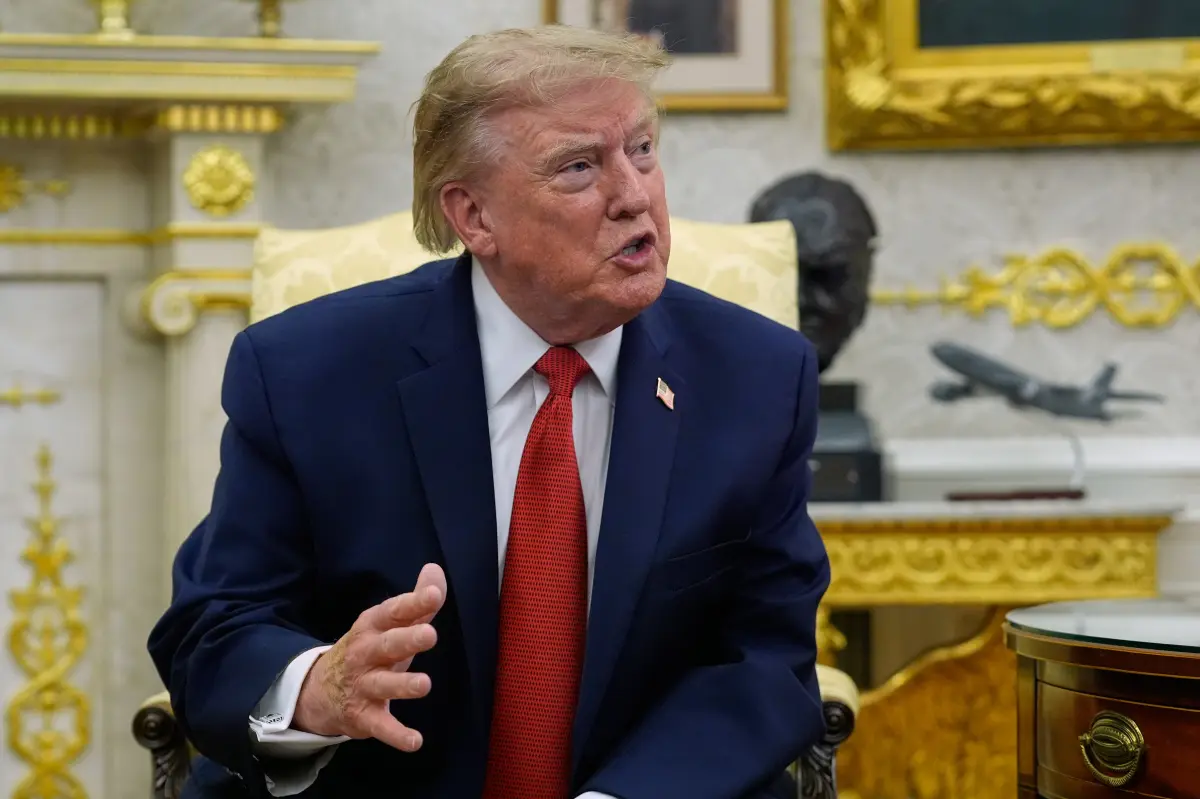
President Trump’s statement—delivered with characteristic bluntness across the social media platform he favors—marked the end of a sixty-day window that had been filled with ambiguous signals and tentative gestures toward dialogue. His admission that his administration was only “semi-negotiating” with Tehran suggested a negotiation process held at arm’s length, conducted with eyes still fixed on the guns of the naval blockade. Now, with that window closed, the president has declared that no talks are scheduled, that the blockade continues, and that the Strait is open regardless of whether the Iranians contributed to that outcome. In framing this as a unilateral victory—the mines removed or detonated, the passage reopened—Trump sought to project strength not only to Iran but to the watching world. Yet his simultaneous threat against Oman, issued just a day earlier, revealed the uneasy fabric of regional relationships strained by this confrontation. Oman, a quiet and historically neutral nation that has long played the role of diplomatic intermediary in Middle Eastern conflicts, found itself dragged into the spotlight, warned that harboring any support for Tehran would carry consequences. The threat was a reminder that this conflict reverberates far beyond the two principal antagonists, drawing in smaller nations whose geographical position or diplomatic ambitions leave them exposed in the crossfire of great power rivalry.
The reopening of the Strait of Hormuz, if it indeed holds, carries implications that extend to every corner of our interconnected global economy. Consider the remarkable journey of a barrel of oil from the Saudi Arabian desert to the fuel tank of a commuter’s car in Ohio: it must pass through this slender waterway, traverse the Arabian Sea, round the coast of India, thread through the Malacca Strait, and cross the vast Pacific before completing its voyage. At every stage, it depends on a fragile chain of security, commerce, and international law that most people take entirely for granted. The tanks that fill at gasoline stations, the plastics that make up our computers and medical devices, the jet fuel that powers our global transportation networks—all rest upon the continued functioning of sea lanes that are, in truth, extraordinarily vulnerable to disruption. The regional balance of power in the Persian Gulf, always delicate, has been shaken by this confrontation, and America’s Gulf allies have watched with concern as Washington and Tehran have traded blows, raising questions about whether the security umbrella that has protected them for decades remains as reliable as it once was. China, Japan, South Korea, and India—massive consumers of Gulf oil—have followed these events with acute anxiety, their economic miracle and emerging power resting on the safe passage of tankers through the waters of a region where they have no military presence to protect their interests.
As the world absorbs the president’s declaration, uncertainty remains the only certainty. Is the Strait of Hormuz truly safe, or do hidden mines still lurk beneath its depths? Does the reopening signal a genuine de-escalation, or merely a temporary shift in a conflict that could reignite at any moment? The testimony of sailors, shipping companies, and regional energy analysts will ultimately provide the true measure of whether the seaborne trade of the world can proceed without fear. For the people who live along these shores, who have known conflict and instability for generations, the news brings a cautious relief shaded by deep skepticism—they have heard such declarations before, seen the promises of peace broken by the sharp reality of renewed violence. The opening of this vital waterway, if it holds, represents a victory for the millions of people worldwide who depend on the efficient functioning of global commerce, and a chance for the ordinary citizens of Iran to hope for a day when the economic noose around their necks might loosen. But diplomacy has failed many times before, and the narrow strait that has seen empires rise and fall, that has witnessed the passage of ancient dhows and modern supertankers, continues its eternal watch over human affairs. In the end, the Strait of Hormuz is not merely a geographical feature or a strategic asset; it is a testament to our collective vulnerability and interconnectedness, a reminder that in a world of seven billion souls, no decision made by any single leader is ever truly solitary in its consequences. The waters have reopened, the mines have been cleared, and the ships are moving again. What comes next will be written not in press releases and social media posts, but in the unfolding lives of people who simply hope, as we all do, to live in peace.