






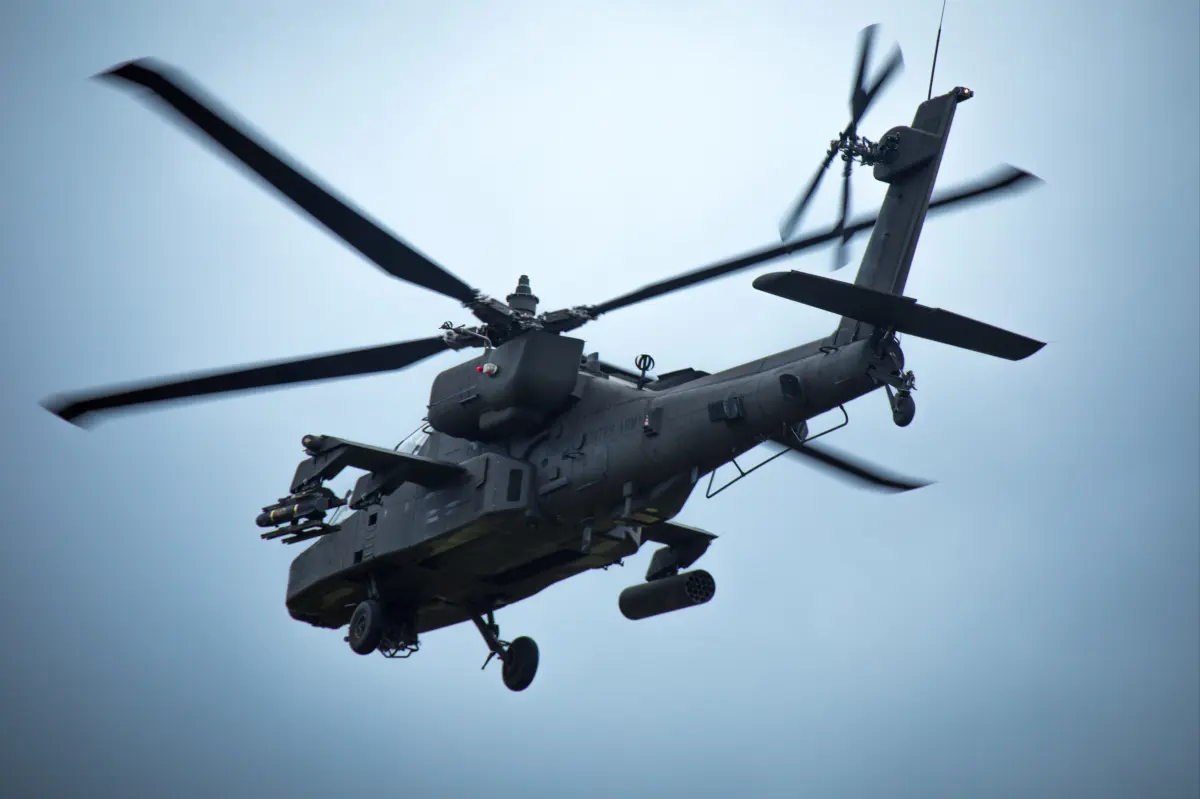
The theaters of modern combat are evolving at a breakneck pace, transforming the skies, fields, and waters into high-stakes testing grounds for novel forms of asymmetric warfare that challenge our traditional understandings of survival. Among the most iconic symbols of American military superiority is the US Army’s AH-64 Apache helicopter—a heavily armored, dual-engine attack helicopter often regarded as a flying tank designed to dominate the battlefield and withstand significant enemy fire. Yet, even this forty-million-dollar marvel of engineering and its highly trained crew find themselves vulnerable to the cheap, highly lethal, and increasingly intelligent autonomous weapon systems turning up in the arsenals of foreign adversaries. This stark reality was thrust into the public eye when President Donald Trump shared new, breathtaking details during an interview with Fox News, shedding light on a terrifying encounter that occurred over hostile territory in the Middle East. According to the President, two courageous US Army Apache pilots narrowly escaped what should have been an instantly fatal incident when an Iranian-made attack drone, packed with high-grade military explosives, collided with their gunship at a low altitude. This was not a typical aerial dogfight or a standard ground-to-air missile engagement, but rather a freakish, terrifying collision of human skill and hostile artificial intelligence that pushed the limits of aeronautical science and tested the sheer psychological fortitude of the American soldiers behind the glass. What ensued was a desperate struggle for survival that ultimately redefined the boundaries of emergency aviation and resulted in a miraculous rescue operation that will be studied in military academies for generations to come.
The details of the incident, as recounted by President Trump and relayed by reporter Trey Yingst, paint a vivid and claustrophobic picture of near-instantaneous catastrophe. While flying at a low altitude over a highly contested area, the Apache was suddenly ambushed by a loitering munition—an Iranian suicide drone designed to detonate upon impact with absolute devastating force. Instead of exploding on contact with the helicopter’s exterior armor, the drone shattered the canopy and wedged itself directly inside the cockpit, physically lodging itself in the narrow space between the pilot sitting in the rear station and the co-pilot/gunner situated in the front seat. The sheer psychological terror of this moment is almost impossible to overstate; two highly trained professionals suddenly found themselves trapped in a confined space with a live, burning, highly volatile explosive device hovering mere inches from their bodies. The drone’s engine and electronics had ignited, immediately filling the sealed cockpit with toxic fumes, blinding smoke, and an intense, searing heat that threatened to melt their gear and overwhelm their life-support systems. Warning panels lit up in a cascade of red alerts, and the internal temperature of the gunship skyrocketed as the pilots breathed shallowly through their oxygen masks, fully aware that a single spark, a sudden jolt, or the shifting of the drone could trigger a catastrophic blast that would vaporize them and their aircraft in a microsecond.
Faced with an unimaginable, white-hot nightmare, the pilots had to summon a level of professional discipline and physical composure that borders on superhuman. In the world of military aviation, training is designed to make reactions to emergencies instinctive, but no simulator in the world could adequately prepare a crew for the reality of piloting an unstable, burning helicopter with an unexploded, fuel-soaked aerial bomb physically wedged inside the crew compartment. The flight controls, delicate instrument arrays, and visibility were heavily compromised by the thick smoke and intense thermal radiation pulsing from the trapped drone. Despite the blistering heat that degraded their physical touch and threatened to cause structural failure of the helicopter’s hydraulic lines, the crew maintained an astonishing degree of communication and focus, working in tandem to keep the aircraft stable. They knew they were flying on borrowed time; the “miracle,” as President Trump later characterized it, was that the primary triggering mechanism of the Iranian drone failed to detonate upon the initial impact, but there was no telling how long that safety buffer would hold under the extreme thermal stress inside the cockpit. Every second they remained airborne was a roll of the dice against a fiery death, yet they refused to succumb to panic, focusing every ounce of their energy on managing the failing systems of their forty-million-dollar aircraft while desperately scanning the horizon for an emergency landing option.
Recognizing that a land-based crash landing risked a massive ground explosion that would ensure their deaths and potentially endanger ground forces or local populaces, the pilots made a calculated, split-second decision to pilot the burning gunship toward the open sea. This tactical decision, while logically sound, was fraught with extreme peril, as ditching a heavy, top-heavy attack helicopter like the Apache into water is notorious for its high mortality rate, often resulting in the aircraft flipping upside down and trapping the crew underwater. As the Apache descended toward the dark, waving expanse of the ocean, the cockpit remained an inferno, with the pilots desperately fighting to maintain spatial awareness and control of the rotors through the thick, choking haze. With remarkable precision, they managed to guide the crippled machine down to the water’s surface, executing a controlled ditching that absorbed the massive energy of the impact without instantly ripping the fuselage apart. Upon impact, the violent rush of cold seawater flooded the cockpit, representing a new, terrifying threat of drowning but simultaneously providing a merciful relief from the agonizing heat and, crucially, helping to cool and neutralize the unstable explosives packed inside the wedged drone. The pilots, battered and bruised but fueled by pure adrenaline, successfully unbuckled themselves from their harnesses, kicked through the shattered remnants of the canopy, and scrambled out into the sea as their beloved gunship slowly succumbed to the depths of the ocean.
Floating in the open sea, battered by waves and wrestling with the psychological shock of what they had just survived, the pilots faced the daunting task of awaiting rescue in highly contested, hostile waters where traditional search-and-rescue assets might be slow to arrive or vulnerable to enemy attack. It was at this critical juncture that the incident transitioned from a harrowing tale of survival into a historic milestone for the global military community, demonstrating the incredible potential of next-generation autonomous technology. Rather than deploying a traditional manned rescue helicopter or a crewed naval vessel into the dangerous zone, the US military launched an unmanned sea drone—a cutting-edge autonomous surface vessel (USV)—to retrieve the downed aviators. This marked the first time in United States military history that an unmanned maritime drone was utilized to conduct a live search-and-rescue operation for downed pilots in a combat environment. Guided by sophisticated artificial intelligence, GPS telemetry, and remote operators located miles away, the sleek, robotic vessel navigated the perilous waters with pinpoint accuracy, locating the floating pilots and providing a safe platform for their recovery. The irony of the situation was profound and poetic: after nearly being killed by an enemy drone that represented the destructive potential of autonomous warfare, the pilots were snatched from the jaws of death by an allied drone that symbolized the life-saving potential of that very same technological revolution.
The incredible survival of these two Apache pilots, brought to light by President Trump and widely reported by Fox News, transcends the tactical details of a military engagement to capture something deeply human and universally inspiring. President Trump’s characterization of the event as an absolute “miracle” is a sentiment echoed by everyone who has reviewed the telemetry and realized just how close these soldiers came to a fiery end in the skies over enemy territory. This dramatic episode serves as a powerful reminder of the raw courage, quick thinking, and unshakable bond of brotherhood that define the men and women who serve in the armed forces, proving that even in an era increasingly dominated by algorithms, remote-controlled weapons, and robotic systems, the ultimate deciding factor in survival remains the human heart and spirit. As these two pilots returned home to their families, they did so not only as the survivors of one of the most bizarre and terrifying encounters in modern military history, but as living testaments to the triumph of human agency over technological terror. Their story will undoubtedly become a legendary case study in military survival, illustrating how a combination of rigorous training, exceptional luck, and the pioneering use of rescue technology can transform a guaranteed catastrophe into a historic victory of human resilience.