



Behind the cold, sterile ink of bureaucratic policy directives lies the deeply intimate and terrifying reality of human beings caught in the gears of geopolitical convenience. Consider the lives of two Iranian women who made the hazardous journey to the United States in November 2024, driven by the desperate urge to survive and the burning hope of finding sanctuary in a free world. One of these women is a baptized Christian convert, a status that under the fundamentalist regime of the Islamic Republic of Iran is treated as a heresy and a capital offense, carrying the immediate threat of arbitrary arrest, state-sponsored torture, or execution. The other is a courageous democracy activist whose public defiance of Tehran’s theological autocracy marked her as an enemy of the state, making her an active target for the regime’s notorious intelligence services. When they finally crossed the American border, exhausted but hopeful, they believed they had reached a shore where human rights were sacrosanct. Instead, they were immediately met with detention, stripped of their liberty, and thrust into a complex, cold legal labyrinth. Even though they successfully convinced a United States immigration judge that their fears of persecution were absolutely valid—earning them the legal protection known as “withholding of removal”—they now face a terrifying and bewildering fate. Rather than being allowed to rebuild their shattered lives in safety on American soil, they are slated to be boarded onto a generic charter flight and sent to the Central African Republic (CAR), a nation in the heart of Africa with which they share no cultural, linguistic, or historical ties. This imminent deportation is the human face of a radical policy shift that reduces vulnerable refugees to statistical units of exchange, fundamentally altering the traditional concept of asylum.
This deportation is not an isolated incident but the latest implementation of a rapidly expanding network of “third-country agreements” drafted by the Trump administration. Designed as a legal mechanism to bypass the awkward diplomatic and legal blockages of repatriating migrants to hostile or highly oppressive states, these third-country deals allow the U.S. government to rid itself of asylum-seekers by sending them to developing nations willing to accept them in exchange for financial or logistical incentives. Historically, international law has prohibited “refoulement”—the forcible return of asylum seekers to a country where they face direct torture or death. By utilizing third-country agreements, U.S. federal authorities can technically claim they are respecting this humanitarian boundary because they are not sending the Iranian women back to Tehran; instead, they are sending them to Bangui. The administration has relied on this strategic loophole with growing frequency, striking similar arrangements with several other African countries, including a previously established removal deal with the Democratic Republic of the Congo (DRC). At least eight African countries, such as Eswatini, Ghana, and Sierra Leone, have participated in these arrangements, quietly accepting deportees from the United States in transactions that trade human lives for economic development packages, security assistance, or geopolitical favor. It is a highly transactional approach to a deeply moral crisis, effectively transforming the sacred duty of refugee protection into a geopolitical commodity that can be outsourced to the highest bidder or the most desperate economy.
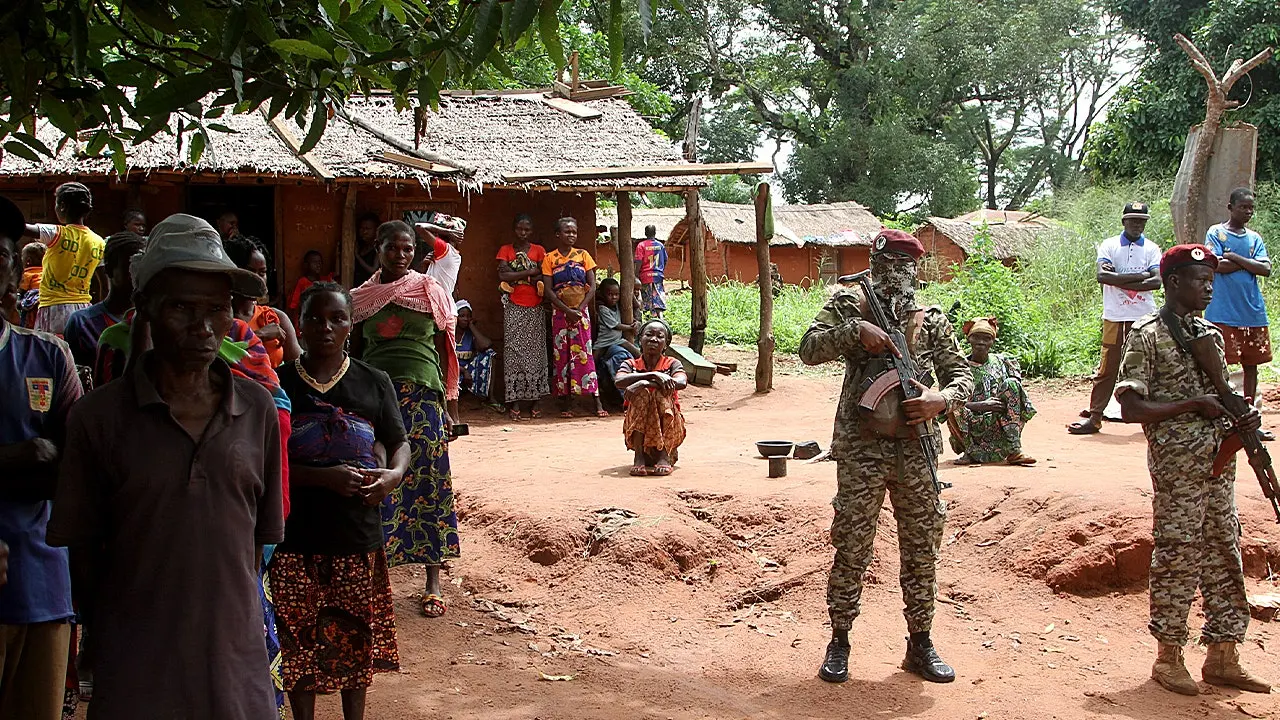
The destination for these deportees, the Central African Republic, is a country struggling under the weight of its own immense internal challenges, making it an incredibly precarious sanctuary for traumatized foreign nationals. Bordered by Chad to the north, Sudan and South Sudan to the east, the DRC and the Republic of the Congo to the south, and Cameroon to the west, CAR occupies a volatile, landlocked geography at the heart of Africa’s most troubled regions. Since gaining independence from France in 1960, the nation has been plagued by chronic political instability, suffering through six military coups, systemic corruption, and a near-total collapse of central state authority outside of the capital city. Armed insurgencies continue to fracture the country along sectarian and ethnic lines, perpetuating a cycle of horrific violence and leaving civilian populations vulnerable to mass atrocities. In this fragile domestic climate, President Faustin-Archange Touadéra, who secured a controversial third term in a highly contested December election, has increasingly relied on external actors to maintain his grip on power. Most notably, the CAR government has embraced Russia for critical security assistance, inviting mercenaries from the state-backed Wagner Group to police its regions and secure its survival. Simultaneously, President Touadéra has attempted to court Western governments, offering access to the country’s vast and lucrative mineral sectors, which include diamonds, gold, and uranium, in hopes of securing foreign aid and diplomatic legitimacy. It is within this chaotic, highly militarized state, where foreign mercenaries roam and local militias control major resource corridors, that the U.S. government plans to settle hundreds of highly vulnerable Middle Eastern and Asian asylum-seekers.
The alarming legal and ethical contradictions of this strategy have ignited fierce outrage and resistance from immigration defense attorneys, who argue that the policy is a massive betrayal of both American values and international human rights conventions. Emily Trostle, the attorney representing the two Iranian women, has been vocal about the extreme risks her clients face under this new agreement, highlighting the profound existential dread of being cast out to a volatile nation with no clear safety net. Trostle confirmed that both of her clients had their fear of returning to Iran validated in a court of law, which legally barred the U.S. government from sending them back to their home country. However, by exploiting the technicalities of the law, the administration has managed to bypass the spirit of that judicial protection, leaving defense lawyers scrambling to find legal avenues to halt the flights. Under the newly finalized deal, which was quieted through during a high-level U.S. diplomatic delegation visit to the CAR capital of Bangui in May, the deportees are essentially being cast into a legal limbo. While they are supposedly guaranteed housing in apartments within the capital city and spared from immediate repatriation to their home countries, immigration lawyers argue that there is absolutely no infrastructure in CAR to support their integration, protect them from sectarian violence, or ensure their long-term survival. The lack of transparent information from the State Department and federal authorities regarding the total number of migrants, the selection criteria, and the frequency of subsequent flights has only heightened the sense of dread surrounding this policy.
The logistical details of the upcoming deployment paint a sobering picture of the lived reality for those about to be deported. The first flight under this arrangement, scheduled to depart as early as Thursday, is expected to carry roughly twenty individuals, including the two Iranian women, alongside citizens from war-torn Syria, Taliban-controlled Afghanistan, and a Turkish national. These individuals represent some of the most shattered corners of the globe, having fled some of the most brutal regimes and active war zones in modern history, only to find themselves grouped together on a charter flight to a land completely alien to them. Upon arrival in Bangui, they will be placed in local apartments, but will largely be left to navigate a foreign culture, language barrier, and fragile security environment with virtually no resources of their own. The International Organization for Migration (IOM), which received a massive $85 million in funding from the United States this fiscal year, has confirmed its involvement in the aftermath of their arrival. Under explicit pressure and request from the Central African government, the IOM plans to provide what it describes as strictly voluntary, post-arrival humanitarian assistance, such as basic medical care and food aid. However, acutely aware of the ethical minefield this policy represents, the international agency has taken great pains to publicly distance itself from the deportation process itself, emphasizing that it remains entirely uninvolved in the actual enforcement, logistics, or execution of the removals. This delicate bureaucratic balancing act does little to ease the anxiety of the deportees, who find themselves caught between a host government that views them as bargaining chips and international agencies that can only offer temporary band-aids to their permanent exile.
Ultimately, this unprecedented agreement between Washington and Bangui illustrates a profound and troubling shift in the global architecture of asylum, signaling a future where human rights are increasingly subservient to administrative efficiency and border externalization. As wealthy, powerful Western democracies look to insulate themselves from the historic waves of global migration driven by war, climate change, and political tyranny, they are increasingly shifting the physical and moral burden of refugee protection to the Global South. By paying less-developed, highly vulnerable nations to act as containment centers for the world’s displaced, the United States is setting a dangerous precedent that threatens to dismantle the international refugee protection network established in the wake of the Second World War. For the twenty individuals preparing to board the flight to the Central African Republic, the grand promises of international law and American sanctuary have dissolved into a stark, terrifying reality. They are bound for a capital city guarded by foreign mercenaries, nestled within a nation recovering from civil war, carrying nothing but their trauma and the devastating realization that their lives have been bargained away. As their attorney and human rights groups make desperate, last-minute appeals to halt the deportations, the impending flight stands as a quiet, haunting reminder of what happens when the human face of migration is completely erased from the calculations of state power.