





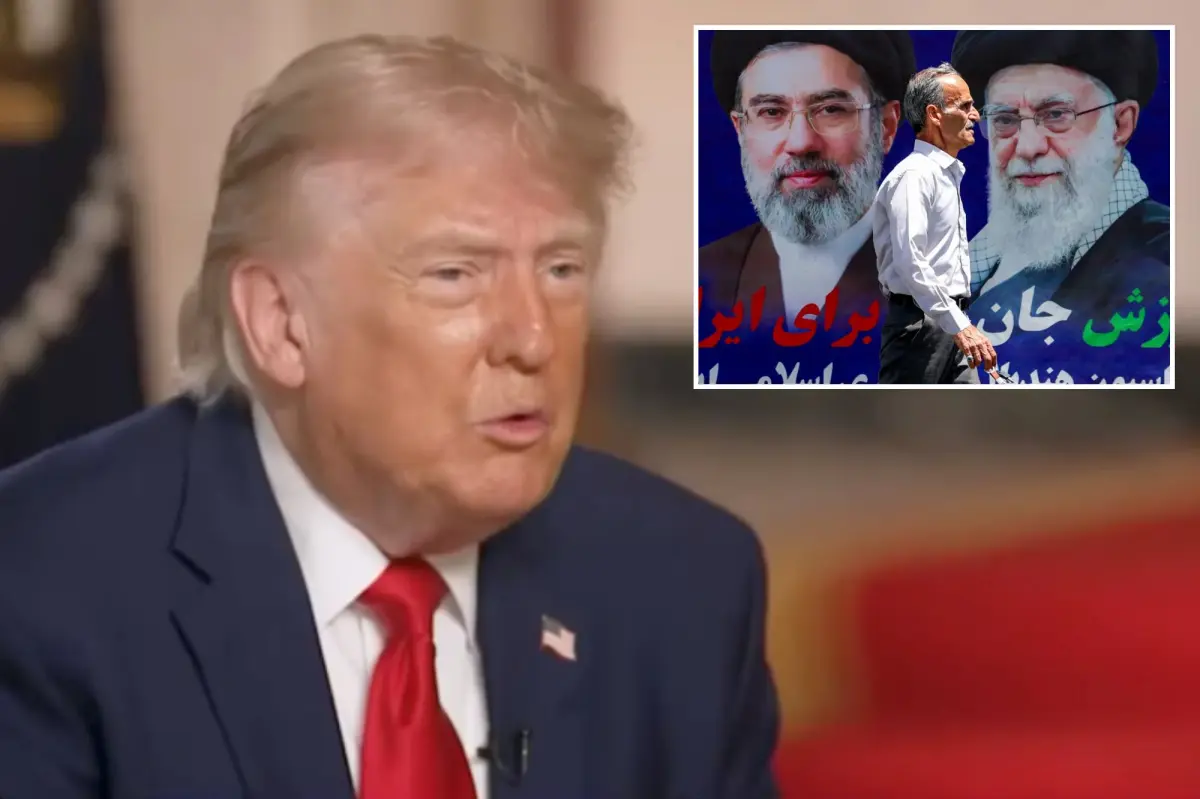
In an era defined by rapid-fire geopolitical shifts and high-stakes international posturing, President Donald Trump has made it clear that when it comes to dealing with the long-standing nuclear threat from Iran, he is playing a calculated, patient game. Speaking on the program “My View with Lara Trump,” the president shared a candid look into his administration’s diplomatic strategy, asserting that he is in “no hurry” to finalize a deal with Tehran. While acknowledging that an immediate resolution would bring welcomed economic relief—notably predicting that global gasoline prices would come “tumbling down” once a stable agreement is reached—Trump emphasized that rushing into a pact of this magnitude is a recipe for failure. By maintaining a posture of strategic patience, the administration aims to signal to the Iranian regime that Washington will not be rushed into signing a weak or superficial agreement just to score a quick political victory. This deliberate pacing serves as a psychological lever, designed to keep pressure on Tehran while ensuring that any finalized document addresses America’s long-term national security interests without compromise.
At the absolute center of this diplomatic push is an unyielding, non-negotiable red line: the total and permanent prevention of Iran from ever obtaining or developing a nuclear weapon. Trump revealed that during ongoing discussions, the Iranian regime has already agreed in principle to this foundational demand—a development he characterized as highly significant. For decades, the international community has grappled with the complex puzzle of Iran’s nuclear ambitions, marked by the rise and fall of various multilateral agreements that critics argued merely delayed, rather than eliminated, Tehran’s capacity to build a bomb. By focusing on a definitive and verifiable ban on nuclear weapons as the absolute starting point of current talks, the Trump administration seeks to bypass the strategic ambiguities of past diplomacy. The President’s rhetoric suggests that if the Islamic Republic refuses to translate this verbal agreement into an ironclad, enforceable treaty during active diplomatic negotiations, the United States is fully prepared to resolve the standoff through entirely different and far more confrontational means.
Beyond the immediate nuclear threat, the administration’s demands extend into the vital waterways of the Middle East, highlighting the critical connection between regional military security and global economic stability. Trump has laid down strict, immediate conditions regarding the Strait of Hormuz, the world’s most crucial maritime chokepoint for global oil supplies, demanding that it be opened immediately with zero tolls for unrestricted shipping traffic in both directions. For years, Iran has threatened to weaponize its geographical proximity to the strait, using the threat of maritime blockades as asymmetrical leverage against Western economic interests. To permanently neutralize this behavior, Trump is demanding that the regime remove all remaining underwater mines from the waterway, supplementing the extensive clearance operations already conducted by advanced United States Navy mine sweepers. By insisting on a toll-free, fully demilitarized corridor, the administration is attempting to strip Tehran of its ability to hold the global energy market hostage, ensuring the uninterrupted flow of global trade.
A particularly dramatic and technically complex dimension of these negotiations involves the physical remediation of Iran’s deeply buried nuclear infrastructure, which was heavily damaged by American military strikes nearly a year ago. Trump discussed the fate of highly enriched material—colloquially referred to as “nuclear dust”—which currently sits buried deep underground beneath collapsed mountain ranges, a direct consequence of a devastating strike carried out by American B-2 stealth bombers eleven months prior. In an unusual twist of global cooperation, the President explained that the United States and China are the only nations possessing the heavy mechanical and technical capabilities required to safely excavate and destroy this buried radioactive material. The proposed plan outlines a highly coordinated, high-stress cooperative effort involving the United States, China, the International Atomic Energy Agency (IAEA), and the Islamic Republic of Iran itself to safely unearth and completely eliminate these hazards, transforming a heavily fortified site of military ruins into a focal point of cooperative, verifiable disarmament.
This sophisticated blend of diplomatic maneuvering and technical cooperation is backed by an explicit and formidable show of military deterrence, as reiterated by Secretary of Defense Pete Hegseth over the weekend. Hegseth made it plain that the Pentagon is fully prepared to pivot from diplomacy to direct military action if the current negotiations fall apart, warning that the administration will accept nothing less than an exceptional deal for the American people. In a deliberate rhetorical nod to an older, more direct era of American defense policy, Hegseth cautioned that if Iran refuses to finalize an agreement now, they will have to deal directly with the “War Department.” The Defense Secretary emphasized that the United States military is postured even more aggressively today than it was at the start of the administration, leaving no doubt that the Pentagon has the logistical capability and tactical readiness to dismantle Iran’s nuclear capabilities by force if peaceful channels fail to deliver results.
As President Trump convenes critical meetings in the White House Situation Room to make a final determination on the negotiations, the world is witnessing a masterclass in high-pressure coercive diplomacy. The administration’s strategy relies on a delicate balance: offering Iran a clear path toward economic normalization and regional stability on one hand, while keeping the devastating specter of unmatched military power visibly on the table with the other. By combining the patience of a seasoned negotiator with the raw deterrent power of the modern American military, the administration is attempting to fundamentally redraw the security architecture of the Middle East. Whether this high-stakes gamble culminates in a historic, verifiable peace treaty that permanently denuclearizes Iran and secures global shipping lanes, or descends into a renewed military conflict, the coming days will decide the trajectory of global security and foreign policy for years to come.