





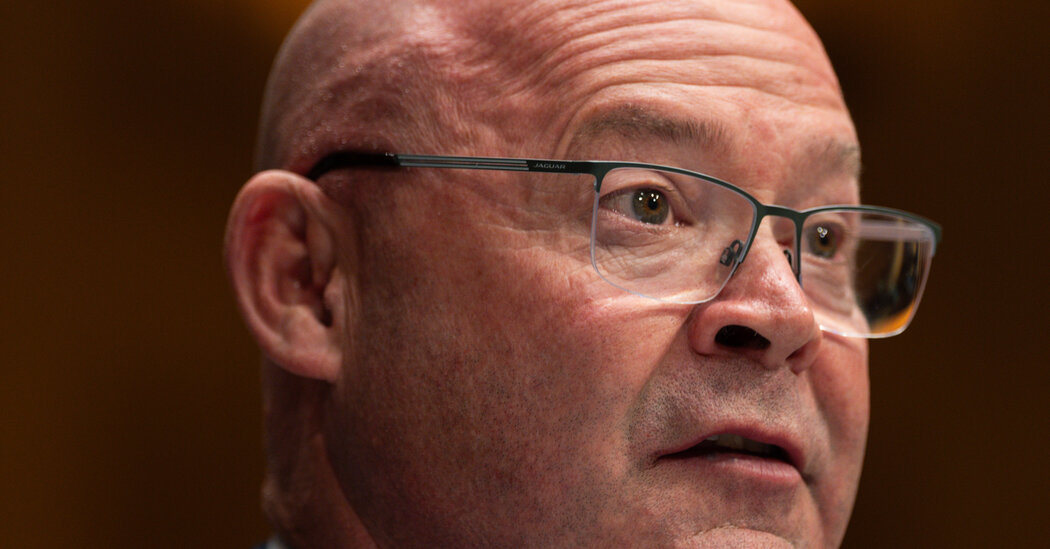
Last winter, in the quiet corridors of the Department of Justice, a lawyer representing the International Brotherhood of Teamsters made a quiet but monumental proposal to federal officials: after thirty-five years of intense, court-mandated government supervision, it was finally time for the United States government to step back and let the union govern itself. This discreet outreach, which occurred far from the public eye and has only recently come to light through interviews with individuals close to the discussions, set the stage for an extraordinary legal motion filed in a Manhattan federal court. The joint filing by Teamsters leadership and federal prosecutors aims to dismantle the last remaining vestiges of an oversight structure established in 1989—a legal dragnet originally designed to purge the union of systematic organized crime, racketeering, and systemic financial corruption. Should a federal judge approve this proposal, it will mark a historic turning point, signifying a crowning achievement for the union’s formidable general president, Sean M. O’Brien. O’Brien has spent his tenure successfully leveraging high-level political connections, aggressive negotiating tactics, and a fierce, populist rhetoric to consolidate a level of absolute authority within the organization that has not been witnessed in decades. This potential liberation from federal oversight highlights a profound evolution for a union once synonymous with backroom mob deals, representing a bold declaration that the modern Teamsters are finally capable of keeping their own house clean without a federal referee.
This consolidation of authority was on full display at the union’s recent convention in the neon-lit expanse of Las Vegas, where O’Brien’s political dominance was cemented in a spectacular, unprecedented fashion. In an overwhelming show of solidarity that stunned even seasoned labor observers, delegates voted so decisively in favor of O’Brien’s nomination that his re-election to a second term was declared on the spot, bypassing the traditional, months-long membership voting process entirely. Armed with a resounding mandate, the 54-year-old leader took to the stage to deliver a raw, profanity-laced acceptance speech to more than 1,700 roaring delegates, championing the “militancy” and uncompromising stance that have become the hallmarks of his leadership style. Onstage, O’Brien demanded absolute internal unity, famously asserting that the era of “bullshit” was officially over and that the union’s formidable power flowed directly from the rank-and-file members upward, rather than from the executive suite down. Yet, as the chants of “five more years” reverberated throughout the convention hall, it was undeniably clear who held the levers of power. In interviews, O’Brien has readily acknowledged his intense, self-described “alpha” personality, defending his polarizing approach as a necessary tool of leadership while insisting that his actions are guided by a deep personal integrity and an unwavering commitment to the welfare of the union’s members. For O’Brien, the impending termination of federal supervision is not a product of personal vanity, but rather a hard-won recognition of the Teamsters’ modern maturity, proving that the organization is more than ready to police its own ranks after decades of state-imposed custody.
However, the prospect of an entirely unbound Sean O’Brien has sent a chill through certain corners of the union, sparking quiet anxieties among members and legal experts who fear the return of an autocratic reign. Several insiders and rank-and-file members, speaking on the condition of anonymity out of a very real fear of executive reprisal, paint a more complicated picture of O’Brien as a domineering figure with zero tolerance for internal dissent or political opposition. These fears are not merely academic; just a day before the joint motion to end oversight was submitted to the court, a group of more than twenty concerned Teamsters took the risky step of filing an independent letter to the district judge, pleading with the court to preserve the independent investigating procedures. They argued that several sensitive investigations—including serious allegations of internal election misconduct and financial improprieties—remain active and could easily be swept under the rug without the protective umbrella of external, neutral arbiters. This internal friction highlights a deeper psychological divide within the modern labor movement: while almost all members naturally yearn for their union to be free from government interference, many fear that without the safety net of independent federal monitoring, the democratic rights of the rank-and-file will be crushed under the weight of O’Brien’s centralized, unchallenged machine. This tension was further illuminated when the union’s independent election supervisor had to step in and discipline O’Brien for using his official union-sponsored podcast to launch profanity-laden, personal attacks against his political opponents, laying bare the aggressive methods the leadership is willing to employ to discourage rival candidacies.
To understand the immense gravity of removing these external safeguards, one must look back to the dark era of 1988, when federal prosecutors launched a sweeping racketeering lawsuit that exposed how completely La Cosa Nostra had infiltrated the Teamsters, utilizing murder, embezzlement, bribery, and physical intimidation to control the union. The landmark 1989 consent decree that followed was a radical intervention, establishing a court-appointed independent review board with the unilateral power to investigate union officers, run democratic elections, and expel corrupt elements. While both union advocates and prosecutors agree that the mafia’s control was effectively broken by the late 1990s, federal authorities were highly reluctant to relinquish absolute control, leading to a modified 2015 agreement that established a transition plan toward self-policing under three key independent officers. This transitional structure, however, created significant friction, particularly between the independent investigator, former federal judge Robert D. Luskin, and the union’s newly established internal investigative unit led by Frank Hughes, a former state police officer. This bureaucratic overlap often resulted in chaotic duplicate investigations and heated disputes, which culminated in a scathing 150-page report by Luskin that accused the Teamsters’ executive board of going far too easy on two of O’Brien’s close political allies who had embezzled tens of thousands of dollars in union dues. When Luskin’s term expired shortly thereafter, O’Brien chose not to renew his contract, instead consolidating investigative roles and initiating the quiet judicial push to close the independent investigator’s office by the end of the year, effectively transferring all policing powers back to internal union control.
Simultaneously, O’Brien has rewritten the rules of modern labor politics by executing a highly calculated, bipartisan chess game that has shattered the traditional alliance between major unions and the Democratic Party. He shocked the political landscape by delivering a fiery, populist speech at the 2024 Republican National Convention where he directly praised Donald Trump while lambasting corporate greed, followed by a controversial decision to withhold the Teamsters’ presidential endorsement entirely—a move that dealt a severe blow to the Democratic ticket. By actively courting both sides of the aisle, O’Brien has secured direct, personal access to Donald Trump, meeting with him frequently and even lobbying him successfully on critical transportation policies and labor nominations, such as pushing for the appointment of labor ally Lori Chavez-DeRemer. While this unapologetic pragmatism has drawn fierce condemnation from progressive labor activists who view any alignment with the Republican platform as a betrayal of working-class interests, O’Brien remains entirely unrepentant, arguing that his job is not to serve a political party, but to force both parties to compete for the favor of the American worker. This transactional political strategy was vividly illustrated at the Las Vegas convention, where high-profile figures from across the political spectrum—including progressive champion Ro Khanna and conservative firebrand Josh Hawley—all lined up to praise the union, desperate to win a share of the Teamsters’ immense electoral influence ahead of future election cycles.
As the legal world awaits a final ruling from Judge Loretta Preska, who has meticulously overseen this landmark case for nearly a quarter of a century, the Teamsters stand at the precipice of an entirely unmonitored future. The transition represent a profound test of faith: if the motion is granted, the independent investigator’s office will close permanently on December 31, and within three years, all external judicial review of internal union discipline will cease entirely, leaving the union’s destiny solely in the hands of its leadership. This impending reality was captured in a moment of dark humor during the Las Vegas convention, when Representative Ro Khanna joked that O’Brien’s staggering 96 percent re-election victory represented “Putin numbers,” drawing a wave of nervous, halting laughter from the assembled delegates. Ultimately, the story of the modern Teamsters is a complex, uniquely American drama about the delicate, often precarious relationship between institutional power, democratic freedom, and the absolute necessity of internal accountability. Whether Sean O’Brien’s unbound, fiercely militant leadership will usher in a golden era of powerful, self-governing union prosperity, or slowly slide back toward the insular, autocratic abuses of the past, is a question that the Teamsters themselves will now have to answer, completely alone, in the court of their own conscience.