





A Summit on the Edge: How the G7 in Évian Reveals the Deepening Fracture of the Western Alliance
1. The Ghost of Évian: How Two Decades Rewrote the Rules of Transatlantic Diplomacy
The picturesque Alpine spa town of Évian-les-Bains, nestled on the pristine southern shore of Lake Geneva, has long served as a tranquil backdrop for some of the world’s most high-stakes geopolitical dramas. When the leaders of the world’s leading industrialized democracies last gathered here in June 2003, the international community was reeling from the geopolitical shockwaves of the U.S.-led invasion of Iraq. That military campaign, executed in the face of passionate, public opposition from core European allies like France and Germany, threatened to dismantle the post-Cold War security architecture. Yet, despite the frosty handshakes exchanged on the lakeside promenades and the palpable tension in the summit rooms, President George W. Bush and his European counterparts worked tirelessly to preserve an indispensable diplomatic illusion. They maintained a polished veneer of a unified West—a coalition of like-minded democracies standing shoulder-to-shoulder against the chaotic and unpredictable perils of an unstable world. More than two decades later, as the heads of state return to the very same manicured French terraces, another American military conflict in the Middle East looms large over the proceedings. This time, however, the diplomatic window dressing has been completely stripped away, revealing a profoundly altered global order where the shared values that once anchored the transatlantic alliance have given way to deep suspicion and strategic polarization.
+————————————————————————+
| ÉVIAN-LES-BAINS SUMMIT COMPARISON |
| |
| 2003 SUMMIT (Post-Iraq Invasion) 2026 SUMMIT (Modern Rift) |
| ┌─────────────────────────────────────┐ ┌────────────────────────┐ |
| │ • Veneer of cooperative alliance │ │ • Veneer stripped away │ |
| │ • Disagreements but shared rules │ │ • US viewed as threat │ |
| │ • Commitment to G7 multilateralism │ │ • Complete divergence │ |
| └─────────────────────────────────────┘ └────────────────────────┘ |
+————————————————————————+
2. The Transatlantic Fracture: When an Ally Becomes a Global Liability
When President Donald J. Trump arrives in Évian, he will not find a receptive audience of deferential allies eager to fall in line behind American leadership. Instead, he will be met by European leaders who no longer view the United States as a reliable anchor of global stability or a partner in addressing existential global challenges like climate change, economic inequality, and international security. In a startling and historically unprecedented shift, many European capitals now view Washington’s erratic foreign policy as a direct threat to their own sovereign interests and domestic stability. This collective anxiety has intensified following a series of unilateral American provocations, most notably the destabilizing military strikes in Iran that have sent shockwaves through global energy markets, alongside a calculated contempt for the founding tenets of NATO and bizarre diplomatic overtures, such as a renewed push to acquire Greenland. As Charles A. Kupchan, a esteemed professor of international relations at Georgetown University, notes, the traditional handbook for dealing with a volatile American presidency has been completely rewritten. During the early years of the current administration, the prevailing strategy among European allies was one of quiet accommodation—biting their collective tongues and maintaining a friendly facade in hopes of preserving the status quo. However, the combined impact of the Iranian escalation and the Greenland controversy has shattered that approach, forcing historical allies to realize they must cooperate with Washington only where interests occasionally align, while prepared to assertively say “no” when the bedrock of international law is threatened.
3. Diplomatic Damage Control: Macron’s High-Stakes Versailles Playbook
Unlike the deep-seated disputes of the early 2000s, which bruised diplomatic relationships without destructive long-term impacts on the institutional machinery of the G7, today’s divisions threaten the absolute collapse of the multilateral alliance. Recognizing this existential threat, French President Emmanuel Macron has tailored a diplomatic agenda for the Évian summit that is noticeably modest. Rather than pursuing sweeping multilateral accords on trade, climate, or secure tech governance, Macron’s primary objective has shifted to raw damage control: preventing a highly public American walkout. In past summits, President Trump’s sudden and angry departures have cast a shadow over collective communiqués, reducing months of tedious diplomatic preparation to bureaucratic irrelevance. To mitigate this risk, Macron has engineered a charm offensive designed to appeal directly to the American president’s affinity for historical grandeur and personal prestige. By rearranging the entire summit schedule to accommodate Trump’s personal milestones—such as his 80th birthday and a scheduled evening viewing of cage fights at the White House—Macron has cleared the path for a post-summit dinner at the legendary Palace of Versailles. Ostensibly organized to commemorate the 250th anniversary of American independence, which was formalized at Versailles in 1783, the lavish dinner is a calculated attempt to use French statecraft and history to keep a volatile superpower engaged at the negotiating table, even if only through a gilded, temporary peace.
                      MACRON'S DIPLOMATIC STRATEGY
                     ┌─────────────────────────────┐
                     │   Minimize Ambitious Goals  │
                     └──────────────┬──────────────┘
                                    │
                     ┌──────────────▼──────────────┐
                     │  Accommodate Trump's Agenda │
                     └──────────────┬──────────────┘
                                    │
                     ┌──────────────▼──────────────┐
                     │ Versailles Pageantry Dinner │
                     └─────────────────────────────┘
4. The Toxicity of American Engagement: Why Europe Is Backing Away
Despite these elaborate gestures of goodwill, the structural divide separating Washington from its traditional Western European allies has grown far too wide to be bridged by opulent dining and historical pageantry. The defining characteristic of this summit, as noted by Jeremy Shapiro, Director of Research at the European Council on Foreign Relations, is not a shared pursuit of common goals, but a collective effort to avoid a public collapse, while maintaining a fragile illusion of unity that none of the participants truly believe in. The roots of this disillusionment run deep, exacerbated by the administration’s decision to launch military campaigns in the Middle East without consulting European partners, and compounded by a complete disinterest in participating in critical peace processes, such as the ongoing conflict in Ukraine. On the economic and environmental fronts, the G7 nations remain deadlocked; key members have steadfastly refused to endorse or join American military operations in the Persian Gulf, drawing sharp rebukes from a White House that demands absolute alignment. This constant pressure has made public association with American policy politically toxic for European leaders. Even populist, right-leaning leaders like Italian Prime Minister Giorgia Meloni, who once shared ideological common ground with the American president’s nationalist platform, find themselves forced to distance their governments from Washington to protect their own standing among European electorates who are increasingly hostile to American unilateralism.
5. Geopolitical Fault Lines: The Divergent Realities of Canada, Europe, and Asia
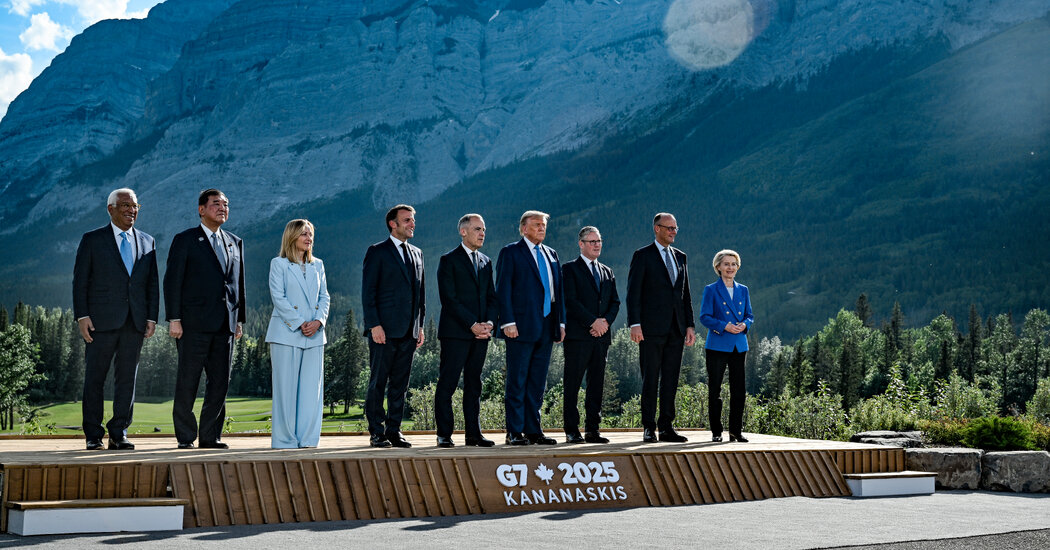
The widening gap between the United States and its historical partners is not felt uniformly across the G7, revealing deep fault lines that reflect the distinct geographic and security realities of its members. Nations that enjoy the geographical buffer of oceans and stable borders can afford to take a more principled stance against Washington’s erratic foreign policy. For instance, Canadian Prime Minister Mark Carney has found himself with the domestic support to speak out against Washington’s abandonment of multilateral norms, articulating a vision of a global order that is no longer dependent on American leadership. By contrast, frontline states like Germany and Japan face a far more precarious reality. Positioned adjacent to increasingly assertive and heavily armed neighbors—specifically Russia and China—both Berlin and Tokyo remain deeply dependent on the U.S. nuclear umbrella and military presence to deter region-wide conflict. This acute security dependency forces German Chancellor Olaf Scholz and Japanese Prime Minister Shigeru Ishiba to navigate a treacherous path: they must quietly register their disapproval of Washington’s unilateralism while avoiding any diplomatic rift that might compromise their national defense. Meanwhile, even the legendary “Special Relationship” between Washington and London has begun to fray. Under Prime Minister Keir Starmer, the United Kingdom has taken the extraordinary step of denying U.S. forces the right to use British airbases for offensive operations in Iran, highlighting a growing discomfort with American policy that has been exacerbated by aggressive interference in Britain’s domestic politics by senior U.S. officials.
┌───────────────────────────────────────────────────────────────────────────┐
| G7 ALLY RESPONSES TO THE U.S. |
| |
| [CANADA] |
| • Speaks more freely about U.S. policy rifts. |
| • Geographically insulated; advocates for sovereign global institutions. |
| |
| [GERMANY & JAPAN] |
| • Caught between public disapproval and absolute reliance on U.S. defense.|
| • Proximity to Russia and China limits freedom of diplomatic maneuver. |
| |
| [UNITED KINGDOM] |
| • Historic “Special Relationship” strained under domestic pressures. |
| • Denied U.S. use of airbases for offensive campaigns in Iran. |
└───────────────────────────────────────────────────────────────────────────┘
6. The Death of Consensus: How Side-Channel Diplomacy Now Rules the G7
As the formal sessions of the Évian summit commence, the official agenda features an array of pressing issues, from global economic imbalances and Chinese industrial overcapacity to the ethics of regulating artificial intelligence. President Macron has extended invitations to a broad group of non-member heads of state, including Ukraine’s President Volodymyr Zelensky and Egypt’s President Abdel Fattah el-Sisi, in an effort to broaden the summit’s scope and inject a sense of constructive urgency. Yet, these formal efforts are overshadowed by a profound uncertainty regarding the role America will play in these discussions. While President Trump’s recent bilateral meetings with Chinese President Xi Jinping in Beijing theoretically position him to lead a coordinated Western strategy on global trade, his unpredictable policy shifts have left European officials wary of constructing any long-term strategies around Washington’s promises. Consequently, the true work of this G7 summit will not take place around the main conference table under the glare of international media, but rather in the quiet corridors, private gardens, and informal side meetings far from American ears. As Jeremy Shapiro dryly notes, the real diplomatic breakthrough of the summit will occur when the other sixth-eighths of the alliance excuse themselves to hold the genuine, necessary conversations about the future of global stability. This pivot away from formal, American-led multilateralism toward informal, regional coalitions may well be the defining legacy of the Évian-les-Bains summit—a quiet acknowledgment that the old alliance has fractured, and a new, more fragmented era of global governance has begun.