




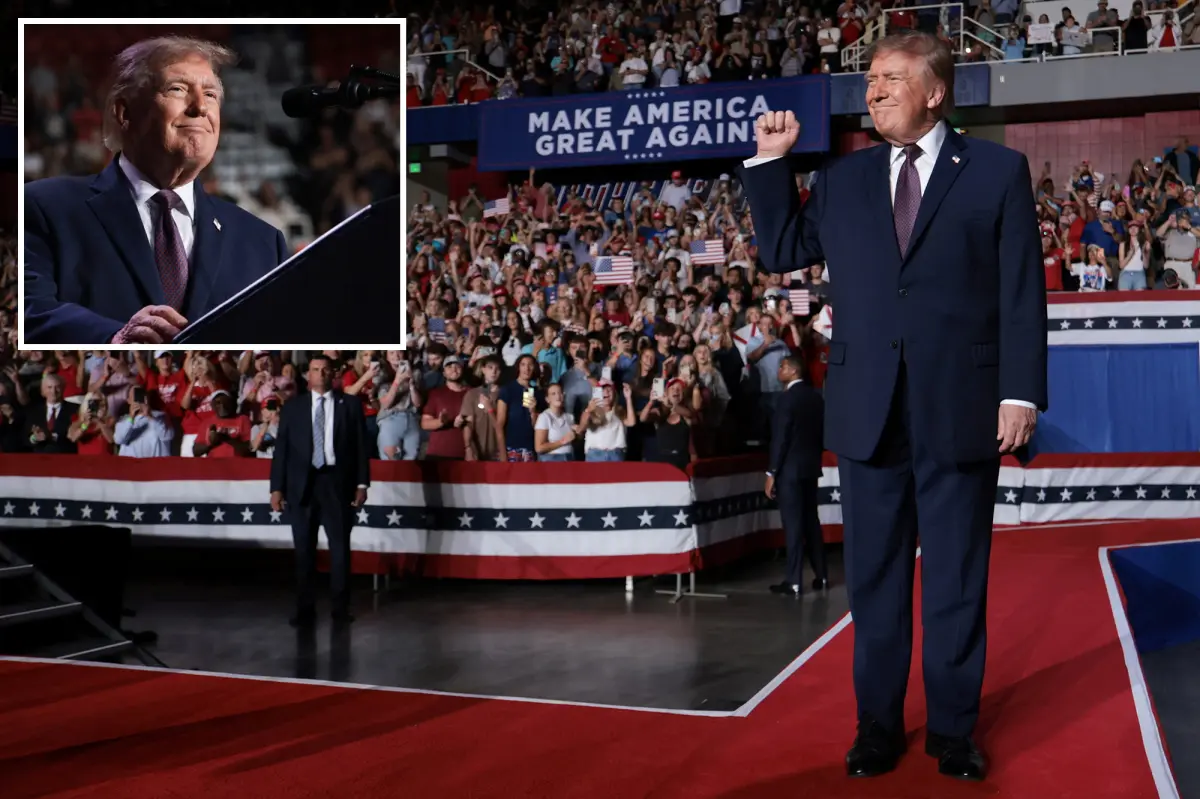
MOBILE, Ala. — The Mitchell Center was alive with the kind of electric, almost homecoming energy that has become a signature of President Donald Trump’s political life. Thousands of Alabama supporters packed the arena on the campus of the University of South Alabama, waving flags, wearing red, and waiting for the moment their champion walked out. But this rally was different. It wasn’t just about policy or politics; it was personal. President Trump told the crowd he had come to the deep-red state to pay his respects to some of his earliest and most loyal supporters. “I’m here to say, hello, I love you and really as a sign of respect,” he said, his voice carrying a rare note of tenderness. Then he added, with the kind of honesty that has always connected him to his base: “You got to pay respect to people that have loved you right from the beginning.” In that moment, the rally felt less like a political event and more like a reunion—a conversation between a leader and the people who believed in him before anyone else did. The crowd didn’t just hear his words; they felt them. They roared, clapped, and cheered because they understood exactly what he meant. For them, this was never just about politics. It was about loyalty, memory, and a bond that had been forged years before, in a stadium not far from here, when a different Trump first stepped onto the stage and changed everything.
In contrast, the president explained that his stop in Texas the day before had been a matter of necessity, not sentiment. He had rallied with Republican Senate hopeful Ken Paxton because, as Trump put it plainly, “we have to win that race.” But Alabama was different. Alabama was a thank-you visit, a pilgrimage to the place where it all began. Trump took the audience on a journey down memory lane, recalling how Mobile was the site of his first mega-rally more than a decade ago. “It sort of all began here,” he said, and the crowd responded with knowing applause. He told the story of how his 2016 campaign team had originally booked a “little hotel” in Mobile for him to speak, expecting a modest crowd. But then something unexpected happened: demand for tickets exploded. The tiny venue couldn’t possibly hold the thousands upon thousands of people who wanted to see him. So, the team made a last-minute decision and moved the event to a football stadium. On August 21, 2015, an estimated 30,000 Trump supporters packed the stands, spilling over with energy and enthusiasm. “We packed the stadium, and the rest is history,” Trump said. It was a humble origin story, but also a powerful one. He wasn’t just recalling a rally; he was reminding everyone in that arena that they were there at the beginning, part of a movement that would go on to shock the world. That memory wasn’t lost on the crowd. They didn’t just see a president; they saw the first man who had looked at them, believed in them, and given them a voice when no one else would.
The president also gave the people of Alabama a reason to look forward to the future. With a grin, he revealed that he would be returning to the state on October 10 to watch the Alabama Crimson Tide take on the Georgia Bulldogs in what promised to be a monumental clash of college football powerhouses. The announcement sent a ripple of excitement through the arena. Football in the South is more than a game; it’s a religion, and Trump knows how to speak the local language. He wasn’t just coming to shake hands or make speeches—he was coming to sit among the faithful, to share in their joy and their passion. It was a personal touch, a way of showing that he wasn’t just a politician who showed up when he needed something. He was a friend who wanted to be part of their world. And for the people of Alabama, that meant everything. They didn’t want a distant leader who flew in and out; they wanted someone who would sit in the stands, cheer for the home team, and share a moment of pure, uncomplicated happiness. Trump’s promise to return was a symbol of his connection to the state, a connection that went beyond policy and politics and touched something deeper—shared culture, shared values, and a shared sense of belonging.
On the election front, the president expressed absolute confidence in the slate of candidates he had endorsed across the Yellowhammer State. He praised Sen. Tommy Tuberville, who was running for governor, and Rep. Barry Moore, who was seeking a Senate seat, along with congressional candidates Rhett Marques and Jerry Carl. “All these guys—they’re going to win,” Trump declared, but he didn’t let them rest on that promise. He knew that enthusiasm doesn’t always translate into votes, and he urged the crowd not to be complacent. “You got to still get out to vote,” he said, his voice rising. Then came the line that has become a rallying cry in every corner of the country: “Pretend that I’m on the ballot.” It was classic Trump—direct, emotional, and incredibly effective. He wasn’t just asking them to support a list of names; he was asking them to support him, to protect his legacy, and to continue the movement they had started together years ago. The crowd understood the assignment. They knew that these candidates would carry forward his vision, and they were ready to show up, not just for the candidates, but for the president himself. In that arena, there was no doubt in anyone’s mind that Alabama would deliver.
Infrastructure also took center stage, and Trump made sure to highlight a massive win for the state: $3 billion in funding from his administration for a new Interstate 10 corridor bridge. It was a huge deal for Mobile, a city that has long struggled with traffic congestion and aging infrastructure. Trump framed the investment as proof that his administration was delivering on its promises, not just to the big coastal cities, but to hardworking Americans everywhere. He spoke about the bridge with pride, emphasizing the scale of the project and its importance to the region’s economy. Then, with a mischievous twinkle in his eye, he joked that Tuberville, should he win the governorship, might want to name the bridge after him. “That’s a lot of money … $3 billion … maybe they’ll name the damn bridge after me, and I’ll be happy,” Trump quipped, drawing laughter and applause from the crowd. The moment was pure Trump—combining humor, ego, and a genuine sense of accomplishment. It also highlighted something deeper: his ability to turn even a policy announcement into a personal connection with the people. He wasn’t just talking about concrete and steel; he was talking about his relationship with Alabama and his desire to leave a lasting mark on the state that had been with him from the very beginning.
As the rally came to a close, the mood was one of triumph and anticipation. President Trump had come to Mobile not just to speak, but to honor a relationship that had helped shape his political career. He had reminded the crowd of their shared history, from that first stadium rally in 2015 to the millions of votes they had cast for him over the years. He had given them a taste of the future—a promise to return, a commitment to their candidates, and a $3 billion investment in their infrastructure. But more than anything, he had given them something money can’t buy: respect. In a political world that often feels cold and transactional, Trump had made a point of showing up for the people who had always shown up for him. “I love you,” he had said at the start, and for the people in that arena, it wasn’t just a phrase. It was a reminder that they were not forgotten, that their loyalty had been seen, and that their place in his political story was secure. As the crowd filed out of the Mitchell Center, their voices hoarse from cheering and their hearts full of pride, one thing was clear: the bond between Donald Trump and Alabama was as strong as ever. And with the midterms just weeks away, that bond might be the most powerful force of all.