





The High-Stakes Chessboard of Persian Gulf Diplomacy: A Glacial Approach to Peace
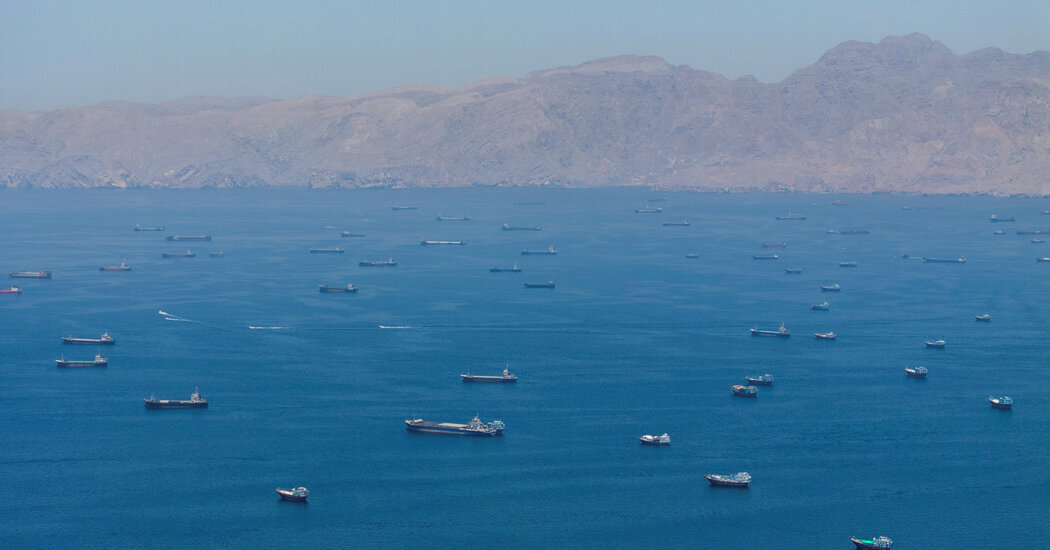
The geopolitical architecture of the Middle East remains suspended in a state of anxious anticipation as both Washington and Tehran signal that a definitive resolution to their protracted maritime conflict is far from guaranteed, even as backchannel negotiations continue to flicker behind closed doors. At the absolute core of this high-stakes diplomatic maneuvering is a concerted effort to dismantle a crippling regional crisis by reopening the Strait of Hormuz—the world’s most critical maritime transit choke point for crude oil and liquefied natural gas, which has been effectively shuttered under a punishing Iranian blockade and subsequent American naval counter-measures. While the prospect of restoring free navigation through this vital global channel offers a glimmer of hope for stabilizing volatile international energy markets, the architectural framework of any prospective peace deal remains obscured by profound disagreements and mutual systemic distrust. This prevailing uncertainty was underscored by Iranian Foreign Ministry spokesman Esmail Baghaei, who cautioned during a state broadcast address on Monday that while consensus has indeed been reached on a substantial portion of the draft agreement, finalized signatures are by no means imminent. The diplomatic narrative is further complicated by diametrically opposed descriptions of the emerging framework emanating from both capitals, raising serious questions among international observers about whether the two historical adversaries can genuinely bridge their deep ideological divides or if the current talks will simply dissolve into another abortive attempt at detente. Ultimately, this opening phase of negotiations highlights a stubborn reality: despite the immense economic and humanitarian costs of the ongoing hostilities, neither side seems willing to project weakness, transforming what should be a pragmatically driven peace process into a perilous game of rhetorical brinkmanship where a single diplomatic misstep could shatter the fragile progress made so far.
The Washington Doctrine: Trump’s High-Stakes Lever and the “No Dust, No Dollars” Mandate
In the United States, President Donald J. Trump has adopted a fiercely protective posture over the developing negotiations, navigating severe pushback from hawkish factions of his own party who fear the administration is preparing to concede too much to a long-standing adversary. Writing with characteristic bluntness on social media, the president declared that any final accord would either be “great and meaningful” or there would simply “be no deal,” flatly rejecting any proposal that might be construed as appeasement by his domestic critics. This defiant stance was mirrored in earlier remarks where Trump urged caution, admonishing negotiators not to rush the delicate process because both sides must take their time to “get it right” if they hope to secure a durable peace. In tandem with the president’s public posturing, Secretary of State Marco Rubio, speaking from India on an official state visit, hinted that a breakthrough might be announced imminently, revealing that a robust proposal was currently on the table to secure the immediate reopening of the Strait of Hormuz in exchange for structured, time-bound negotiations focusing specifically on Iran’s nuclear capabilities. Rubio signaled that the administration is pragmatic enough to accept an interim agreement that does not immediately strip Tehran of its nuclear infrastructure, noting with journalistic clarity that complex nuclear diplomacy cannot be settled “in 72 hours on the back of a napkin.” However, this pragmatism is paired with a severe economic squeeze: US officials have made it clear that while they are willing to initiate the complex process of unfreezing billions in heavily restricted Iranian assets, they will not do so unconditionally, adopting the rigid maxim of “no dust, no dollars”—a direct reference to the complete eradication of Iran’s highly enriched uranium stockpiles. Until a comprehensive pact is formally ratified, the global blockade imposed by the United States on Iranian shipping ports and affiliated vessels in April will remain in absolute, unyielding force.
Tehran’s Strategic Counter-Narrative: Balancing Economic Survival with Regional Hegemony
Across the Persian Gulf, the Iranian government is executing a highly calculated public communications strategy designed to downplay expectations while simultaneously preserving its domestic leverage and sovereign dignity. Foreign Ministry spokesman Esmail Baghaei sought to contextualize the current draft as merely a preliminary scaffolding that conspicuously avoids addressing the most contentious aspects of the dispute, declaring that the current phase of negotiations is strictly confined to ending the state of warfare rather than codifying detailed nuclear concessions. On the highly sensitive issue of the Strait of Hormuz, Baghaei delivered a carefully calibrated, ambiguous message, suggesting that the current framework lacks specific protocols regarding the mechanics of the reopening and refusing to rule out the possibility that Iran might still demand transit tolls from international shipping vessels—a claim that directly contradicts the absolute rejection of maritime fees insisted upon by senior American negotiators. This public minimization of the deal stands in stark contrast to disclosures made by three senior Iranian officials who, speaking on the condition of anonymity, painted a significantly more expansive picture of a memorandum of understanding already under consideration. According to these covert sources, the proposed deal is structured around a sweeping cessation of hostilities on all regional battlegrounds—including Lebanon, where Israeli defense forces remain locked in a deadly campaign against the Iranian-aligned militant group Hezbollah—coupled with the complete lifting of the devastating American naval blockade and the immediate release of twenty-five billion dollars in frozen Iranian foreign exchange assets. This deep divergence between the public declarations of Iranian diplomats and the private assertions of their internal colleagues exposes the immense internal pressures weighing on Tehran, where officials must balance critical economic survival against the political necessity of projecting ideological triumph to their regional proxies. This internal friction highlights the precarious nature of the negotiations: if the Iranian leadership accepts an agreement that is perceived domestically as an outright surrender of its nuclear and regional ambitions, they risk destabilizing the very network of proxy alliances that forms the cornerstone of their national security doctrine. Conversely, rejecting a deal risks prolonging an economic embargo that continues to strangulate Iran’s domestic currency and fuel widespread civil unrest.
The Nuclear Conundrum: Technical Obstacles, Enrichment Moratoriums, and the Ballistic Void
Even if both nations manage to find common ground on the immediate cessation of naval hostilities, the most mathematically complex and politically volatile hurdle remains the future of Iran’s advanced nuclear weapons program. According to authoritative data published by the International Atomic Energy Agency, Iran has accumulated an alarming stockpile of approximately 970 pounds of uranium enriched to sixty percent purity, putting the Islamic Republic dangerously close to the enrichment threshold required to manufacture a viable nuclear warhead. How Tehran will dispose of this highly enriched material represents a critical point of contention: one historical template under consideration is the 2015 Joint Comprehensive Plan of Action, under which Iran transferred the bulk of its fissile material to Russia, while an alternative option involves a monitored chemical process to dilute the material back to low-enrichment levels unfit for military weaponization. While American negotiators have historically fought to secure an ironclad enrichment moratorium lasting at least two decades, Iranian representatives have pushed back aggressively, proposing a significantly truncated timeline that would allow them to resume industrial-scale enrichment activities in the near future. A senior United States official sought to downplay the dispute over timelines, arguing that the precise duration of the freeze is less critical than the implementation of intrusive, fail-safe verification mechanisms capable of detecting any covert breakout attempts. Crucially, the interim framework currently under review does not address Iran’s substantial and sophisticated arsenal of ballistic missiles—a glaring omission that has generated intense anxiety in Jerusalem, given that Israeli population centers remain well within striking range of Iran’s advanced rocket systems. This calculated decision to sideline the missile issue in favor of a narrower, focus-driven agreement underscores the sheer difficulty of comprehensive disarmament in a region defined by asymmetric warfare and deep security dilemmas. By deferring the missile question to hypothetical future rounds of talks, negotiators have avoided an immediate impasse, but they have also guaranteed that any final settlement will remain highly vulnerable to regional sabotage by actors who view Iran’s long-range strike capabilities as an existential threat that must be addressed immediately rather than deferred to another political administration.
A Tempest of Geopolitical Reaction: Domestic Hawk Skepticism and Israel’s Anxious Silence
The mere outline of the potential agreement has already unleashed a torrent of fierce domestic and international criticism, illustrating the narrow political tightrope both administrations must walk to preserve the talks. In Washington, prominent conservative voices have openly condemned the emerging proposal, with Republican Senator Thom Tillis of North Carolina questioning the strategic logic of trusting Tehran’s commitment to reopen the Strait of Hormuz without first securing a comprehensive, fully verified peace treaty. This domestic skepticism is closely mirrored in Israel, where Prime Minister Benjamin Netanyahu broke an uncharacteristically long, eighteen-hour silence following Trump’s announcement to confirm that he had conducted a lengthy telephone call with the president to reiterate Israel’s unwavering stance that Iran must never be permitted to cross the nuclear threshold. Netanyahu’s cautious statement, which also emphasized Israel’s absolute sovereign right to defend itself and continue military operations against hostile forces in Lebanon, did little to conceal deep anxieties within the Israeli defense establishment that the proposed interim deal will fail to dismantle Iran’s nuclear research facilities or curb its proxy-funding infrastructure. Adding fuel to this geopolitical firestorm, Hezbollah leader Naim Qassem delivered a highly provocative televised address from Lebanon, framing the potential cease-fire as an absolute triumph for the “Axis of Resistance” and declaring that Iran had successfully humiliated the United States on the global stage. These conflicting reactions reveal the volatile environment surrounding the negotiations: for Trump, the challenge lies in neutralizing accusations of weakness from within his own political base, while for regional actors, the fear remains that an incomplete or temporary deal will merely offer Iran economic breathing room to reconstitute its forces and project power with renewed vigor. This delicate dynamic is further strained by the fact that localized clashes between Israeli forces and Hezbollah combatants have persistently threatened to dismantle the tenuous cease-fire originally brokered in April, serving as a stark reminder that events on the ground can easily outpace the progress made at the negotiating table.
The Abraham Accords Gambit: An Unpredictable Climax to a High-Volume Chess Match
In a bold attempt to bypass these formidable obstacles and secure crucial political support from hawkish Republicans, President Trump has introduced a highly ambitious geopolitical wild card, calling on major Arab nations like Qatar and Saudi Arabia to officially sign the Abraham Accords and normalize diplomatic ties with Israel as part of the initial peace package. While regional analysts widely view the immediate accession of Doha and Riyadh to the accords as a highly improbable prospect given the ongoing territorial disputes and popular domestic opposition, the mere introduction of this grand bargain serves as a strategic maneuver designed to placate domestic critics by framing any potential concession to Iran as part of a historic, transformative realignment of the entire Middle East. Trump has fiercely defended his idiosyncratic approach to international relations against a wave of media and partisan skepticism, taking to social media to aggressively dismiss his detractors as “losers” criticizing a complex process they lack the clearance or intellect to understand. Asserting his self-proclaimed mastery of negotiating, the president reminded the public of his past foreign policy actions while reinforcing his core doctrine: “I don’t make bad deals!” Ultimately, as the United States maintains its suffocating economic and naval stranglehold on Iranian commerce, the world is left to witness a high-stakes game of diplomatic chicken where the margin for error is razor-thin. Whether this highly unconventional strategy of combining maximum economic pressure with theater-level incentives will yield a historic diplomatic breakthrough or result in a localized escalation that plunges the Persian Gulf back into open warfare remains the defining question of contemporary international relations. The fate of this fragile maritime corridor, the future of global energy security, and the stability of nuclear non-proliferation efforts all rest in the balance of a negotiation that is as unpredictable as it is consequential. If a deal is struck, it could permanently alter the balance of power in the Gulf; if it fails, the consequences will be measured not in diplomatic communiqués, but in the volatile fluctuations of oil prices and the terrifying threat of regional kinetic war.