







The Trump Doctrine of Perpetual Kineticism: How the “Candidate of Peace” Reshaped Global Conflict
The Paradox of the “Candidate of Peace” and the New American Interventionism
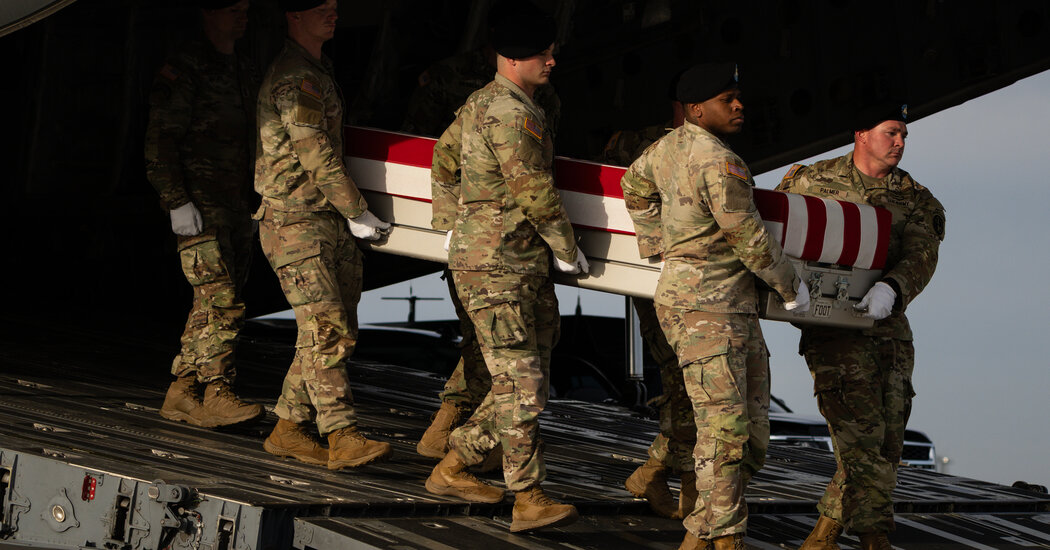
During his first term in the Oval Office, Donald J. Trump established himself as a fierce and vocal critic of the sweeping foreign military campaigns initiated by his predecessors, frequently characterizing the conflicts in the Middle East and Central Asia as a catastrophic waste of American blood and treasure. “Great nations do not fight endless wars,” Mr. Trump famously declared during his 2019 State of the Union address, articulating an isolationist, “America First” foreign policy stance that resonated deeply with a war-weary electorate. As he campaigned for his second term, he went even further, branding himself as “the candidate of peace” who would steer the United States away from costly, open-ended overseas entanglements and prioritize domestic renewal over nation-building. Yet, the reality of his return to power has painted a starkly different and hyper-kinetic picture of American global engagement, characterized by a series of aggressive, unilateral maneuvers. Since his second inauguration, the United States has found itself enticed by, or directly initiating, nearly a dozen military operations across multiple hemispheres, including high-stakes air campaigns, a devastating regional war against Iran, a legally controversial maritime interdiction campaign in the Caribbean, and an unprecedented Special Operations raid that resulted in the arrest and extradition of Venezuela’s constitutional president. This dramatic divergence between anti-interventionist campaign rhetoric and a highly assertive operational reality suggests that the administration has replaced the old doctrine of nation-building not with diplomatic withdrawal, but with a highly volatile, tech-heavy pattern of rapid-strike global intervention designed to project raw power without the long-term domestic political burden of formal military occupations.
              TRUMP'S FOREIGN POLICY PARADOX
   ┌──────────────────────────────────────────────────┐
   │                CAMPAIGN PROMISE:                  │
   │  "Great nations do not fight endless wars."      │
   └────────────────────────┬─────────────────────────┘
                            │
                            ▼
   ┌──────────────────────────────────────────────────┐
   │                ACTUAL EXECUTION:                 │
   │  Hyper-kinetic, high-intensity interventions     │
   └────────────────────────┬─────────────────────────┘
     ┌──────────────────────┼──────────────────────┐
     ▼                      ▼                      ▼
┌─────────────────┐ ┌─────────────────┐ ┌─────────────────┐
│ OPERATION EPIC │ │ OPERATION ROUGH │ │ MADURO RAID & │
│ FURY │ │ RIDER │ │ CARIBBEAN COUP │
│ (Iran Conflict)│ │ (Yemen/Houthis) │ │ (Venezuela) │
└─────────────────┘ └─────────────────┘ └─────────────────┘
Air Campaigns and Shifting Coalitions: From the Horn of Africa to a Changing Syria
The rapid acceleration of this new military posture became visible almost immediately after the transition of power in Washington. On February 1, 2025, mere days after his second inauguration, President Trump ordered a wave of concentrated airstrikes targeting Islamic State operatives and young recruits in northern Somalia, a move heralded by White House officials as the dawn of a significantly ramped-up counterterrorism initiative in the Horn of Africa. Throughout 2025, this aggressive aerial offensive intensified, with the U.S. military executing more than 100 targeted strikes against both the Islamic State and Al-Shabab, the powerful extremist group formally aligned with Al-Qaeda, a high-tempo campaign that has persisted unabated into the current year. Simultaneously, in the Levant and Mesopotamia, the administration sought to redefine its security relationships; in March 2025, a highly coordinated joint operation between American and Iraqi forces successfully neutralized a senior Islamic State commander believed to lead the group’s remaining operational networks across Iraq and Syria, highlighting the enduring, albeit territorial-less, threat of the insurgent group. Further west, in Syria, the theater grew exceptionally bloody in December 2025, when the Pentagon unleashed a devastating barrage of over 100 precision-guided munitions from fighter jets, attack helicopters, and artillery pieces against 70 suspected militant strongholds to avenge the deaths of two American soldiers and an interpreter killed in a prior insurgent ambush. This massive retaliatory strike, assisted directly by Jordanian warplanes, preceded a historic geopolitical pivot: by April 2026, the United States completed the formal handover of its primary military bases in Syria, bringing an end to more than a decade of direct American ground presence. This withdrawal did not signal a retreat from the region, but rather a structural evolution, as U.S. military officials shifted their efforts toward training, advising, and assisting local security forces in the wake of the historic ouster of Syrian dictator Bashar al-Assad in late 2024, demonstrating a preference for remote-warfare capabilities over boots-on-the-ground deployments.
The Red Sea Crisis: The Astronomical Costs of Operation Rough Rider
Perhaps the most glaring example of the immense financial and material strain generated by this hyper-kinetic foreign policy was the outbreak of Operation Rough Rider in March 2025, a massive maritime and aerial campaign initiated against the Iranian-backed Houthi militia in Yemen. Designed to safeguard international shipping channels and reassert Western dominance over critical trade routes, the intense campaign quickly devolved into an incredibly expensive war of attrition, with the U.S. military burning through sophisticated weaponry and advanced munitions at an alarming rate of approximately $1 billion during the first thirty days of operations alone. The highly resilient Houthi forces responded with surprising technological competence, employing low-cost, asymmetrical tactics to down several American MQ-9 Reaper drones—valued at approximately $30 million each—all while launching persistent missile and drone barrages at allied naval vessels in the Red Sea, including a daring strike directed near a deployed American aircraft carrier. The operational strain on U.S. naval forces was further highlighted by a highly embarrassing accident on the high seas, in which two elite, $67 million F/A-18 Super Hornet fighter jets operating from America’s flagship carrier accidentally tumbled off the flight deck and sank into the ocean during high-tempo operations. Realizing the unsustainable financial and narrative costs of this naval campaign, the White House abruptly ordered U.S. Central Command to “pause” offensive operations on May 5, 2025, with President Trump announcing he had negotiated a verbal agreement with the Houthi leadership, whom he praised in unexpectedly laudatory terms. “We hit them very hard and they had a great ability to withstand punishment—you could say there was a lot of bravery there,” Trump remarked, adding that the Houthis had given their solemn word to cease targeting maritime vessels, a diplomatic gamble that has yielded only partial success as the threat of sporadic attacks continues to force major global commercial shipping lines to take long, expensive detours around the African continent.
| Metric | Operation Rough Rider (Yemen) | Operation Epic Fury (Iran) |
|---|---|---|
| Primary Adversary | Houthi Militia (Yemeni Insurgents) | Islamic Republic of Iran |
| Financial Cost | ~$1 Billion in the first month alone | Trillions in global economic damage (oil spike) |
| U.S. Hardware Lost | Multiple MQ-9 Reapers, 2x F/A-18 Jets | Classified (Strategic naval vessels damaged) |
| American Casualties | Zero direct combat fatalities reported | 13 U.S. Service Members killed |
| Adversary Casualties | Estimated dozens of rebel fighters | Over 2,000 military & leadership personnel |
| Current Operational Status | Fragile truce; shipping routes compromised | Naval blockade; sporadic retaliatory strikes |
Operation Epic Fury: The High-Stakes Duel for the Strait of Hormuz
While the administration sought to temporarily de-escalate tensions in the Red Sea, its standoff with Tehran reached a catastrophic boiling point following a series of unilateral Israeli airstrikes on Iranian territory, prompting the White House to launch Operation Midnight Hammer on June 22, 2025. In a dramatic display of long-range strategic power, the President authorized the deployment of stealth B-2 Spirit bombers to drop specialized bunker-buster munitions directly onto Iran’s heavily fortified nuclear enrichment facilities at Fordo and Natanz, while a U.S. Navy submarine launched a flurry of land-attack cruise missiles targeting the nuclear facility at Isfahan, an assault the administration proudly claimed had completely “obliterated” Iran’s nuclear infrastructure. Rather than forcing a total diplomatic capitulation, these strikes laid the groundwork for an even larger, devastating regional conflict that erupted in earnest on February 28, 2026, under the Pentagon codename Operation Epic Fury. This full-scale joint offensive by American and Israeli forces targeted crucial military installations, command nodes, and political infrastructure across Iran, resulting in a staggering loss of life, with Tehran reporting more than 2,000 casualties, including some of the country’s highest-ranking political and military figures alongside Iran’s Supreme Leader, while 13 American service members lost their lives in the fighting. Iran retaliated with a massive, coordinated barrage of ballistic missiles and explosive suicide drones directed at Israel, American military bases, and allied installations across the Middle East, trigger-locking the region into an active war that effectively shut down the Strait of Hormuz and caused global oil and gas prices to jump instantly. Although President Trump declared a temporary, fragile cease-fire in April 2026 to facilitate backchannel negotiations, the conflict remains highly volatile, with the United States enforcing a strict naval blockade to prevent Iranian oil exports while both sides exchange sporadic, retaliatory strikes that threaten to drag the global economy further into chaos.
CHRONOLOGY OF ESCALATION (2025 - 2026)2025
├── FEB: Somalia airstrikes launched against ISIS/Al-Shabab targets.
├── MAR: Joint U.S.-Iraqi operation kills senior ISIS leader in Iraq.
├── MAR: Operation Rough Rider begins against Houthi forces in Yemen.
├── MAY: Trump orders “pause” in Yemen after Houthi deal; shipping remains wary.
├── JUN: Operation Midnight Hammer hits Iranian nuclear facilities at Fordo & Natanz.
├── SEP: Anti-drug bombing campaign starts in Caribbean; 59 vessels destroyed.
└── DEC: Massive retaliatory airstrikes hit dozens of ISIS targets in Syria.
2026
├── JAN: SEALs launch Caracas raid, capturing President Maduro & wife.
├── FEB: Operation Epic Fury launched against Iran; Strait of Hormuz closed.
├── APR: Ceasefire declared with Iran; U.S. base handovers accomplished in Syria.
└── MAY: Joint commandos target ISIS in Nigeria; Nimitz deploys off Cuba.
Executive Overreach or Decisive Justice? The Venezuelan Raid and Caribbean Interdictions
Closer to home, the administration’s aggressive willingness to utilize lethal military force has triggered intense debates over international law, national sovereignty, and executive overreach in the Western Hemisphere. On September 2, 2025, the U.S. military embarked on a highly controversial campaign, targeting and bombing small vessels in the Caribbean Sea and the eastern Pacific Ocean that the White House asserted were actively smuggling illicit narcotics bound for American cities. Under this aggressive maritime interdiction campaign, at least 59 vessels have been destroyed to date, resulting in the deaths of more than 200 individuals on board—actions that have drawn sharp condemnation from international legal scholars and human rights organizations, who describe the unilateral strikes as illegal, extrajudicial killings executed without any formal presentation of evidence or due process of law. This maritime campaign proved to be a prelude to an even more shocking escalatory action on January 3, 2026, when elite U.S. Special Operations forces executed a daring, high-stakes raid directly inside Caracas, the capital of Venezuela. The highly coordinated assault resulted in the deaths of dozens of Venezuelan presidential guard members, culminating in the physical extraction of President Nicolás Maduro and his wife, who were flown directly to New York to face federal charges of narco-terrorism and conspiracy to import vast quantities of cocaine. While both Maduro and his wife entered pleas of not guilty during their highly publicized arraignment, and with their trial projected to be months or even years away, the raid has radically destabilized Latin American geopolitics; Maduro’s powerful vice president, Delcy Rodríguez, immediately assumed the presidency, preserving the regime’s socialist grip on power while the U.S. Navy signaled further potential action in the region by deploying the aircraft carrier USS Nimitz to the southern Caribbean, coinciding with federal drug charges levied against Cuba’s former president, Raúl Castro.
The West African Front and the Long-Term Echoes of Persistent Engagement
The administration’s global campaign against militant networks found another active front in the dense forests and arid landscapes of Sub-Saharan Africa, where it has engaged in a protracted, complex campaign against regional Islamic State affiliates. On Christmas Day in 2025, the United States launched a series of unexpected, heavy airstrikes in northwestern Nigeria targeting Islamic State West Africa Province (ISWAP) positions, with President Trump claiming the operations were necessary to halt the systematic slaughter of Christian groups in the region, a rationale that local political analysts and Nigerian officials quickly criticized as overly simplistic, noting that the extremist group has also murdered thousands of local Muslims. This West African offensive escalated further in May 2026, when the President authorized a high-risk, joint U.S.-Nigerian commando raid that successfully eliminated Abu Bilal al-Minuki, an extremely influential, high-ranking Islamic State leader responsible for coordinating regional logistics and financial funding networks. While subsequent American airstrikes have killed scores of fighters in the area, the lack of independent confirmation regarding civilian casualties has fueled growing domestic resentment and raised serious questions about the long-term effectiveness of these operations. Ultimately, the turbulent trajectory of Donald Trump’s second term demonstrates that while his rhetoric continues to criticize the conventional, expansive nation-building projects of the past, his operational strategy is defined by an unprecedented willingness to deploy rapid, high-intensity, and often legally controversial military power around the globe. Rather than ending the era of American involvement in distant theaters, the current administration has simply transitioned the country into a brand-new, highly volatile era of global kinetic engagement—proving that even for an administration that campaigned on the promise of national retreat and global pacification, the gravity of international conflict and the temptations of unilateral military might remain incredibly difficult to escape.