



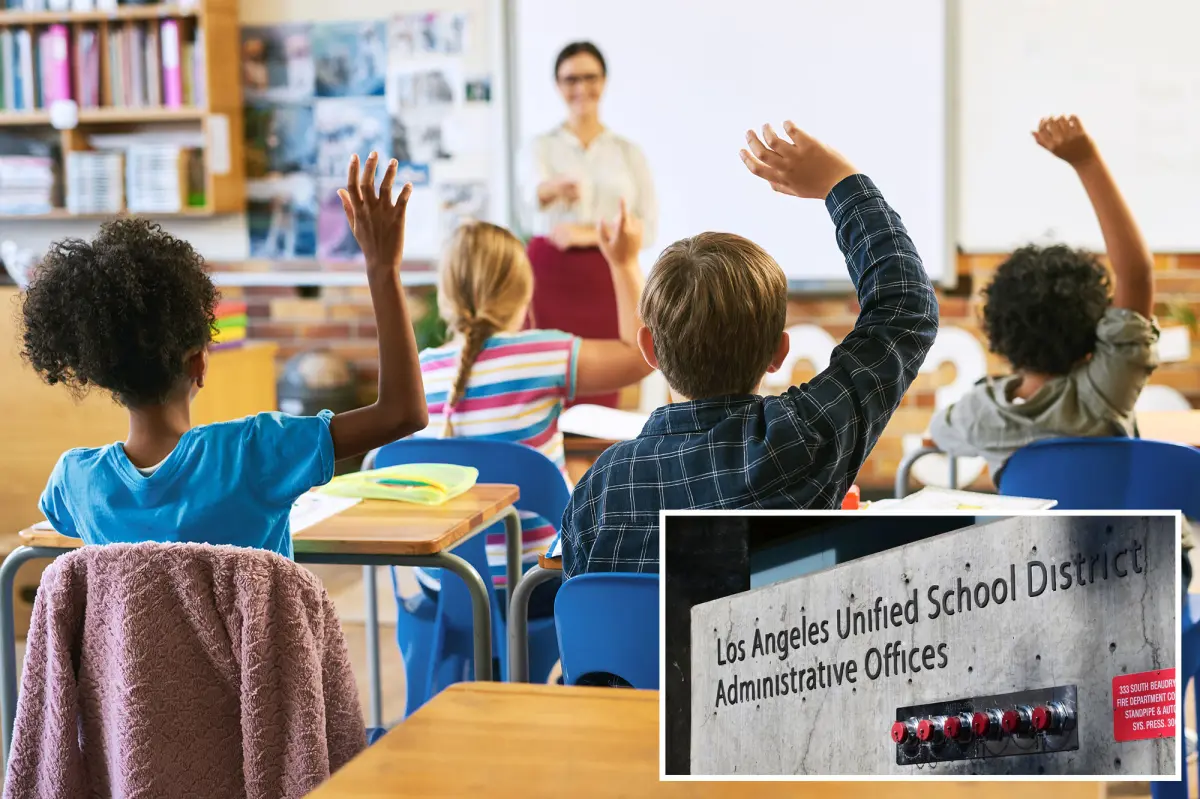
For the vibrant and diverse families whose daily rhythms revolve around the Los Angeles Unified School District, the arrival of late summer usually heralds preparation and hope for a new school year, but this year it brings a chill of profound uncertainty. Standing on the precipice of a high stakes and county imposed deadline on August seven, the nation’s second largest school system is facing a looming declaration of bankruptcy that could dismantle its administrative independence. This ticking clock is not merely a dry calendar event for municipal financial administrators; it represents a deep and visceral source of anxiety for parents, caregivers, and children who view their local public schools as crucial sanctuaries of stability and safety. Across the bustling neighborhoods of Los Angeles, from East Los Angeles to the San Fernando Valley, working class households are forced to contemplate a chaotic reality where their school district’s administrative authority is stripped away and handed over to county bureaucrats. This impending catastrophe is driven by a massive structural budget deficit that has been exacerbated by the compounding stresses of declining student enrollment and the sudden, painful expiration of vital pandemic era federal relief funds. As families scramble to prepare their children for the upcoming academic year, they are haunted by the terrifying possibility that the institution responsible for nourishing, educating, and protecting over half a million students might lock its doors or suffer a severe administrative takeover. The psychological toll on the community is immense, as the systemic issues of a massive public entity translate directly into sleepless nights for parents who simply want to know if their children’s teachers will still be teaching in the local classrooms. In a city already grappling with severe economic pressures, escalating costs of living, and deep socioeconomic divides, this local educational crisis threatens to tear down the fragile safety net, leaving vulnerable families to bear the heavy burden of institutional failure and administrative incompetence. Every parent deserves absolute transparency and safety for their children during this uncertain time.
The emotional weight of this looming financial collapse is made significantly heavier by a devastating crisis of leadership and trust that has left the Los Angeles community feeling profoundly betrayed. Just as families were trying to navigate the choppy waters of post pandemic recovery, the district was rocked by the abrupt and scandalous departure of former Superintendent Alberto Carvalho, whose home was subjected to a highly publicized Federal Bureau of Investigation raid that shattered any remaining illusions of stable local governance. This dramatic fall from grace left a gaping wound in the public’s confidence, forcing everyday citizens to wonder how a system with a staggering twenty billion dollar budget could be managed with such apparent carelessness and a distinct lack of integrity. Now, the burden of steering this massive, struggling ship through a historic financial storm falls onto the shoulders of Superintendent Andres E. Chait and a school board that is increasingly isolated from the harsh realities of the classroom. Dedicated educators and school support staff, who consistently show up to serve their students despite being under resourced, must watch from the sidelines as the highest levels of district leadership are consumed by scandals, investigations, and defensive public relations maneuvers. The deep disconnect between the sterile, executive suites of the central office and the vibrant but struggling classrooms where real learning happens has never been wider, leaving teachers to purchase basic supplies out of their own meager pockets while the central board mismanages structural funds on an astronomical scale. This profound trust deficit means that when administrators request patience or promise that they have the situation under control, their pleading words fall on deaf ears, as parents and staff alike have grown weary of empty assurances from a leadership class that seems far more concerned with political self preservation than with the fundamental human right to a stable, high quality public education. They see a historical district failing its most critical test, and their patience has completely run out in this troubling school year.
At the heart of this complex financial disaster lies a deeply painful paradox regarding how we value the human beings who keep our schools running every day. In April of this school year, after long and grueling negotiations under the shadow of a citywide strike, the school board unanimously approved three separate collective bargaining agreements aimed at giving teachers, school bus drivers, cafeteria workers, and playground aides the financial raises they desperately needed. To these hardworking employees, the contract wins which will cost close to one point two billion dollars annually represented a necessary step toward labor dignity and financial survival in an incredibly expensive metropolitan area where basic housing and grocery costs have climbed out of reach. Yet, in a cold and tragic twist of structural mathematics, those same agreements are now being cast by critics and county analysts as the primary cause of the district’s financial ruin. This financial tension is projected to yield an immediate deficit of two hundred thirty one million dollars by next November, a figure that is modeled to grow into a staggering three point five billion dollar deficit by the end of June back in twenty nine. This creates a painful moral dilemma for a community where fair compensation is framed as structural poison. School board member Tanya Ortiz Franklin validated the county’s fiscal concern, agreeing that these costly labor deals are driving the district toward ruin, even though she and her colleagues voted to pass them only months before. This leaves local workers feeling deeply scapegoated for decades of administrative neglect, caught in an unfair struggle between demanding a livable wage and keeping their schools open. They carry the daily emotional burdens of teaching children under stressful circumstances, only to be told that their basic food and rent money represents the end of the public school system as we know it. This painful structural reality threatens to undermine classroom morale and further fracture the fragile relationships between administrative officials and school employees across the entire city.
Confronted with this alarming mathematical reality, the Los Angeles County Office of Education has officially run out of patience, setting up a high stakes bureaucratic showdown that threatens to strip the local school board of its democratic authority. In a scathing and remarkably blunt letter dated July second, County Superintendent Debra Duardo completely rejected the district’s newly submitted fiscal stability plan, calling it out for an extreme lack of detail and execution strategy. Duardo’s sharp rebuke was not just an administrative critique; it was a strong condemnation of systemic corporate mismanagement, accusing the school board of failing to execute previously promised budget cuts while recklessly approving labor agreements without any realistic way to fund them. By rejecting the plan, the county has issued a cold ultimatum: if the district fails to present an airtight, fully detailed budget correction plan by the fast approaching August seven deadline, the county will execute a takeover. This intervention would result in the forced appointment of an external trustee who would wield unprecedented power, including the unilateral authority to veto any of the district’s spending decisions, effectively rendering the school board and the superintendent obsolete. For the citizens of Los Angeles, this loss of local control represents an alarming erosion of their democratic voice, as crucial decisions regarding their children’s classrooms would no longer be made by elected representatives who live in their communities, but rather by an appointed external bean counter focused solely on balance sheets. This bureaucratic takeover threatens to completely ignore the nuanced human needs of individual communities, reducing the complex, emotional world of public schooling down to a cold series of numbers where the struggles of real children are secondary to administrative calculations. No community should have to watch as their local voice is entirely erased by a distant county office. The parents who have spent years fighting for better school lunches and modern textbooks deserve to have their democratic representation preserved rather than traded away to solve a balance sheet budget emergency completely.
The true tragedy of this impending county intervention is that the inevitable financial corrections will not be felt in comfortable administrative offices, but will instead strike directly at the heart of local neighborhoods through school closures, program cuts, and thousands of devastating layoffs. While the school board has desperately attempted to delay the most painful of these adjustments until July of twenty seven, the threat of these deep cuts hangs over the community like a dark cloud. When administrators talk coldly about optimizing footprints and rationalizing staffing ratios, what they mean is shuttering historical neighborhood schools that have served as multigenerational community anchors, forcing young children to cross busy street intersections to attend unfamiliar, overcrowded campuses. It means the elimination of life changing art, music, and after school programs that offer safe havens for children in areas of persistent poverty. Furthermore, the threat of thousands of layoffs means that dedicated counselors, educators, and support staff who spent decades building deep, trusting relationships with struggling students could be abruptly dismissed, destroying the delicate network of emotional support that students rely on daily. The palpable sense of disbelief, anger, and grief among parents and school employees is entirely justified as they watch a slow motion disaster that threatens to strip their children of a rich, supportive, and well rounded educational experience. This impending wave of austerity highlights the profound disconnect between high level macroeconomics and the lived reality of families, for whom a neighborhood school is not a balance sheet, but a vibrant community of love, learning, and mutual support. Every single child in Los Angeles has a fundamental right to go to a school that is fully staffed, clean, and welcoming, rather than a place that feels like a sinking ship. We cannot simply stand by and watch as the dreams of our younger generation are traded away to pay for the bad financial management of the adult administrators who were supposed to protect them in the first place today.
In the face of this monumental structural crisis, the official response from Los Angeles Unified has been characterized by a surreal, almost clinical calm that stands in sharp, jarring contrast to the desperate panic felt by the community. In public statements, district officials have attempted to downplay the severity of the August seven deadline, brushing aside valid fears of a catastrophic county takeover by framing the entire high stakes process as a cooperative, routine exercise in partnership and professional guidance. This polite, corporate public relations strategy, however, does absolutely nothing to soothe the frayed nerves of parents and teachers who can clearly read the writing on the wall and see the massive multi billion dollar cliff that the district is rapidly approaching. The reality is that the era of delaying difficult decisions and relying on temporary, band aid solutions has come to an end, and the bills are finally coming due for decades of structural mismanagement. As the critical August deadline approaches, the families of Los Angeles find themselves caught in a high stakes game of bureaucratic chicken, desperately hoping that some form of financial salvation will emerge before their local schools are completely dismantled. To truly resolve this crisis and heal the deep wounds of the public trust, school leadership must move past polished press releases and sterile administrative jargon to confront the human cost of their decisions with radical honesty, transparency, and deep empathy. Ultimately, the future of over half a million children hangs in the balance, and they deserve a public education system that is not constantly teetering on the edge of complete insolvency, but is instead structurally sound, beautifully resourced, and fully committed to nurturing the minds and spirits of the next generation of bright Angelenos who represent our shared municipal future. Every local administrative official must realize that the real wealth of this wonderful city does not lie in budget percentages, but in the innocent faces of the young children who walk through the school doors each morning today.