





Garden Grove, nestled in the heart of Orange County, California, is a quintessential suburban haven where families seek the quiet comfort of peaceful streets, vibrant local parks, and a tightly-knit community spirit. However, this peaceful existence was shattered over a long, harrowing weekend when an invisible and highly volatile hazard began brewing in their very backyards, transforming an ordinary week into an extraordinary nightmare. More than 40,000 residents were suddenly forced to flee their homes under urgent, mandatory evacuation orders, packing what few essential belongings they could carry into their cars and rushing out of neighborhoods that instantly resembled eerie, abandoned ghost towns. Imagine the sudden, heart-stopping panic of a mother grabbing her children’s school packs, or an elderly resident scrambling to locate life-saving medications, all while emergency sirens wailed in the distance. The source of this widespread terror was a malfunctioning industrial storage tank containing thousands of gallons of a highly unstable chemical, transforming a mundane weekday into a high-stakes, nerve-wracking waiting game where a single structural failure could level entire neighborhoods. Families watched the local news coverage anxiously from crowded motel lobbies, makeshift Red Cross shelters, and cars parked on the edges of the evacuation zone, deeply gripped by the terrifying prospect that everything they had worked for could be obliterated in a fraction of a second. This visceral sense of fear and sudden displacement highlighted a stark, uncomfortable reality: the incredibly thin line that separates peaceful suburban domesticity from major industrial catastrophe in modern America. For several agonizing days, the collective breath of the city was held as a potential toxic explosion loomed over them, severely testing the emotional resilience of a community that suddenly had to confront the terrifying reality of high-risk commercial operations situated right next door to their homes, schools, and playgrounds. This was no longer just a regulatory headline; it was a deeply personal crisis of safety, home, and survival.
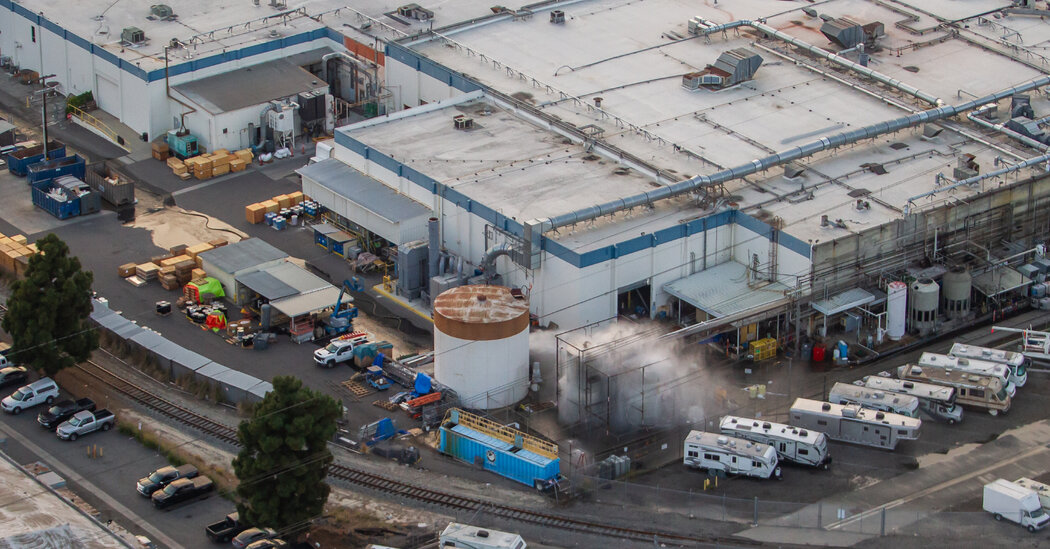
At the dark, mechanical center of this terrifying suburban standoff was a massive, 7,000-gallon industrial tank located at a local manufacturing facility owned by GKN Aerospace, a British multinational corporation responsible for producing high-tech military and commercial aviation components. Inside the metallic belly of this tank sat a highly volatile and flammable liquid chemical compound known as methyl methacrylate. While this substance is incredibly valuable to modern aerospace engineering—serving as a primary ingredient in the production of high-performance acrylic plastics, transparent resins, and durable aircraft landing gears—it represents a catastrophic danger when human safety systems fail to maintain its stability. According to the United States Environmental Protection Agency, methyl methacrylate is an incredibly hazardous material; acute exposure to its highly toxic fumes can trigger severe respiratory distress, make breathing nearly impossible, and cause painful chemical burns to the eyes and skin. Furthermore, long-term environmental research and animal studies have linked exposure to this chemical to devastating birth defects, emphasizing the severe biological threat it posed to the thousands of families, pregnant mothers, and young children living just a few blocks away. Over the course of the week, the internal temperature of the GKN tank began to rapidly climb, triggering a thermal reaction where the chemical began to vaporize, build pressure, and release highly toxic venting gases. This caused the thick steel outer shell of the tank to visibly swell and bulge under the intense pressure of the thermal runaway. To the engineers and emergency officials watching, this alarming physical deformation was a ticking time bomb, signaling that the metal was reaching its absolute tensile breaking point and could explode at any minute, unleashing a toxic chemical cloud and a lethal wave of shrapnel across the closely packed residential streets of Garden Grove, showing how easily chemical utility can transform into local devastation.
For the courageous first responders of the Orange County Fire Authority, who answered the initial emergency call on that tense Thursday afternoon, the chemical incident required a masterclass in high-stakes problem-solving under extreme psychological pressure. Confronted with a potential explosion that could easily devastate surrounding blocks, hazardous materials teams and veteran incident commanders, including Craig Covey and Interim Fire Chief TJ McGovern, had to carefully coordinate a rescue operations plan where a single miscalculation would trigger the very disaster they were trying to prevent. The firefighters could not simply approach the bulging GKN tank to cool it down with traditional hoses, as the sharp thermal shock of spraying cold water onto the hyper-pressurized, hot metal could cause a sudden physical collapse of the structure and set off an instantaneous, catastrophic blast. Instead, these brave men and women had to set up complex remote observation systems and utilize high-resolution thermal imaging cameras to track the tank’s internal temperature from a safe distance, maintaining a stressful, around-the-clock vigil over a sleeping chemical giant. The mental and physical exhaustion of these emergency response crews grew exponentially as the crisis stretched from Thursday night into the hot Southern California weekend without any clear quick fix in sight. Clad in heavy, suffocating chemical protection suits, bulky thermal gear, and self-contained breathing apparatuses under the hot sun, these responders stood bravely on the thin line between a highly volatile chemical weapon and the residential city they swore to protect. They carried the immense psychological burden of knowing that forty thousand human lives, homes, and dreams depended entirely on their absolute composure, continuous scientific analysis, and meticulous tactical decision-making, transforming their station into a high-stakes battlefield of science, human empathy, and raw bravery.
Relief finally arrived from an unexpected, counterintuitive source: a physical structural failure that under any other circumstances would have signaled a terrifying catastrophe, but in this bizarre scenario, became their absolute saving grace. On Sunday, thermal sensors and visual drone inspections confirmed that a tiny, localized crack had formed in the outer shell of the bulging, misshapen GKN tank. Rather than initiating a sudden, explosive rupture of the container, this specific structural fault acted as a natural, slow-release safety valve, allowing the built-up internal organic gases and highly pressurized chemical vapors to escape gradually and safely dissipate into the open atmosphere. With the immense mechanical pressure finally venting safely, the immediate threat of a violent, explosive shockwave completely dissolved, and the internal temperature of the volatile mixture finally began its steady and highly anticipated descent, dropping from a critically dangerous 100 degrees Fahrenheit down to a much safer and manageable 93 degrees. Incident Commander Craig Covey confirmed the physical presence and positive behavior of the crack on Monday, expressing immense relief that the tank had safely depressurized on its own and that the overall disaster response team had successfully “turned the corner” on the active, multi-day crisis. Interim Fire Chief TJ McGovern echoed this profound optimism in an official video address to the weary public, declaring that the immediate threat of an explosion was officially “off the table,” bringing a triumphant end to the most acute phase of this toxic emergency. This unexpected mechanical turn of events provided a well-deserved collective sigh of relief to the exhausted emergency crews who had worked tirelessly through the weekend to prevent a disaster, proving that sometimes, even in the realm of chaotic high-hazard engineering, nature finds a peaceful way to relieve the pressure before it tears everything apart, giving the community its first real glimmer of hope.
Despite these highly encouraging physical changes in the tank, the emotional and psychological ordeal was far from over for the thousands of displaced families who found themselves stranded in a frustrating state of suburban limbo. Local health and emergency authorities chose to keep the mandatory evacuation orders firmly in place for the 40,000 residents, recognizing that while the threat of a massive explosive blast had successfully passed, the surrounding air quality, potential localized toxic chemical emissions, and lingering chemical residue still posed a significant hazard to human health. State Senator Thomas J. Umberg, who represents the evacuated legislative district, captured the community’s collective exhaustion and anxiety in a public statement, acknowledging that while the greatest physical danger had likely been neutralized, the state government could not yet guarantee a completely safe, toxic-free environment for families to return home. He pleaded with the anxious public for “a little more patience,” a request that felt incredibly heavy and frustrating to parents trying to soothe crying children in cramped motel rooms, pet owners deeply worried about beloved animals left behind without food or water, and elderly residents lacking access to their routine prescription medications. The human cost of this industrial scare was measured not in physical injuries, thankfully, but in the collective anxiety, the financial strain of sudden hotel stays, the loss of hourly wages, and the profound emotional disruption of daily life that occurs when an entire community is suddenly uprooted by a corporate safety failure. This event leaves behind a lingering sense of vulnerability that will haunt these neighborhoods long after they are allowed to return, shining a harsh spotlight on the delicate and often perilous relationship between residential neighborhoods and the heavy industrial facilities operating in their immediate communities, reminding everyone that home is not just a place, but a feeling of absolute safety that must be protected.
As the immediate physical threat of the crisis finally subsided and the quiet streets began to hum with life again, the focus of the community, local activists, and state leaders shifted swiftly from emergency crisis management to the pursuit of absolute corporate accountability. The Orange County District Attorney’s Office announced a formal, comprehensive investigation into GKN Aerospace to determine exactly why a 7,000-gallon tank of highly volatile, unstable chemicals was allowed to reach such a critical and dangerous thermal state in the middle of a highly populated suburban area. This investigation will deeply examine GKN’s internal maintenance protocols, chemical storage safety systems, emergency alarm networks, and whether corporate negligence, inadequate training, or cost-cutting played a direct role in putting thousands of innocent civilian lives at risk. GKN, a major British multinational manufacturing giant, provides critical aviation parts for both military and civilian aircraft globally, but the local spotlight is now firmly fixed on its corporate citizenship, regulatory compliance, and community safety record. The legal and social fallout from this terrifying near-disaster will likely reverberate through Southern California’s regulatory and municipal landscape for years to come, raising serious, systemic questions about historical land-use zoning laws that permit high-tech industrial facilities storing toxic chemicals to operate alongside quiet residential housing tracts, public parks, and local schools. For the weary citizens of Garden Grove, returning to their physical homes will only be the first step in a very long, difficult process of psychological healing and rebuilding their shattered sense of safety. They will rightfully demand concrete guarantees from both their elected leaders and the multinational corporations in their backyards that a chemical ticking time bomb of this scale will never again threaten to tear their families, homes, and peace of mind apart, transforming this crisis into a catalyst for lasting safety reforms.