




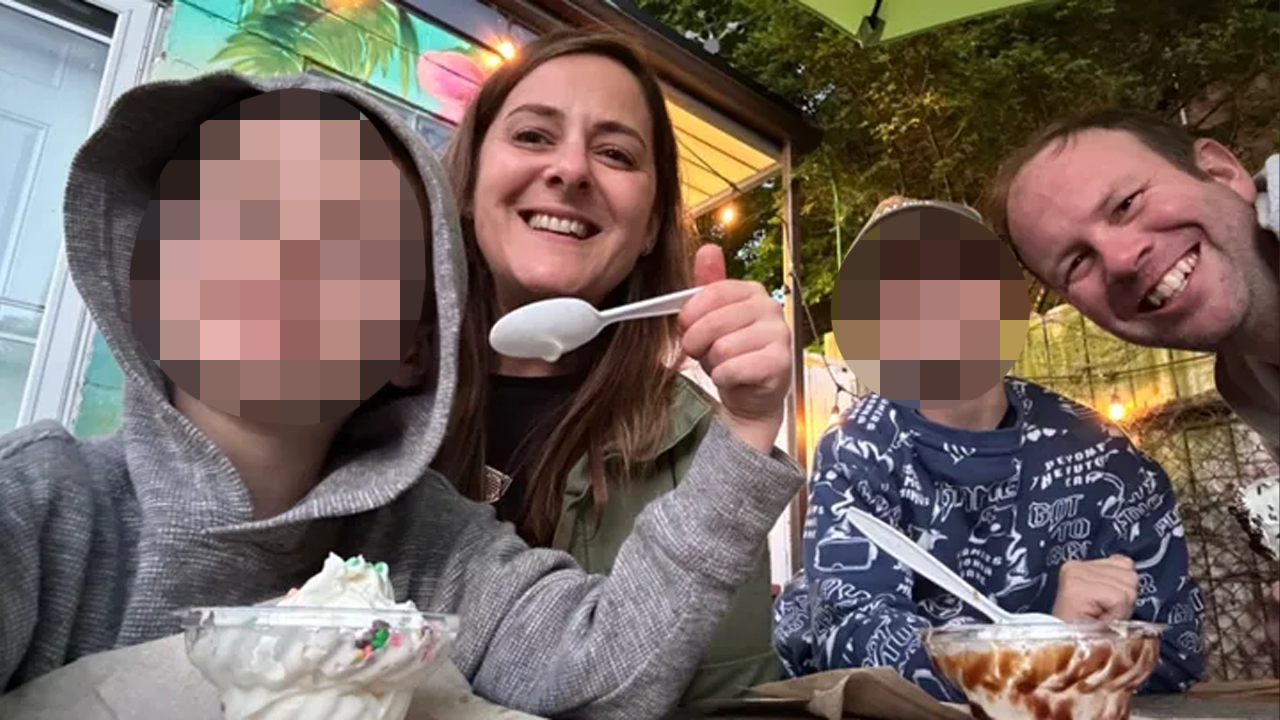
It was just after midnight on a quiet street in Edgewood, Pennsylvania, when the safety of a suburban home was shattered in a way that no family should ever have to endure. The house on Linden Avenue, a place where a family should have been sleeping soundly, became the scene of a nightmare. According to authorities, an intruder broke in and attacked Dr. Idris Evans and his wife as they lay in bed, unleashing a brutal stabbing assault that would end the life of a beloved pediatrician and leave his wife fighting for her own recovery. By the time police arrived—just minutes after a frantic 911 call from a neighbor—the damage was already catastrophic. Dr. Evans, only 46 years old, was rushed to the hospital but was pronounced dead at 1:42 a.m. His wife, whose name has not been released, was hospitalized with stab wounds and later listed in stable condition. But the physical wounds are only part of the tragedy. The couple’s two young children, ages 8 and 12, were home at the time of the attack, adding a layer of trauma that no child should ever have to process. This was not a random act of nature or a tragic accident; it was a violent intrusion into the most intimate space a family can share, and the shockwaves are being felt far beyond the small community of Edgewood.
Dr. Idris Evans was not just any doctor. He was a healer devoted to the most vulnerable patients—children fighting for their lives. As the medical director of the Pediatric Critical Care Transport Team at UPMC Children’s Hospital of Pittsburgh, he led the specialized team responsible for transporting critically ill children to the hospital, often under the most urgent and stressful circumstances imaginable. He was also an assistant professor of critical care medicine at the University of Pittsburgh School of Medicine, where he helped shape the next generation of physicians. His colleagues knew him as someone who brought both skill and compassion to the bedside, someone who understood that behind every medical chart was a frightened child and a desperate family. In the pediatric intensive care unit, he was a calm presence in a storm of uncertainty, a doctor who could explain the impossible in ways that gave parents hope. His death leaves a gaping hole in the medical community, but more importantly, it robs the world of a man who dedicated his entire professional life to saving others. To his patients, he was a guardian angel in scrubs. To his students, he was a mentor and an inspiration. To his family, he was a husband and father whose life was snuffed out in a senseless act of violence. The loss is profound, and the grief is shared by everyone who ever crossed his path—from the hospital hallways to the classrooms where he taught the next wave of critical care specialists.
The details of the attack are almost too horrifying to process. According to court documents, Dr. Evans and his wife were asleep when they were suddenly attacked by a man armed with a kitchen knife. The intruder, later identified as 32-year-old Elijah Hemingway, was reportedly wearing nothing but underwear and allegedly made bizarre declarations about being “God.” In the chaos of the attack, Dr. Evans is said to have called the attacker by name—“Elijah”—as if he recognized him, though his wife told investigators she had never seen the man before in her life. The randomness of the violence makes it even more terrifying, but the possibility that Evans somehow knew his attacker adds an unsettling layer of mystery. Somehow, in the darkness of their own bedroom, the couple fought back against a naked intruder wielding a blade, with nothing but terror and adrenaline to protect them. Dr. Evans’ wife managed to escape the home and flee to a neighbor’s house, where she desperately banged on the door, bleeding and traumatized, spurring the neighbor to call 911 at around 12:31 a.m. Police arrived within three minutes, but that window of time was already too late for Dr. Evans. The children, who were in the home during the attack, were forced to live through a horror that no therapy can fully erase—waking up to screaming and chaos, and losing their father in the most violent way imaginable.
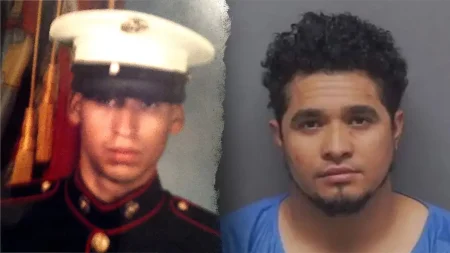
Now, the focus turns to the man accused of this heinous crime. Elijah Hemingway has a criminal history in Allegheny County that dates back to 2016, and his most recent prior arrest came just months ago, in July, in connection with a burglary that allegedly took place in February. Yet despite that arrest, he was released without bail—a decision that raises difficult questions about the criminal justice system and the risks presented to communities when individuals with violent histories are allowed back onto the streets. On Thursday, authorities brought seven new charges against Hemingway in connection with the Evans attack, including criminal homicide, aggravated assault, burglary, and trespassing. The charges are a formality in the eyes of the law, but they barely capture the enormity of the alleged crime. According to the criminal complaint, Hemingway told police that he had been invited into the home by Dr. Evans, but he could not provide any details about how the two men had met. He also claimed that the doctor stabbed him in the back first, but investigators found no such wound—only cuts on his hands, which they said were consistent with committing a stabbing attack. These bizarre, self-serving claims paint a picture of a man trying to twist the story to escape responsibility, but the evidence, including blood found on the windowsill and exterior door of the family’s kitchen, points to a brutal and unprovoked invasion. Hemingway was found just two doors down from the crime scene, wearing nothing but underwear, by a Monroeville Police K-9 named Channy. It was a conclusion to a manhunt that lasted little more than an hour after the attack, but it cannot undo the damage that was done.
The legal and investigative process will now unfold in the public eye, bringing with it more painful details and inescapable questions. How did Hemingway get into the house? Was this truly random, or was there some prior connection to the family? Why was he free in the first place, given his recent arrest? The affidavit and criminal complaint lay out the evidence—the blood on the window sill, the exterior door, the wounds on the suspect’s hands—and each piece of evidence paints a grim picture of violence and chaos. The fact that Hemingway allegedly claimed to be God and appeared “psychotic” during the attack adds another layer of complexity to an already devastating story. If he was in the throes of a mental health crisis, that raises its own set of painful questions about our systems of care and support, and whether this could have been prevented. But for now, the family, the community, and the medical world are left to mourn a man who was taken far too soon. Dr. Evans’ wife remains hospitalized, recovering from her physical wounds while facing an emotional recovery that will take a lifetime. The couple’s children must now navigate a world without their father, their lives permanently divided into before and after this night. The court system will do its job, but no verdict will bring Dr. Evans back or erase the terror of that night. What the community can do is hold onto the memory of a man who spent his life saving children, and demand that justice be served for him and his family.
In times like these, words can feel hollow. There is no way to summarize the grief that comes from losing a spouse, a father, a healer, a friend. But there is also a resilience that emerges from tragedy, and in the days and weeks to come, we will likely see that resilience in the form of memorials, vigils, and tributes to Dr. Evans. His hospital will continue to care for the children he devoted his life to protecting, and his students will carry forward the lessons he taught them. His patients, many of whom are too young to understand what has happened, will grow up with a legacy of a doctor who fought for them when they were at their most vulnerable. And his children will grow up knowing that their father was a hero—not just in his final moments, when he faced an attacker in the darkness of his own home, but every day of his life. The family deserves privacy and support, and the community deserves answers. For now, we can only hold onto the humanity of Dr. Idris Evans: a pediatrician, a teacher, a husband, a father, a man of compassion and courage. In the face of inexplicable violence, let us remember the life he lived rather than the way he died, and let us push for a world where families can sleep safely in their beds, and where a man who healed children is not stolen from them by an intruder in the night. This story is still developing, and the full truth may take months to emerge. But one thing is certain: a light has gone out in Pittsburgh, and it will not easily be forgotten.