





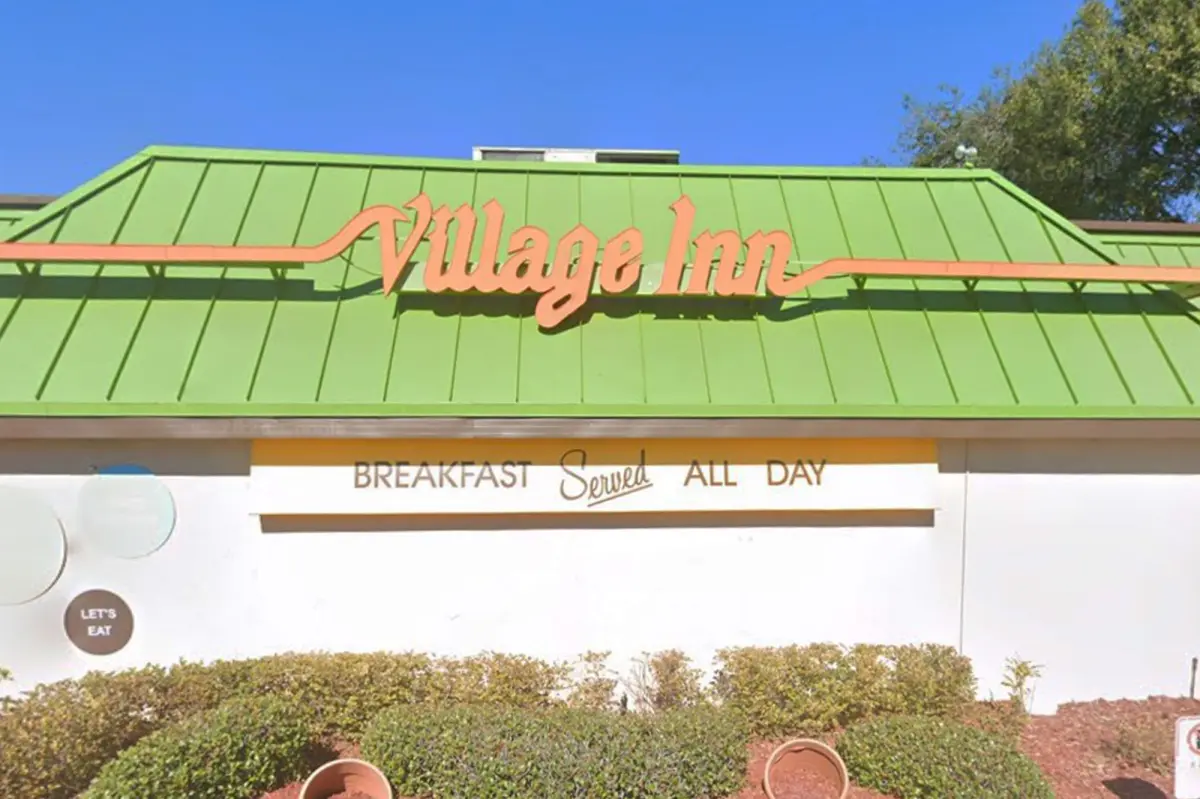
On the surface, the Village Inn in Oldsmar, Florida, looks like the same family restaurant it has always been—a place where the coffee is always warm, the booths are worn but welcoming, and the menu offers the kind of breakfast that steady diners have ordered for years. But under that familiar, friendly exterior, the operation is quietly fighting for its life. VI Oldsmar LLC, the franchisee that runs this location, filed for Chapter 11 bankruptcy protection in the U.S. Bankruptcy Court for the Middle District of Florida on September 18. The numbers in the petition are sobering: the company reported just over $72,000 in assets but more than $554,000 in liabilities. For many people, the words “bankruptcy” conjure images of darkened windows and an immediate closing sale, but that is not how Chapter 11 works. This is a reorganization bankruptcy, not a shutdown order. It gives the business a chance to keep its doors open while it works out a plan to satisfy creditors. The company also filed under Subchapter V, a streamlined process designed specifically for small businesses that want to avoid the high costs and complexity of a traditional corporate bankruptcy. It is a legal lifeline, not a white flag. Indeed, an employee at the Oldsmar location confirmed that the restaurant remains open and has no plans to close. The dining room is still serving pancakes, patties, and omelets while lawyers and accountants sort through a stack of unpaid bills. But no amount of syrup can make the financial reality sweeter, and the pending case marks a heavy moment for a neighborhood spot that has long been more than just a restaurant.
Behind the legal language lies a deeply human story about the fragility of small business ownership in the modern economy. The petition gives a blunt financial snapshot: about $5,235 in cash, $15,000 in food and paper inventory, $50,000 in kitchen equipment, and $2,100 in office furniture. That’s the visible wealth of a restaurant—the freezers stocked with eggs and bacon, the flat-top grill that has sizzled through thousands of breakfast rushes, the storeroom shelves lined with boxes and cans. Against all this, the company owes more than half a million dollars. It is a lopsided balance sheet that reflects a business stretched far too thin. The restaurant has between one and 49 creditors, which under the law makes it a small business bankruptcy, but the list of creditors is filled with familiar names: the landlord, the tax collector, and the food suppliers. For people who work in restaurants, these names are not just entries in a legal document. They are the uncomfortable conversations in the back office, the phone calls that go unanswered, and the prayer that next week’s sales will be stronger than last week’s. The assets may be modest, but they represent something real: a livelihood, a daily routine for employees, and a gathering place for a community.
A closer look at the largest debts reveals who is waiting to be paid. The biggest single claim, for $250,000, belongs to 3682 JAGS LLC, likely the property owner or landlord. The Florida Department of Revenue is owed about $120,400, while the Internal Revenue Service has a claim for nearly $78,500. The food distributors are also in line: US Foods is waiting on roughly $40,301, and Sysco is owed about $30,000. These are not faceless corporations in the minds of a struggling franchisee. When a food supplier has not been paid, it means that the truck that used to pull up with fresh produce and dairy is now less welcome. When a landlord is owed a quarter of a million dollars, every rent check is a grim reminder that the building is not actually yours. And when both state and federal tax agencies come calling, the pressure becomes overwhelming. The money owed to tax authorities is especially painful because it represents taxes collected from customers every day—sales tax, payroll tax, and other withholding that was supposed to be passed along to the government. For a small restaurant, the gap between what is owed and what is available is the difference between survival and collapse. Chapter 11 protection does not make these debts disappear, but it does give the business breathing room, a chance to reorganize its finances and perhaps pay back a portion of what is owed over time. That is no small comfort to a restaurant operator staring down a mountain of obligations.
The reasons behind this financial turmoil go far beyond bad luck or mismanagement. According to the Tampa Bay Business Journal, the franchisee has been struggling with the lingering effects of the 2024 hurricanes that struck the Tampa Bay region. Storms like these are more than just dramatic weather events with high winds and flooded roads. They disrupt the rhythms of daily life, chase away tourists, and keep residents at home when they might otherwise be dining out. Some restaurants lost power for days; others lost roofs or suffered water damage; almost all of them lost sales. But the aftermath is often worse than the storm itself. Insurance claims drag on, government assistance is slow to arrive, and the bills do not stop just because the weather has cleared. Rent still comes due every month. Employees still need to be paid. Food costs continue to rise. The operator also cited declining restaurant sales and rising operating costs—a familiar pressure in an industry where profit margins are notoriously thin. Breakfast and brunch restaurants, in particular, have been hit hard by the rising price of eggs, dairy, and other staples, as well as by customers who are more careful about how much they spend on a meal outside the home. For this Oldsmar location, the hurricanes were not the entire story, but they were certainly the knockout blow to a business that was already reeling.
This is not the first time that this particular franchisee has turned to bankruptcy. In fact, according to The Street, the Oldsmar filing is the fifth Chapter 11 bankruptcy filed by a Village Inn franchisee operated by managing member Lloyd D. Lehan IV since June. Just last month, Bay Pines Group LLC, another Lehan-owned company that runs a Village Inn on Bay Pines Boulevard in Seminole, filed for bankruptcy protection as well. That pattern is hard to ignore. It suggests a network of restaurants under enormous strain, each struggling with its own set of debts and disappointments. Restaurants are often set up as separate legal entities, with each location forming its own LLC to isolate liability. But when the same manager is behind multiple filings, creditors and industry watchers begin to ask harder questions. Did one location’s problems spread to others? Were debts from one struggling restaurant being shifted to cover another? Or is this simply what happens when a business model built for an earlier era collides with rising costs, falling traffic, and a brutal hurricane season? The human toll is not just financial. Behind each filing are employees who wonder whether they will have a job, managers who look for ways to reassure their staff, and regular customers who hope their favorite booth will still be there. No immediate comment was available from Village Inn, Lehan, or the Oldsmar restaurant, so many questions remain unanswered. But the legal record tells a story of a small business operator backed into a corner, not just once but repeatedly.
Despite the grim financial details, there is reason to hope that this is not the end of the road for the Oldsmar Village Inn. The restaurant brand itself is a survivor with deep roots in American comfort food. Village Inn was founded in Denver in 1958 as the Village Inn Pancake House, and it has spent more than six decades serving pancakes, omelets, chicken fried steak, and the kind of unfussy food that families crave on a weekend morning. Today the chain has more than 100 company-owned and franchised restaurants across several states, including Colorado, Florida, Texas, and Arizona. One franchisee’s bankruptcy does not define the entire brand. Instead, it is an opportunity for the courts to step in, protect creditors’ interests, and allow a struggling business to find a way forward. Subchapter V, in particular, offers a more humane and efficient path to reorganization. It was designed for small businesses with relatively modest debts, giving them the tools to negotiate a repayment plan and emerge from bankruptcy with fewer burdens. The Oldsmar location remains open, and as any restaurant regular will tell you, that matters. It means the kitchen is still warm, the cook is still cracking eggs, and the servers are still filling coffee cups. For a community that has weathered hurricanes, rising prices, and economic uncertainty, there is something quietly reassuring about a local restaurant that refuses to give up. The next few months will be critical, and not everyone will get paid in full. But as long as the doors are open and the pancakes are still being flipped, there is still a chance for a comeback. In the restaurant business, that is often all you can ask for.