




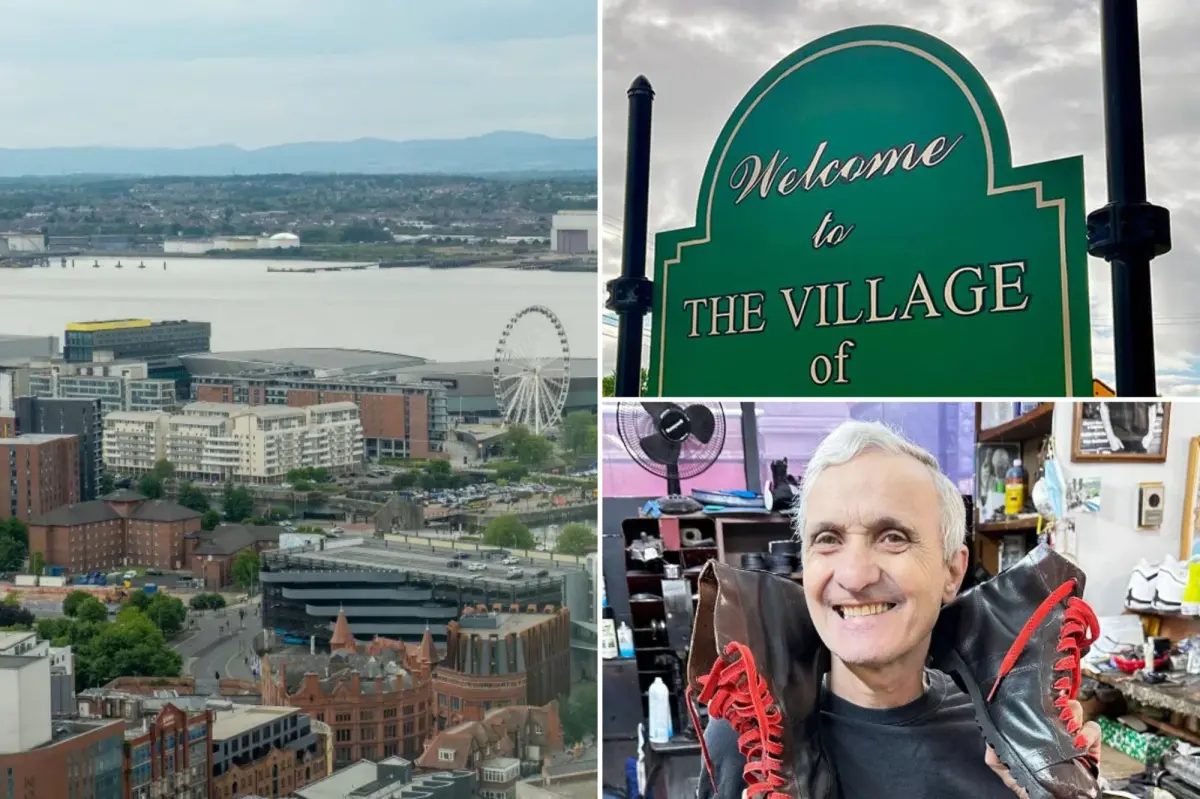
Nestled along the shores of Onondaga Lake in central New York, the tiny village of Liverpool has just received an extraordinary honor: it has been named the nicest place in America. This isn’t a title handed out lightly, nor is it about scenic views or charming storefronts, though Liverpool certainly has those in abundance. Rather, it comes from Reader’s Digest, which each year invites readers across the country to nominate towns and cities where neighborliness isn’t just a word but a way of life—places where people genuinely lean into one another, where kindness is a reflex, and where communities come together to create positive change. For the tenth year of this beloved list, Liverpool, home to just over two thousand residents, rose above thousands of nominations to claim the gold for goodwill. It’s the kind of recognition that doesn’t make headlines for grand gestures or celebrity philanthropy, but instead celebrates the quiet, persistent, and deeply human acts of care that happen every day in ordinary places. And in Liverpool, those acts are not occasional or exceptional; they are woven into the very fabric of the village, passed down through generations and practiced by everyone from shopkeepers to schoolchildren.
What made Liverpool stand out, according to the editors and judges behind the list, was not a single defining program or one remarkable individual, but the sheer breadth and depth of community support happening all at once. It was the kind of place where neighbor-to-neighbor care wasn’t an anomaly but the norm, where volunteerism wasn’t a chore but a joy, and where philanthropy wasn’t reserved for the wealthy but practiced by everyone who had something to give, whether that was time, skills, or simply a listening ear. Leigh Belz Ray, the editor-in-chief of Reader’s Digest, captured this spirit beautifully when she explained that the residents of Liverpool are united by a common understanding that small changes bring big impact, and that helping others without motive or promise of reward is the ultimate expression of human connection. That philosophy is not just a slogan; it’s lived out in countless ways across the village. From organized outreach programs to spontaneous acts of kindness between neighbors, Liverpool embodies a kind of communal warmth that has become increasingly rare in modern America. It’s the kind of place where people don’t just wave hello—they stop to ask how you’re doing, and they mean it. They don’t just notice when someone is struggling; they find ways to help, often before being asked. And they don’t wait for institutions or governments to solve problems; they roll up their sleeves and do it themselves, together.
One of the most touching stories that Reader’s Digest highlighted is that of Ralph Rotella, a beloved local cobbler whose generosity has become legendary. Over the years, Rotella has refurbished and donated more than 300,000 pairs of shoes to people in need, a staggering number that represents not just skill and hard work, but an almost boundless compassion. His workshop is not just a place of business; it’s a hub of community giving, where people drop off old shoes knowing they’ll be repaired and given a second life, and where those in need can find not just footwear but dignity. Rotella, who has lived in Liverpool since 1995, told Reader’s Digest that as long as his hands work and he can walk and dance, he’ll keep doing it. His words are simple, but they carry a profound message about purpose and service. What’s even more heartwarming is the way the community has embraced him in return. He described how everywhere he goes—the grocery store, Home Depot, the local diner—people approach him with bags of shoes, eager to contribute to his mission. “Ralph, I got some shoes for you, can I bring them down?” they ask, and in that exchange, you see the beautiful reciprocity of a community that values giving. Rotella isn’t just a cobbler; he’s a symbol of what makes Liverpool special: one person’s dedication, multiplied by a community’s willingness to join in, creates a ripple effect that touches thousands of lives.
But Liverpool’s niceness extends far beyond any single individual. The village is also home to organizations like Operation Northern Comfort, a volunteer group that was formed in the aftermath of Hurricane Katrina and has since turned its attention closer to home. What began as a response to a distant disaster has become a local lifeline, offering repairs, assistance, and all manner of help to neighbors in need. Whether it’s fixing a broken porch, repairing a leaky roof, or simply showing up with tools and a willing heart, Operation Northern Comfort embodies the idea that community care is not abstract—it’s practical, hands-on, and deeply personal. Alongside this organization is In My Father’s Kitchen, a remarkable initiative that provides non-denominational and non-discriminatory assistance to unhoused people through direct street outreach. Volunteers don’t wait for people to come to them; they go out into the streets, building relationships, offering food and necessities, and treating every person with the respect and dignity they deserve. These programs, along with countless smaller acts of kindness, paint a picture of a community that refuses to look away from suffering. As Mayor Stacey Finney put it, there is a spirit of volunteerism in Liverpool because people love the area they live in and want to enhance it. “You’ve got to love where you live, and invest your time where you live,” she said, and those words resonate deeply in a village where civic pride and compassion are inseparable.
The roots of this benevolence run deep, and Liverpool’s story is not just a modern phenomenon. The shores of Onondaga Lake, where the village now sits, were once the site of a historic peace treaty among the Mohawk, Oneida, Onondaga, Cayuga, and Seneca peoples—the Haudenosaunee Confederacy. That legacy of peace, cooperation, and mutual respect has left an indelible mark on the land and its people. Reader’s Digest noted that the spirit of kindness in Liverpool extends back generations, and it’s impossible not to feel that there is something almost sacred about a place where such an important agreement was forged. The village’s modern-day neighborliness can be seen as a continuation of that ancient tradition, a living reminder that human beings are at their best when they come together in peace and goodwill. This year’s panel of judges, which included Today Show co-host Craig Melvin, bestselling author Mitch Albom, and Molly Irani, a restaurateur from last year’s winning town of Asheville, North Carolina, was clearly moved by what they found in Liverpool. The creative team from Reader’s Digest spent nearly a week in the village, and according to editor Leigh Belz Ray, every single person on that team wished they could have stayed even longer to report on more of the truly soul-lifting work being done there. That kind of reaction speaks volumes, because it’s one thing to read about kindness, but another to be immersed in it, to feel the warmth of a community that genuinely cares for one another.
In a world that often feels divided and disconnected, the recognition of Liverpool as the nicest place in America is a heartening reminder that goodness is still alive and thriving in small towns across the country. The list, now in its tenth year, has previously honored places like Asheville, North Carolina, Provo, Utah, and Buffalo, New York, each with its own unique character but all sharing that same essential quality of neighborliness. This year’s finalists also included Portland, Oregon; Charleston, Arkansas; and Swanville, Minnesota, all places that exemplify what it means to be a community. And in 2024, Fort Greene in Brooklyn was a runner-up, proving that niceness can flourish in urban neighborhoods as well as rural villages. But Liverpool’s victory feels particularly special, perhaps because it is so small, so unassuming, and so ordinary in the best possible way. It’s a place where people know each other’s names, where a cobbler can become a local hero, where volunteers show up in the rain, and where the memory of an ancient peace treaty still inspires daily acts of kindness. Liverpool reminds us that being nice is not about being perfect or having all the answers; it’s about showing up for one another, again and again, with open hearts and willing hands. It’s about recognizing that every small act of generosity, every repaired shoe, every warm meal, every kind word, is a thread in the fabric of a community. And in Liverpool, those threads are woven together into something beautiful, resilient, and deeply human. The title of nicest place in America is not just a badge of honor; it’s an invitation to the rest of us to look at our own communities and ask how we can be a little kinder, a little more generous, and a little more connected to the people around us. Because if a small village on the shores of Onondaga Lake can do it, so can we all.