


In the quiet living rooms of immigrant families across the United States, a collective shudder of anxiety felt all too real on Thursday as the Supreme Court handed down a pair of deeply divided decisions that fundamentally reshape the landscape of American immigration. In two separate 6-to-3 rulings split strictly along ideological lines, the court’s conservative majority cleared the path for the administration of President Donald J. Trump to aggressively expand its restrictive border policies and dismantle decades of humanitarian protections. Taken together, these opinions signal a profound era of judicial deference to executive authority, granting the president sweeping power to define who is allowed to seek safety within the borders of the United States and who must be cast out. The decisions have effectively dismantled a fragile status quo that had, for decades, allowed hundreds of thousands of vulnerable individuals to construct peaceful, productive, and law-abiding lives on American soil. As the justices prepare to release further high-stakes rulings in the coming days, these opinions serve as a stark harbinger of a broader judicial willingness to tolerate the administration’s boundary-pushing agenda, leaving immigrant advocates and targeted communities grappling with an intense sense of vulnerability and impending displacement.
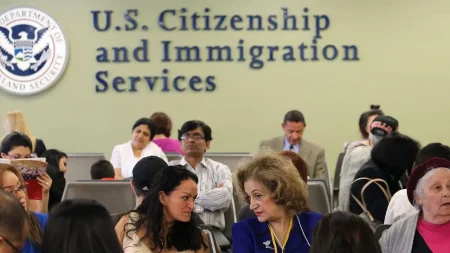
To understand the sheer magnitude of this judicial shift, one must look closely at the first of Thursday’s rulings, which systematically strips away Temporary Protected Status (TPS) from more than 350,000 Haitians and 6,100 Syrians, with cascading implications for hundreds of thousands of others from a dozen war-torn or disaster-stricken nations. Established by Congress with broad bipartisan consensus in 1990, the TPS program was envisioned as a compassionate, statutory safety net, designed to offer legally protected harbor, work authorization, and driver’s licenses to foreign nationals whose homelands were rendered temporarily uninhabitable by cataclysmic events. For the Haitian community, this lifesaver was extended following the catastrophic 2010 earthquake that claimed over 220,000 lives and fractured the nation’s infrastructure—a crisis compounded by years of subsequent political violence, cholera outbreaks, and systemic instability. For Syrians, the designation was a response to the horrific civil war that erupted in 2011, converting historic cities into active war zones and creating one of the worst humanitarian catastrophes of the twenty-first century. Over the last decade and a half, these individuals did not merely “stay” in America; they put down deep roots, buying homes, paying taxes, filling essential roles as doctors, engineers, students, and caregivers, and raising American-born children who have never known any other home. Now, with a single stroke of the judicial pen, these established lives have been plunged into a terrifying legal limbo, forcing families to contemplate the unthinkable choice between returning to active conflict zones or retreating into the frightening, unprotected shadows of undocumented life in the United States.
The legal architecture behind the court’s decision on Temporary Protected Status reveals a stark philosophy of executive supremacy over humanitarian considerations, one that pointedly rejects the notion that the judiciary should act as a check on administrative processes. Writing for the conservative majority, Justice Samuel A. Alito Jr. anchored his opinion in a strict, textualist reading of the federal statute, asserting that the law explicitly prevents federal courts from second-guessing any decision by the Department of Homeland Security to terminate or extend a country’s TPS designation. Even when confronted with evidence that the administration’s decision-making process was deeply flawed—characterized by lower courts as a perfunctory exercise involving “terse and unspecific” emails and “laconic” administrative coordination—the majority insisted that the courts have no constitutional role in reviewing the quality of the government’s internal deliberations. Furthermore, the majority dismissed passionate arguments from immigrant rights advocates who contended that the administration’s drive to end protections was fueled by deep-seated racial animus, particularly against Black and Haitian migrants. Justice Alito declared that none of the public or private statements cited by challengers were “overtly racial” and could instead be interpreted through “race-neutral” policy justifications. This assertion stood in sharp, dramatic contrast to a blistering dissent by Justice Elena Kagan, who read extensively from the president’s own highly publicized, derogatory remarks regarding Haitian immigrants, including false campaign trail claims that Haitian families in Ohio were stealing and eating pets, and characterizations of Haiti as a “filthy, dirty, disgusting” nation. Justice Kagan argued that these statements did not merely hint at bias, but instead “fairly shout” that racial prejudice was a central motivating factor behind the executive branch’s policy decisions.
While the termination of humanitarian protections threatened those already established within the country, the Supreme Court’s second 6-to-3 ruling targeted the highly vulnerable populations arriving at the nation’s physical thresholds, validating the administration’s controversial “turn-back” policy along the U.S.-Mexico border. This policy, which first emerged in 2016, allows federal border agents to physically block asylum seekers from setting foot on American soil, effectively preventing them from triggering the statutory right to request protection from persecution, torture, or death. Under long-standing domestic and international law, any individual who physically reaches the United States is entitled to a formal screening process to evaluate their asylum claims; by physically repelling them at the international boundary line, the administration bypassed this legal framework entirely. Justice Sonia Sotomayor, taking the rare and dramatic step of reading a lengthy, impassioned summary of her dissent directly from the bench, accused the court of actively endorsing a policy that “slams the door shut on all who are fleeing persecution,” in direct defiance of the humanitarian system Congress deliberately built. For the thousands of families waiting in precarious, makeshift camps on the Mexican side of the border, this ruling translates directly into concrete human suffering, exposing them to extreme weather, cartel violence, kidnapping, and extortion, while extinguishing the historic promise of the United States as a beacon of hope for the oppressed.
These rulings are not isolated legal victories; they represent the coronation of a broader, systemic effort by the administration to dismantle the traditional pathways of American immigration and refugee resettlement. Since reclaiming the presidency, the administration has moved systematically to cancel TPS designations for 13 of the 17 protected countries, while simultaneously shrinking the nation’s refugee admission caps to historic lows and restructuring the program in a highly selective manner. Within this broader context, administration officials greeted Thursday’s rulings with triumphant declarations of vindication, asserting that the decisions restore essential boundaries to executive power. James Percival, the general counsel of the Department of Homeland Security, actively celebrated the decisions on social media, writing that “the T in map TPS stands for TEMPORARY” and labeling decades of consecutive extensions as a form of “de facto amnesty” that undermined the integrity of the rule of law. This rhetoric, while comforting to the administration’s political base, ignores the reality that the crises in countries like Haiti and Syria are far from temporary, and that forcing individuals back to these nations under the guise of statutory purity is a recipe for humanitarian disaster. As the administration celebrates its legal victory, it is also bracing for its next major immigration battle before the high court: a highly anticipated ruling on the constitutionality of the president’s aggressive attempt to end birthright citizenship for the children of undocumented immigrants born on American soil, an effort that represents an even more radical departure from settled constitutional law.
In the immediate wake of the Supreme Court’s pronouncements, affected families and their advocates are left to navigate a chaotic and frightening landscape with very few legal lifelines remaining. Because many TPS holders have lived legally in the United States for so long, they do not have active, outstanding deportation orders on their records, meaning that the government cannot easily expel them overnight without first granting them an opportunity to contest their cases before an already overwhelmed immigration court system. This cold comfort, however, offers little solace to families who face the imminent loss of their livelihoods, the potential revocation of professional licenses, and the constant, agonizing threat of family separation. Ahilan Arulanantham, a prominent human rights attorney representing Syrian migrants in the litigation, expressed profound grief over the ruling, warning that the Supreme Court has stripped away a bedrock humanitarian protection established three decades ago, leaving millions of innocent lives at the mercy of partisan politics and xenophobic whims. Ultimately, these rulings force a poignant and painful confrontation with the nation’s core identity, raising fundamental questions about whether the United States will continue to honor its historic legacy as a sanctuary for the displaced, or whether it will transition fully into a closed, defensive fortress where geopolitical compassion is discarded in favor of rigid executive unilateralism.