


The Silent Metropolis: Nairobi’s Preemptive State of Siege
The morning sun rose over Nairobi not with its accustomed roaring cacophony of matatus, street vendors, and bustling commuters, but with an ominous, heavy silence that spoke volumes of a nation in deep political torment. On Thursday, East Africa’s premier economic hub was effectively placed under a state of preemptive siege, as President William Ruto’s administration deployed a massive, intimidating array of security forces, barricaded vital transport arteries, and turned the vibrant capital into a fortress of steel and razor wire. This unprecedented security lockdown was specifically engineered to stifle and suppress the annual commemorative demonstrations planned for June 25th—a date now permanently etched in the Kenyan national consciousness as a tragic symbol of youth defiance and state-sponsored brutality. Two years prior, this very date saw the streets of Nairobi run red with the blood of dozens of peaceful citizens, gunned down by police during historic anti-government demonstrations against a punitive finance bill that threatened to plunge millions deeper into poverty. On this anniversary, the sheer anticipation of renewed clashes and the terrifying specter of state-sponsored police violence in Kenya caused an immediate, spontaneous shutdown of the private sector; businesses remained shuttered, schools closed their gates, and the high-rise corridors of the central business district fell eerily quiet. The previous evening, Interior Minister Kipchumba Murkomen had set a grim, uncompromising tone, warning that anyone deemed a looter or suspected of committing criminal acts would face the full, unmitigated force of the law, thereby framing peaceful democratic dissent as a national security threat. The resulting atmosphere was one of profound apprehension, transforming Nairobi into a ghost town where the military-style presence of security forces served as a stark reminder of the widening chasm between the governing elite and a deeply disgruntled, economically exhausted populace.
A Stifled Memorial: Razor Wire, Flowers, and Political Friction
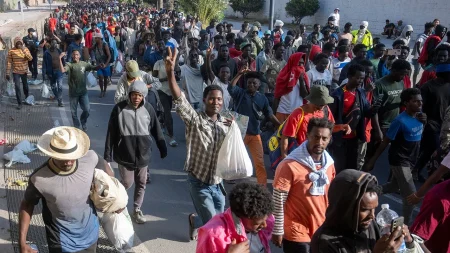
Despite the overwhelming displays of state power and the logistical paralysis gripping the capital, a resilient and determined contingent of demonstrators attempted to honor their fallen compatriots, bringing a poignant, human element to the barren, militarized streets by midday. Bearing floral wreaths meant to symbolize the stolen futures of the young Kenyans killed during previous waves of activism, this small band of peaceful protestors sought to march toward the Parliament buildings, the symbolic epicenter of the legislative decisions that had sparked the national crisis. However, their numbers were vastly XML-dwarfed by the sheer volume of riot police, paramilitary units, and plainclothes agents who had saturated the city center, transforming the democratic right to assembly into a high-risk standoff. Prominent civil rights advocate and protest organizer Boniface Mwangi captured the collective frustration of the nation, declaring that while citizens across the country had prepared to march in solidarity, the president had effectively chosen to close down the entire nation rather than listen to its grievances. Demonstrating the hardline stance of the local administration, Nairobi Police Commander Issa Mohamud defended the sweeping road blockades and the aggressive security presence to members of the media, claiming that these extreme bottlenecks were necessary defensive measures designed to prevent criminal elements and opportunists from infiltrating the city’s core. In a dramatic display of resistance, the marching group—which included veteran opposition leader and potential presidential candidate Kalonzo Musyoka—was abruptly halted by a wall of heavily armed police officers short of the parliamentary gates. Refusing to retreat entirely, the peaceful demonstrators chose instead to gently drape their memorial wreaths over the vicious coils of razor wire that security forces had strung across the avenues, turning structural instruments of state suppression into a striking, colorful monument to the nation’s ongoing struggle for civil liberties and democratic accountability.
The Genesis of Wrath: Debt, Taxes, and the Birth of a New Resistance
To fully comprehend the profound anger simmering beneath the surface of the Nairobi protests, one must examine the systemic economic distress and the controversial legislative actions that originally ignited this firestorm two years ago. The catalyst was the government’s highly unpopular finance bill, a piece of legislation that proposed sweeping, aggressive tax hikes on essential consumer goods, basic foodstuffs, and digital services in a desperate bid to service Kenya’s mounting national debt and satisfy aggressive fiscal targets set by international financial institutions. In a country where astronomical youth unemployment, rising inflation, and an ever-deepening cost-of-living crisis had already pushed the majority of the population to the absolute brink of economic survival, these punitive fiscal measures were perceived as a direct declaration of economic warfare against the poor. What began as a localized, middle-class outcry quickly evolved into a historic, nationwide mass movement, catalyzed in large part by the emerging Gen Z political movement, which brought together a diverse, multi-ethnic coalition of young citizens who felt completely betrayed by the political status quo. The subsequent government crackdowns on these assemblies were characterized by an unprecedented level of brutality, resulting in the documented deaths of over sixty citizens at the hands of security forces, a tragic turning point that permanently shattered President Ruto’s populist image as a champion of the impoverished “hustler” class. Although the intense public outrage eventually forced the administration to begrudgingly withdraw the contentious finance bill, subsequent commemorative gatherings have been met with similar levels of lethal force, with the state continually disputing the casualty figures reported by independent human rights organizations and defending the aggressive, lethal actions of the police as justifiable acts of self-defense.
The Digital Battleground: How Gen Z Reimagined Rebellion Across Borders
This continuing cycle of civil unrest highlights a profound sociological shift within Kenya’s domestic politics, characterized by the emergence of a decentralized, highly sophisticated youth movement that leverages digital technologies to challenge traditional power structures. Unlike the historical protest movements in Kenya, which were traditionally organized along rigid ethnic lines by established, wealthy political chieftains, these recent demonstrations have been horizontally integrated, leaderless, and hyper-connected. Through the strategic use of social media platforms such as TikTok, X (formerly Twitter), and encrypted messaging applications, young organizers managed to rapidly bypass state-controlled media, coordinate real-time logistics, compile safety resources, and broadcast raw, unedited footage of police violence in Kenya to an international audience. Memes, viral videos, and digital infographics served as crucial tools of political sensitization, transforming complex, dry economic policies and long tax documents into digestible, highly motivating pieces of counter-propaganda that resonated deeply with a technologically savvy generation. Furthermore, this dynamic is not operating in a geopolitical vacuum; the spirited resistance seen in Nairobi is part of a broader, sweeping wave of youth-led African protests that has recently disrupted established regimes in countries like Morocco and Madagascar, where a similar demographic bulge of educated but unemployed youth has mobilized to demand structural reforms. This rise in young political consciousness is part of a broader global phenomenon stretching to nations as geographically diverse as Nepal and Peru, signaling a fundamental transformation in how modern civil resistance is conceptualized, executed, and sustained against increasingly authoritarian administrations.
Shadows in the Streets: Police Brutality, Hired Agitators, and the Looming Election
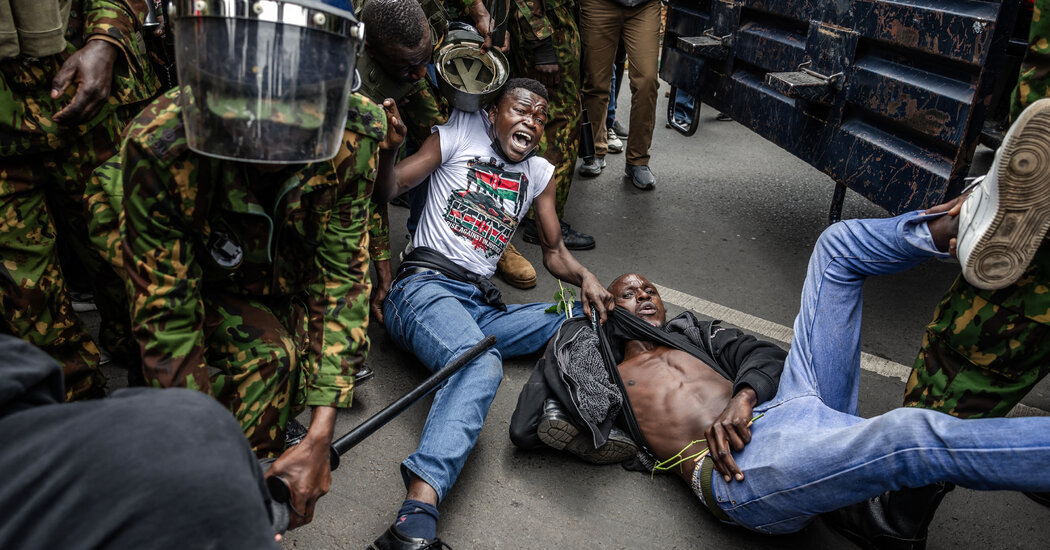
As Kenya cautiously moves toward the highly anticipated presidential elections next year, where President Ruto plans to secure a second and final term in office, the domestic political landscape has become increasingly polarized, volatile, and plagued by systemic fear. For many ordinary residents of Nairobi, the decision to abstain from active participation in the physical street protests was not driven by a lack of political conviction, but rather by a terror of encountering two distinct threats: the unchecked, lethal force of the police, and the terrifying emergence of state-sanctioned armed gangs, colloquially referred to as “goons.” These shadowy, weaponized groups of youths, often recruited from marginalized urban settlements and allegedly compensated by wealthy, pro-government politicians to disrupt peaceful opposition rallies, have introduced a chaotic, dangerous element of plausible deniability to the state’s counter-protest strategy. During the chaotic events on Thursday, the brutal suppressive tactics of the state were on full display as riot police utilized heavy volleys of tear gas to disperse a peaceful crowd attempting to gather near the central police station, turning the surrounding neighborhoods into active conflict zones. In a subsequent evening press conference, Interior Minister Kipchumba Murkomen announced that security operations had resulted in the arrest of at least 355 individuals across the country—including 161 citizens in the capital city alone—while conspicuously failing to provide any detailed information regarding civilian casualties or injuries suffered during the operations. This alarming pattern of mass detentions, combined with the strategic deployment of political agitators, underscores a coordinated effort by the ruling administration to systematically raise the physical and personal cost of civic activism, effectively chilling free speech and public assembly in the lead-up to an election cycle where Ruto faces a fractured but deeply resentful opposition coalition.
Price Tags on Human Life: The Compensation Dilemma and the Solitary Cry for Justice
In a calculated, high-profile attempt to defuse mounting domestic tension, address national outcry, and repair its battered international reputation, the Kenyan government recently announced the establishment of a historic 2 billion Kenya shilling (approximately 15 million USD) compensation fund intended for the families of civilians and security personnel killed or injured during public protests since 2017. However, while some cash-strapped families and victims have quietly welcomed the prospect of financial relief to cope with the economic devastation of losing their primary breadwinners, the overarching consensus among human rights advocates and grieving mothers is that financial restitution can never serve as a substitute for criminal justice and systemic reform. This moral conflict was personified on Thursday by Gillian Munyao, the grieving mother of Rex Masai, a young man whose tragic death during the early stages of the 2024 demonstrations cemented his status as a national martyr and a poignant symbol of the high cost of dissent. Standing defiantly in the rain near the barricaded Parliament compound alongside other grieving mothers, Ms. Munyao carried a simple, heartbreaking placard that boldly declared: “Compensation cannot replace accountability. Arrest killer cops.” Her powerful, solitary message resonates as a stinging indictment of a government attempting to put a price tag on human life while shielding its security apparatus from legal scrutiny, emphasizing that true peace and national healing in Kenya cannot be purchased with state funds, but must instead be built upon a foundation of judicial accountability, institutional transparency, and the immediate prosecution of those who wield state power against the citizens they are sworn to protect.