






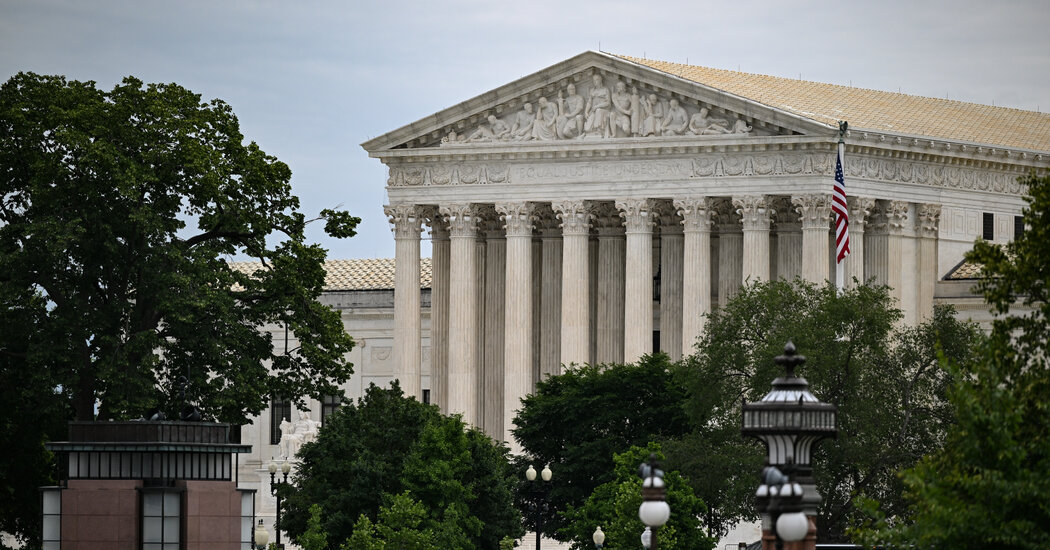
For forty-nine-year-old Jeffery Lee, the long, grueling evening of his scheduled execution was an agonizing, raw exercise in counting down the final, precious seconds of a life that the state of Alabama was determined to extinguish. In the quiet, claustrophobic confines of Holman Correctional Facility, the atmosphere harbored a heavy, almost suffocating tension, which seemed to loom like a physical entity in the cold chamber, extending far beyond the walls of his cell and wrapping its icy fingers around his family, his dedicated legal advocates, the prison staff, and the families of those whose lives had been forever shattered by his tragic past actions. As the fateful hour drew closer, the biological and existential reality of anticipating one’s own clinical death, a psychological torment unique to capital punishment, reached its devastating peak, only to be suddenly suspended in mid-air by an unexpected, eleventh-hour intervention from the nation’s highest court. The Supreme Court of the United States stepped in to block state officials from utilizing its highly controversial, experimental method of nitrogen hypoxia, providing an abrupt, breathtaking reprieve to a man who had already mentally prepared himself to take his last breath on earth. This dramatic, narrow escape from the executioner’s mask highlights the immense emotional and physiological toll experienced by beings trapped within the relentless machinery of the modern American death penalty, where life and death are routinely bargained for in hurried, late-night legal filings over fax machines and secure servers. For a brief moment, the grinding gears of state-sanctioned retribution came to a halt, leaving Lee to contemplate an unexpected, temporary survival while the world outside passionately debated the outer limits of constitutional cruelty. The frantic rush of legal briefs and the clinical coldness of prison protocols were suddenly eclipsed by the raw, undeniable reality of a human life spared, if only for a season, from a suffocating death that many legal and scientific experts argue is a form of torture disguised as modern medicine.
The complex legal drama that unfolded on Thursday night was as extraordinary as it was rare, showcasing a profound and dramatic reversal of the typical dynamics that govern capital punishment appeals in the United States legal system. Usually, it is the condemned prisoner who begs the Supreme Court for an emergency stay of execution as their final hours slip away, pleading for a merciful intervention from the highest appellate body in the nation, only to be almost always summarily rejected by the court’s conservative supermajority. In this instance, however, the roles were inverted; a federal appeals court had already carefully scrutinized the state’s plan to use nitrogen gas on Lee and deemed it likely unconstitutional under the specific circumstances of his case, prompting Alabama’s aggressive attorney general’s office to appeal directly to the Supreme Court to overturn that stay and allow the execution to proceed. The Supreme Court’s decision to reject the state’s plea was delivered in an unsigned, brief order that offered no explanation or legal reasoning, which is a standard practice for the court’s emergency shadow docket but one that leaves legal scholars and the public starving for clarity on such momentous constitutional questions. Yet, the silence of the majority was contrasted by a fierce, written dissent from three of the court’s conservative justices, Clarence Thomas, Samuel A. Alito Jr., and Neil M. Gorsuch, who signaled their willingness to let Alabama proceed with the execution despite the lower courts’ grave constitutional concerns. This deep ideological division within the high court underscores the volatile, highly politicized nature of death penalty litigation today, where the boundary between justice and cruel and unusual punishment is drawn by a razor-thin judicial margin, leaving defense attorneys and state prosecutors locked in a perpetual, high-stakes game of legal chess with human lives hanging in the balance.
At the heart of this intense constitutional battle is the state’s controversial adoption of nitrogen hypoxia, a relatively new and terrifyingly experimental method of execution that Alabama pioneered earlier in 2024 to international condemnation and ethical outrage. The process involves placing a tight-fitting, industrial-grade respirator mask over the inmate’s face and replacing the breathable air with pure nitrogen gas, theoretically causing rapid unconsciousness and death due to a total lack of oxygen. While state officials have repeatedly defended the method as a humane and painless alternative to the increasingly scarce drugs used in lethal injections, describing the controversial procedure as a peaceful transition, the reality witnessed by those present at previous nitrogen executions tells a different and disturbing story. Eye-witness accounts of prior executions using this method describe inmates thrashing in agony, gasping desperately for air, and convulsing violently against their gurney straps for minutes on end, a horrific spectacle that critics argue resembles slow, state-sponsored suffocation rather than a humane medical procedure. The lower court’s determination that the method was likely unconstitutional in Jeffery Lee’s case points to growing judicial skepticism regarding the state’s ability to safely administer this gas without causing catastrophic suffering, particularly given the risks of mask leakage, prolonged gasping, the terror of conscious asphyxiation and physiological reactions, such as the desperate buildup of carbon dioxide in the lungs, which can cause overwhelming feelings of panic and dread. By halting the execution, the courts have temporarily acknowledged the profound ethical hazard of treating human beings as subjects in a deadly, unproven scientific experiment, forcing a pause in a practice that many human rights organizations, medical societies, and global watchdogs have compared to the darkest chapters of historical state cruelty.
To humanize this complex legal struggle, one must look closely at Jeffery Lee himself, a forty-nine-year-old man whose life has been defined by a trajectory of violence, incarceration, and eventual spiritual and psychological reckoning over decades of solitary confinement. While the state viewed him purely as an administrative task to be completed, a line item on an execution docket, those who have worked with him over his decades on death row, and who describe his childhood and early adult years as being marred by systemic neglect and personal turmoil, paint a profoundly flawed, deeply remorseful individual who has spent his confined life searching for meaning, personal growth, and redemption behind bars. At the same time, any honest discussion of his impending fate must acknowledge the profound, lifelong, and enduring grief of the victims and their families, whose lives were shattered by the crimes that sent Lee to death row so many years ago. The tragedy of capital punishment is that it creates an ongoing cycle of trauma, where the state attempts to heal the wounds of a horrific past crime by committing another calculated act of violence, offering a false promise of closure to families who remain trapped in their sorrow. In the middle of this painful ecosystem stands Lee, a human being who has aged, changed, and survived decades in a system designed to break his spirit, only to face the terrifying prospect of being strapped to a gurney and forced to breathe a lethal gas. The court’s stay of execution does not erase his past, nor does it diminish the severity of his crimes, but it does honor his basic humanity by demanding that even those condemned to die are entitled to a process that does not descend into needless, barbaric torture.
Alabama’s aggressive pursuit of nitrogen hypoxia must be understood within the context of the state’s fiercely defensive history of capital punishment, characterized by a series of high-profile, botched executions that severely damaged its institutional credibility. Before turning to nitrogen gas as its new signature method, Alabama struggled for years with lethal injections, culminating in several agonizing, hours-long ordeals where medical staff repeatedly stabbed inmates with needles in failed attempts to establish intravenous lines, sometimes resulting in executions being abruptly aborted at the last minute because the state ran out of hour-long death warrants. Rather than reflecting on these failures or scaling back its reliance on the death penalty, Alabama’s current political leadership, whose actions have consistently shown a preference for swift punishment over careful constitutional scrutiny, chose to double down, aggressively lobbying for the implementation of nitrogen gas to bypass the global shortages of lethal injection drugs and ensure the state could keep carrying out executions. This relentless drive to remain at the vanguard of capital punishment has transformed Alabama into a grim testing ground for unchecked state power, where political ambition often overrides basic human decency and independent scientific consensus. By scheduling Jeffery Lee as the eighth person to face this untested method in Alabama alone, state officials aimed to solidify nitrogen hypoxia as a standardized, routine way of doing business, a chilling demonstration of bureaucratic efficiency that treats the termination of human life with the clinical indifference of an assembly line rather than recognizing the profound moral weight of state-sponsored death.
As the dust temporarily settles on this extraordinary legal standoff, the saving of Jeffery Lee’s life provides a vital, contemplative window of reflection for a society still deeply divided over the morality and efficacy of state-sanctioned killing, rendering it a pivotal milestone in the ongoing struggle for civil liberties, ethical governance, and human rights in the twenty-first century. This stay of execution is not a permanent victory, nor is it a guarantee of safety; it is a brief, fragile pause in a relentless machine that will almost certainly attempt to claim his life again once the legal dust has settled and new arguments are forged in the courts. Yet, in this fleeting quiet, there is a powerful testament to the idea that some constitutional boundaries are too sacred to be crossed, and that the pursuit of justice must never be allowed to sacrifice our collective humanity on the altar of political retribution. The wider battle over nitrogen hypoxia will continue to rage in courthouses and state capitols across the nation, but for now, a forty-nine-year-old man remains alive, breathing the air of a world that was prepared to agonizingly suffocate him just hours before. This case serves as a stark reminder that behind every dry legal brief, every unsigned Supreme Court order, and every political speech, there lies a human heart beating in the dark, waiting with bated breath to see if we as a society will choose the path of unchecked vengeance or if we will find the courage to uphold the dignity of life, even in our darkest moments of societal judgment.