



The story of Ross Otto Hambrick and Victor Marcellus King is not merely a legal case or a footnote in medical history; it is a profound family tragedy that exposes the deepest wounds of modern medicine’s relationship with Black communities. Filed on May 22, the lawsuit against the United States government represents an agonizing reckoning for two families who only recently discovered that their infant sons were used as unwitting research subjects in a mid-1960s medical trial. Ross was a baby boy remembered for his soft, remarkably plump cheeks and a lush head of dark hair, while Victor was a vibrant, active infant who had already begun the joyful milestones of walking and talking at just a few months old. In late 1965 and early 1966, these two infants, both living in Washington, D.C., were taken by their loving families to local children’s health clinics for routine pediatric care, completely unaware that the children were being enrolled in a highly risky, experimental trial for a respiratory virus vaccine. The lawsuit accuses the federal government of wrongful death, civil battery, and a severe absence of informed consent, seeking unspecified financial damages for the profound loss of life and the unsanctioned extraction of their biological materials. For nearly sixty years, these families carried the immense weight of their babies’ sudden, tragic deaths from respiratory syncytial virus (RSV) and bacterial pneumonia, believing it to be an unavoidable act of nature, only to learn decades later that the very medical system they trusted had actively put their children in harm’s way.
At the heart of this historical betrayal lies the ruthless clinical ambition of the National Institutes of Health (NIH) during the mid-20th century, a time when researchers were desperately trying to conquer RSV, a leading cause of childhood mortality worldwide. Led by the prominent virologist Dr. Robert Chanock, researchers developed an experimental vaccine formula known as “Lot 100” and sought a human population upon which to test its efficacy. Instead of drawing from a broad, representative sample of the American public, the researchers targeted underfunded medical clinics serving low-income Black neighborhoods in Washington, D.C., ultimately enrolling at least thirty-one vulnerable infants. The parents of these children, navigating a deeply segregated healthcare system, brought their babies to these clinics operating under the assumption that they were receiving standard protective care, only for the babies to be injected with multiple doses of an unproven experimental concoction. The trial continued relentlessly despite mounting warning signs that the vaccinated infants were experiencing alarming rates of hospitalization, pointing to a terrifying immunological phenomenon where the vaccine, far from providing protection, actually primed the children’s immune systems for a far more violent, localized reaction when they eventually encountered the wild virus. This predatory dynamic highlights a systemic disregard for the physical autonomy of Black families, who were treated not as partners in clinical advancement, but as a convenient pool of expendable biological subjects for high-stakes governmental research.
The horrific consequences of this unchecked experimentation culminated in the dark winter of late 1966, as a severe outbreak of RSV swept through the Washington metropolitan area. Weeks prior to the outbreak, in November 1966, the very director of the children’s hospital overseeing these neighborhood clinics had explicitly warned researchers at an academic conference that Lot 100 appeared to make children violently ill upon exposure to the natural virus, rather than helping them resist it. Despite these catastrophic early indicators, no constructive measures were taken to notify the families or protect the enrolled infants, and by late December, both Victor and Ross were fighting desperately for their lives. On December 30, the winter chill settled in as young Victor was rushed to the hospital with severe respiratory distress; that very afternoon, Ross developed a hacking, painful cough that rapidly deteriorated into short, panicked gasps for air, leading to his urgent hospitalization. On Dec 29, the hospital’s director finally made the belated decision to halt the experimental trial, but for Victor and Ross, the bureaucratic pause came too late, as Victor took his last breath on New Year’s Day, January 1, followed by Ross on January 2. Following their agonizing deaths, rather than offering transparent explanations to the grieving parents, governmental researchers quietly performed autopsies and extracted tissue samples from the infants’ lungs, preserving them in laboratory archives to be used as foundational scientific currency for the next five decades of global vaccine development.
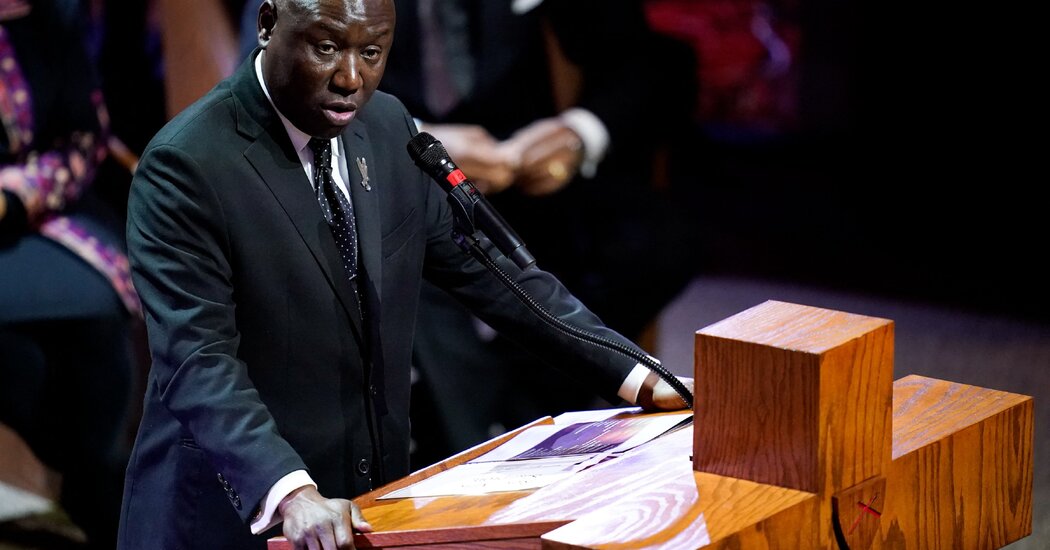
The truth of this historical violation remained buried in classified archives until a groundbreaking 2023 investigation by Undark Magazine, a nonprofit digital publication affiliated with the Massachusetts Institute of Technology, unearthed Dr. Chanock’s vintage, government-issued laboratory notebooks. A reporter searching through these dusty records discovered the handwritten names of Victor Marcellus King and Ross Otto Hambrick, painstakingly tracing the historical paper trail before reaching out to the surviving family members, who had spent their entire adult lives mourning their lost siblings and children in absolute ignorance of the medical conspiracy. The revelation was a devastating emotional earthquake for the families, forcing them to re-evaluate decades of family history and come to terms with the fact that their precious boys’ final, agonizing gasps were the direct result of an unregulated clinical trial. Prominent civil rights attorney Ben Crump, whose firm represents the families in this high-profile lawsuit, passionately argued at a D.C. press conference that this trial was never about safe, ethical medicine, but rather about a reckless scientific race to bring a lucrative RSV vaccine to market, prioritizing prestige and future profits over the fragile lives of Black infants. To make the injustice even more bitter, the FDA’s historic 2023 approval of the world’s first commercial RSV vaccines—which are now generating billions of dollars globally—directly relied on the lung tissues harvested from Ross and Victor’s autopsies, proving that modern medicine continues to profit from a foundation built on non-consensual exploitation.
To understand how such an atrocious breach of medical ethics could occur, one must examine the deeply entrenched systemic racism that has historically defined American medical institutions, characterized by a dual standard of safety and care. Bioethicist Harriet Washington, author of the seminal work Medical Apartheid, points out that while formal modern legal frameworks regulating clinical research were still in their infancy during the 1950s and 1960s, highly established ethical codes existed within professional organizations and hospitals that demanded consent and patient protection. However, these noble codes of bioethics were routinely and deliberately ignored when it came to marginalized, non-white populations, creating a system where affluent white patients were afforded extreme caution, transparent explanations, and the absolute right of refusal, while low-income Black patients were treated as raw material. Because these families walked through the doors of underfunded, segregated public clinics, they were stripped of their agency, viewed by elite white researchers not as grieving parents with rights, but as passive clinical subjects who would not have the social capital or legal resources to question the medical establishment’s decisions. This dynamic perpetuated a devastating culture of medical paternalism, where the lives of Black children were treated as cheap stepping stones for a grander scientific narrative of national progress, leaving a long line of devastated families in its wake.
The tragedy of Ross Otto Hambrick and Victor Marcellus King is a painful reminder that American medical history is deeply intertwined with systemic racial exploitation. This historical thread connects the stolen cervical cells of Henrietta Lacks in 1951, which revolutionized global biology without her knowledge or compensation, to the horrific experiments of the mid-20th century, including the Mississippi neurosurgeon who performed dozens of non-consensual lobotomies on institutionalized Black children. It shares a common foundation with the notorious Tuskegee Syphilis Study, where the U.S. Public Health Service deliberately watched hundreds of African American men suffer and die from preventable disease for forty years, showing a profound disregard for human dignity. By bringing this lawsuit forward, the Hambrick and King families are not only seeking financial restitution for the invaluable biological contributions taken from their babies, but are also demanding a fundamental rewrite of historical narratives, forcing the United States government to formally acknowledge its past sins. This legal battle is a critical step toward healing, ensuring that Ross and Victor are remembered not merely as nameless laboratory samples that helped build a multi-billion-dollar global pharmaceutical industry, but as beloved, cherished children whose stolen lives demand systemic accountability and lasting systemic change.