






Underneath the unforgiving sun of the Middle East, the Strait of Hormuz serves as the literal jugular vein of the global energy market, a narrow, sapphire corridor of water where the psychological anxieties of the entire world are daily laid bare. In the tense, quiet hours of Friday morning, the international maritime community held its collective breath after the Iranian military targeted and struck a container ship in the waterway just twenty-four hours prior. For the crews aboard the massive supertankers and cargo vessels navigating this perilous oceanic highway, the sea is not merely an abstract trade route on a map, but a highly volatile workplace where distant geopolitical calculations can suddenly manifest as explosions on the horizon. Yet, in an admirable display of quiet resilience and calculated risk, commercial captains refused to pull back their throttles or drop anchor in fear. Instead, vessel tracking data revealed a remarkable sight: merchant traffic continued to slide steadily through the strait. This unexpected flow of physical goods acted as an immediate cooling balm on a deeply panicked global commodities market. In the frantic trading pits of London and New York, where analysts had spent the previous night bracing for a devastating energy supply shock, the physical reality of moving ships translated into immediate downward pressure on prices. Brent crude, the international benchmark that dictates the cost of fueling industrial economies from Europe to Asia, plunged by more than three percent to settle at approximately seventy-three dollars a barrel. Simultaneously, across the Atlantic, West Texas Intermediate, the standard for American oil, mirrored this retreat, falling to comfortable depths of between sixty-nine and seventy dollars a barrel, proving that the psychological weight of naval warfare could, at least temporarily, be balanced out by the stubborn forward momentum of international commerce.
To understand the visceral nature of this sudden price relief, one must examine the emotional roller coaster that energy traders and global policy experts have survived over several exhausting months. During the frantic trading hours of the past day, crude prices briefly threatened to break below price levels not seen since the cold days of late February, which marked the absolute eve of the devastating outbreak of war with Iran. The energy market has recently behaved like a cornered animal—erratic, skittish, and highly unpredictable—veering violently between sharp, manic spikes of panic and sudden drops of exhaustion as every whisper from the Persian Gulf is heavily scrutinized. The psychological shadow cast by Thursday’s container ship strike remains exceptionally long; hundreds of vessels are still stranded or cautiously idling in the surrounding waters, and their crews are calling worried families back home to assure them of their safety. Despite this heavy atmosphere of apprehension, a genuine ray of human hope emerged from the diplomatic backrooms where exhausted negotiators representing the United States and Iran managed to hammer out a formal agreement for a sixty-day period of bilateral talks. Coupled with a mutual pledge to suspend active military hostilities, this diplomatic breakthrough represents a rare moment of sanity in a cycle of escalating violence. It offers a crucial window of breathing room, allowing global shipping lanes a desperate opportunity to unclog while reminding a cynical world that behind the cold machinery of warships and high-finance trading screens, human dialogue still possesses the power to pull nations back from the brink of total economic catastrophe.
While international commodities brokers react to the movements of naval fleets and diplomatic cables in real-time, the average person on the street experiences this massive macroeconomic drama at the local level: the neighborhood gas station pump. On Friday, American drivers received a modest but highly welcome reprieve as the retail cost of gasoline crept downward by two cents, bringing the national average to three dollars and ninety cents a gallon, according to data compiled by the AAA motor club. For a parent strictly budgeting for the daily household commute, a student working part-time, or a logistics driver trying to keep a local delivery business afloat, those two cents represent a tangible, small victory in an otherwise exhausting, long-term war against inflation. There remains a frustrating, human disconnect in how these retail energy prices function; while paper barrels of crude oil in financial hubs can lose value in the blink of an eye based on a single positive news headline, retail gas prices move with a stubborn, frustrating sluggishness. They typically trail the drops in the crude market by several days as station owners slowly draw down their existing, more expensive inventories before passing savings on to consumers. This daily, mechanical ritual at the pump is a persistent reminder of the war’s heavy toll on the ordinary citizen, given that the national average has risen by more than thirty percent since the conflict erupted in late February. It reveals the invisible, binding thread that connects a suburban driver in the American heartland to a geopolitical standoff in the Middle East, illustrating how deeply our basic household survival is intertwined with distant, turbulent currents.
At the exact moment that physical energy markets were experiencing a tentative, fragile calm, a completely different kind of storm was battering global stock markets, driven by a profound psychological shift among technology investors. For the past year, the financial world has been practically intoxicated by the promise of artificial intelligence, pouring astronomical sums of money into any corporate entity that promised to revolutionize the future through automated thinking and machine learning. On Friday, however, that speculative fever broke, sending technology shares into a chaotic tailspin as investors began to grapple with a terrifying, existential question: Is the artificial intelligence boom a genuine, generational shift in human industry that is only just beginning, or is it a massive, overhyped economic bubble that is about to burst? This profound anxiety transformed trading floors into arenas of frantic, emotional selling, as the initial euphoria of technological progress clashed with the cold, sobering reality of near-term corporate earnings and the realization that actual consumer profits might take years of heavy capital expenditure to materialize. This sudden panic was not born out of a sudden failure of the technology itself, but rather from a very human exhaustion—a growing fear among ordinary pension fund managers, local retirement planners, and retail day traders that they have paid far too high a price for a digital future that remains frustratingly out of reach, leaving many to wonder if they are standing on the edge of a steep market correction.
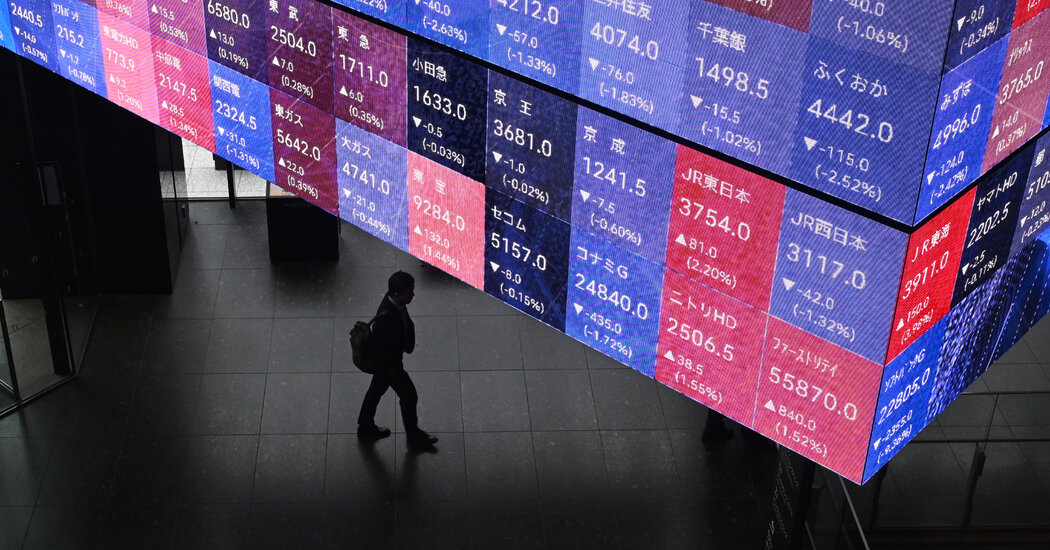
This technology-fueled anxiety rippled violently across the Pacific Ocean, slamming directly into the export-driven economies of East Asian nations, which function as the physical foundries of our modern digital civilization. South Korea’s benchmark KOSPI index suffered a bruising five-point-eight percent drop, acting as a painful, real-time barometer for how deeply the world’s rising worries about artificial intelligence are felt in the industrial cities of Seoul and Suwon. The country’s two microchip titans, Samsung Electronics and SK Hynix, which shoulder the immense global burden of fabricating the physical high-bandwidth memory chips essential for processing complex AI algorithms, bore the brunt of this emotional sell-off. Shares of Samsung plunged by five percent, while SK Hynix suffered an even more devastating eight percent drop, heavily pulling down the broader domestic market with them and leaving local investors reeling. The financial pain proved highly contagious across regional borders; in Tokyo, Japan’s Nikkei 225 index plummeted by nearly five percent, while Taiwan’s tech-reliant stock market shed three percent of its value, and trading floors across Hong Kong and mainland China sank deeply into the red. Behind these cold corporate percentages are communities of engineers, factory workers, and corporate managers who have spent the last year working grueling, overtime hours to meet the world’s hunger for silicon chips, only to watch their corporate valuations evaporate in a single day of nervous selling.
As the sun finally set on Asian trading, the dark cloud of tech anxiety crossed the Atlantic to blanket Western markets, completing a picture of an incredibly fragile, interconnected global economic ecosystem. In the United States, futures on the S&P 500 pointed to a downbeat opening with a projected decline of point-six percent when trading resumed, while in Europe, the Stoxx 600 index, which tracks the health of the continent’s largest companies, slipped by nearly one percent as European investors absorbed the dual shockwaves of geopolitical strife and technology skepticism. This synchronized global retreat highlights the fundamental truth of the modern era: no regional economy is an isolated island capable of weathering these storms alone. A missile fired at a cargo vessel in the Strait of Hormuz, a diplomatic whisper in the corridors of Washington, a microchip etched in a cleanroom in South Korea, and a commuter purchasing regular gasoline in Ohio are all deeply connected nodes in a massive, delicate grid of human progress. When one node vibrates with fear, the entire international structure trembles, proving that beneath the sterile charts, economic formulas, and stock tickers lies a deeply human story of shared vulnerability, shared risks, and our ongoing, collective quest for stability in a highly volatile world.